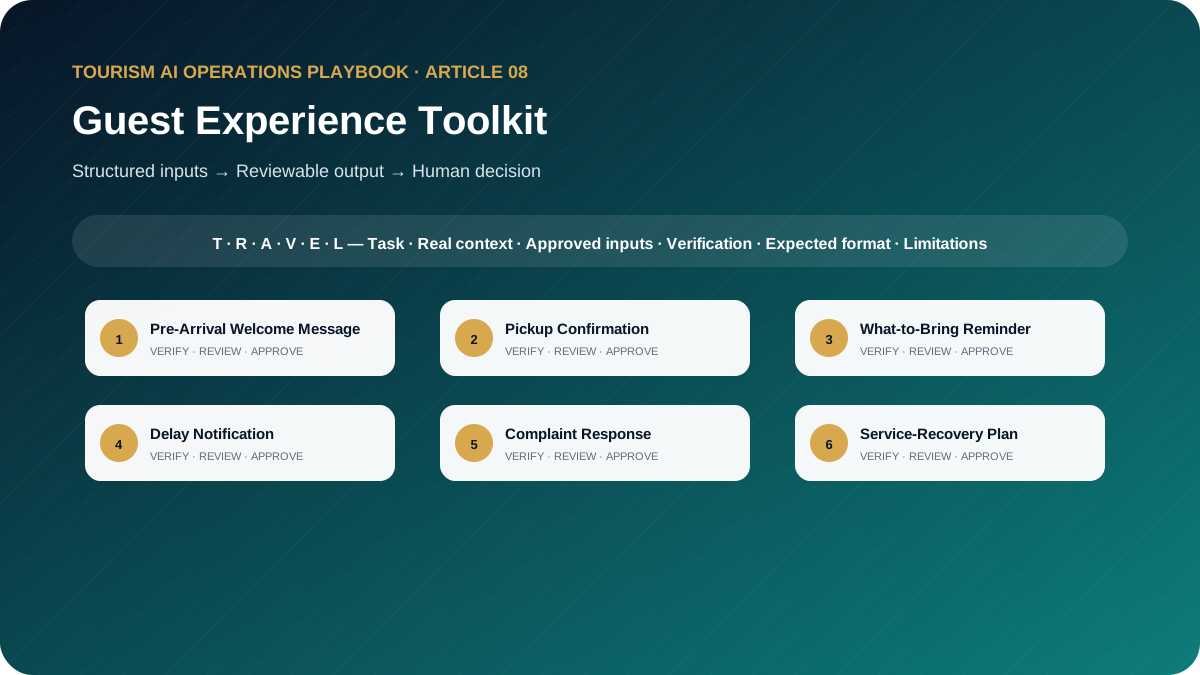
Guest Experience Toolkit: the professional principle
AI can support consistent guest communication and feedback analysis, while facts, privacy, empathy, recovery authority and accountability remain human responsibilities.
Target audience
Guest-experience teams, tour operators, DMC service teams, attraction teams, hotel representatives, quality managers and customer-care leaders.
This is a working guide for people who already understand that tourism is delivered through connected handovers. The prompts are designed to improve preparation, consistency and visibility; they do not transfer authority from the trained employee to the AI system.
Why this topic matters in tourism
Guest experience is created across many handovers, not only during the tour. AI can help a company create consistent messages and analyse patterns, but it should not reduce a guest to a generic response or commit to compensation before the case is understood and authorised.
This article focuses on the complete customer-experience system. The prompts move from pre-arrival expectation setting to live updates, complaint investigation, recovery, public review response and journey-level improvement. The front-line toolkit remains focused on employee preparation and execution.
AI may organise information and propose a structure. It must not manufacture the confirmed operational reality. When the source of truth changes, the employee must update the inputs and verify the output again.
Responsible AI rules for this toolkit
- Use the minimum guest information required for the task.
- Establish confirmed facts before drafting a complaint response.
- Do not promise refunds, compensation or supplier action without authority.
- Match urgency, channel, language and accessibility to the guest situation.
- Escalate safety, discrimination, privacy and serious service incidents immediately.
Companies should adapt these rules to approved tools, information-security controls, local law, supplier contracts and internal authority. When the implications are legal, privacy-related or cybersecurity-related, qualified specialists should be consulted.
The TRAVEL prompting framework
Every template in this playbook follows one memorable structure. The aim is not to make prompts longer for their own sake. It is to place the information, controls and approval points that a tourism professional needs in the right order.
state the professional perspective and the business decision to support.
include the destination, service type, timing, guest journey stage and confirmed constraints.
define the guest or client profile and provide only verified, permitted information.
require source labels, assumptions, uncertainty flags and a check against official or approved records.
specify the exact structure, priority order, tone, length and escalation path.
prohibit invention, protect data and identify who approves the final output.
In one sentence: a professional tourism prompt identifies the task, supplies the real operating context, defines the audience and approved inputs, demands a verifiable structure, explains exceptions and keeps privacy plus final authority with a human.
Ten professional prompt templates
Each prompt contains editable placeholders and a built-in stop rule for missing information. Copy it, replace the placeholders with approved facts and keep the verification and human-approval sections intact. The templates are intentionally detailed because the omitted detail is often where a tourism failure begins.
Pre-Arrival Welcome Message
Prepare a clear welcome that sets expectations before arrival.
When to use it
Use it for a controlled draft before information reaches a guest, supplier, colleague or manager.
Example: A small group receives its final welcome message 48 hours before arrival.
Required inputs
- guest segment anonymised
- destination
- arrival date
- confirmed service
- meeting process
- support channel
- weather source
- cultural notes
- required action
Expected outputs
- email and chat versions
- action checklist
- timing
- verification notes
- accessible-language review
Pre-Arrival Welcome Message
ROLE
Act as a tourism guest-journey communication manager in a professional tourism organisation.

TASK
Prepare a clear welcome that sets expectations before arrival.

CONTEXT
Destination/service: [Insert confirmed details]
Date, operating stage and guest/client profile: [Insert approved information]
Sources of truth: [List approved systems, confirmations, SOPs or official sources]

INPUTS
Provide: guest segment anonymised; destination; arrival date; confirmed service; meeting process; support channel; weather source; cultural notes; required action.
If an essential input is missing, contradictory or unconfirmed, stop and list what is required, its owner and source. Do not guess.

OUTPUT
Return: email and chat versions; action checklist; timing; verification notes; accessible-language review. Separate confirmed facts, assumptions, recommendations and pending items. Label dynamic facts with their source and verification date when supplied.

LIMITS
Do not include unverified visa, weather, transport or attraction information.

PRIVACY AND APPROVAL
Exclude unnecessary personal data, identity or payment details, confidential rates, contracts and security information. Finish with verification actions, unresolved questions and the final approver’s role. The output remains a draft until that person checks it against approved sources.
Replace every placeholder and keep unresolved items visible until an authorised professional reviews them.
Pickup Confirmation
Draft a pickup confirmation that reduces missed connections.
When to use it
Use it for a controlled draft before information reaches a guest, supplier, colleague or manager.
Example: Airport guests need a clear meeting-point and delayed-flight instruction.
Required inputs
- date
- confirmed time/window
- verified location
- meeting sign
- representative
- vehicle information allowed
- luggage
- guest action
- emergency channel
Expected outputs
- concise message
- location steps
- what to do if delayed
- accessibility note
- internal check
Pickup Confirmation
ROLE
Act as a DMC guest communications coordinator in a professional tourism organisation.

TASK
Draft a pickup confirmation that reduces missed connections.

CONTEXT
Destination/service: [Insert confirmed details]
Date, operating stage and guest/client profile: [Insert approved information]
Sources of truth: [List approved systems, confirmations, SOPs or official sources]

INPUTS
Provide: date; confirmed time/window; verified location; meeting sign; representative; vehicle information allowed; luggage; guest action; emergency channel.
If an essential input is missing, contradictory or unconfirmed, stop and list what is required, its owner and source. Do not guess.

OUTPUT
Return: concise message; location steps; what to do if delayed; accessibility note; internal check. Separate confirmed facts, assumptions, recommendations and pending items. Label dynamic facts with their source and verification date when supplied.

LIMITS
Do not expose driver personal details beyond policy or invent a precise time from a window.

PRIVACY AND APPROVAL
Exclude unnecessary personal data, identity or payment details, confidential rates, contracts and security information. Finish with verification actions, unresolved questions and the final approver’s role. The output remains a draft until that person checks it against approved sources.
Replace every placeholder and keep unresolved items visible until an authorised professional reviews them.
What-to-Bring Reminder
Create a practical reminder based only on verified activity requirements.
When to use it
Use it for a controlled draft before information reaches a guest, supplier, colleague or manager.
Example: Guests prepare for a desert safari followed by dinner.
Required inputs
- activity
- date
- weather source
- supplier requirements
- dress code
- footwear
- documents
- health/safety guidance approved
- storage
- prohibited items
Expected outputs
- priority packing list
- mandatory versus recommended
- reason
- guest questions
- verification date
What-to-Bring Reminder
ROLE
Act as a tour experience preparation specialist in a professional tourism organisation.

TASK
Create a practical reminder based only on verified activity requirements.

CONTEXT
Destination/service: [Insert confirmed details]
Date, operating stage and guest/client profile: [Insert approved information]
Sources of truth: [List approved systems, confirmations, SOPs or official sources]

INPUTS
Provide: activity; date; weather source; supplier requirements; dress code; footwear; documents; health/safety guidance approved; storage; prohibited items.
If an essential input is missing, contradictory or unconfirmed, stop and list what is required, its owner and source. Do not guess.

OUTPUT
Return: priority packing list; mandatory versus recommended; reason; guest questions; verification date. Separate confirmed facts, assumptions, recommendations and pending items. Label dynamic facts with their source and verification date when supplied.

LIMITS
Do not give medical advice or invent supplier restrictions.

PRIVACY AND APPROVAL
Exclude unnecessary personal data, identity or payment details, confidential rates, contracts and security information. Finish with verification actions, unresolved questions and the final approver’s role. The output remains a draft until that person checks it against approved sources.
Replace every placeholder and keep unresolved items visible until an authorised professional reviews them.
Delay Notification
Prepare transparent staged updates during a service delay.
When to use it
Use it for a controlled draft before information reaches a guest, supplier, colleague or manager.
Example: A group waits at an attraction because tickets are not yet released.
Required inputs
- service
- confirmed delay
- cause confirmed or unknown
- guest impact
- current action
- next update
- alternatives approved
- support channel
Expected outputs
- immediate alert
- update message
- resolved message
- call script
- internal log points
Delay Notification
ROLE
Act as a guest service duty manager in a professional tourism organisation.

TASK
Prepare transparent staged updates during a service delay.

CONTEXT
Destination/service: [Insert confirmed details]
Date, operating stage and guest/client profile: [Insert approved information]
Sources of truth: [List approved systems, confirmations, SOPs or official sources]

INPUTS
Provide: service; confirmed delay; cause confirmed or unknown; guest impact; current action; next update; alternatives approved; support channel.
If an essential input is missing, contradictory or unconfirmed, stop and list what is required, its owner and source. Do not guess.

OUTPUT
Return: immediate alert; update message; resolved message; call script; internal log points. Separate confirmed facts, assumptions, recommendations and pending items. Label dynamic facts with their source and verification date when supplied.

LIMITS
Do not create a new ETA, blame a supplier or promise recovery without approval.

PRIVACY AND APPROVAL
Exclude unnecessary personal data, identity or payment details, confidential rates, contracts and security information. Finish with verification actions, unresolved questions and the final approver’s role. The output remains a draft until that person checks it against approved sources.
Replace every placeholder and keep unresolved items visible until an authorised professional reviews them.
Complaint Response
Draft a personalised response after reviewing confirmed complaint facts.
When to use it
Use it for a controlled draft before information reaches a guest, supplier, colleague or manager.
Example: A guest complains that a shared tour departed without enough waiting time.
Required inputs
- complaint anonymised
- timeline
- evidence
- service standard
- company finding
- guest impact
- authorised remedy
- pending investigation
- tone
Expected outputs
- acknowledgement
- factual response
- action
- remedy wording
- next step
- privacy check
Complaint Response
ROLE
Act as a senior tourism customer-care specialist in a professional tourism organisation.

TASK
Draft a personalised response after reviewing confirmed complaint facts.

CONTEXT
Destination/service: [Insert confirmed details]
Date, operating stage and guest/client profile: [Insert approved information]
Sources of truth: [List approved systems, confirmations, SOPs or official sources]

INPUTS
Provide: complaint anonymised; timeline; evidence; service standard; company finding; guest impact; authorised remedy; pending investigation; tone.
If an essential input is missing, contradictory or unconfirmed, stop and list what is required, its owner and source. Do not guess.

OUTPUT
Return: acknowledgement; factual response; action; remedy wording; next step; privacy check. Separate confirmed facts, assumptions, recommendations and pending items. Label dynamic facts with their source and verification date when supplied.

LIMITS
Do not disclose employee details, admit unverified liability or invent compensation.

PRIVACY AND APPROVAL
Exclude unnecessary personal data, identity or payment details, confidential rates, contracts and security information. Finish with verification actions, unresolved questions and the final approver’s role. The output remains a draft until that person checks it against approved sources.
Replace every placeholder and keep unresolved items visible until an authorised professional reviews them.
Service-Recovery Plan
Design a proportionate recovery plan that restores control and protects future trust.
When to use it
Use it for a controlled draft before information reaches a guest, supplier, colleague or manager.
Example: A private tour uses the wrong language guide and replacement is possible after one hour.
Required inputs
- failure
- affected guests
- severity
- immediate safety
- confirmed facts
- available remedies
- authority
- supplier role
- communication
- prevention
Expected outputs
- stabilisation
- guest options
- decision authority
- message plan
- documentation
- follow-up
- prevention owner
Service-Recovery Plan
ROLE
Act as a guest experience recovery manager in a professional tourism organisation.

TASK
Design a proportionate recovery plan that restores control and protects future trust.

CONTEXT
Destination/service: [Insert confirmed details]
Date, operating stage and guest/client profile: [Insert approved information]
Sources of truth: [List approved systems, confirmations, SOPs or official sources]

INPUTS
Provide: failure; affected guests; severity; immediate safety; confirmed facts; available remedies; authority; supplier role; communication; prevention.
If an essential input is missing, contradictory or unconfirmed, stop and list what is required, its owner and source. Do not guess.

OUTPUT
Return: stabilisation; guest options; decision authority; message plan; documentation; follow-up; prevention owner. Separate confirmed facts, assumptions, recommendations and pending items. Label dynamic facts with their source and verification date when supplied.

LIMITS
Escalate safety, discrimination, privacy or major financial cases immediately.

PRIVACY AND APPROVAL
Exclude unnecessary personal data, identity or payment details, confidential rates, contracts and security information. Finish with verification actions, unresolved questions and the final approver’s role. The output remains a draft until that person checks it against approved sources.
Replace every placeholder and keep unresolved items visible until an authorised professional reviews them.
Post-Tour Thank-You Message
Write a warm follow-up that reflects the actual experience and invites useful feedback.
When to use it
Use it for a controlled draft before information reaches a guest, supplier, colleague or manager.
Example: A family completes a three-day private programme.
Required inputs
- tour
- guest segment
- positive moments confirmed
- issue resolved if appropriate
- feedback channel
- review policy
- future relevance
Expected outputs
- email and chat versions
- feedback questions
- optional review request
- CRM note
- privacy check
Post-Tour Thank-You Message
ROLE
Act as a tourism relationship manager in a professional tourism organisation.

TASK
Write a warm follow-up that reflects the actual experience and invites useful feedback.

CONTEXT
Destination/service: [Insert confirmed details]
Date, operating stage and guest/client profile: [Insert approved information]
Sources of truth: [List approved systems, confirmations, SOPs or official sources]

INPUTS
Provide: tour; guest segment; positive moments confirmed; issue resolved if appropriate; feedback channel; review policy; future relevance.
If an essential input is missing, contradictory or unconfirmed, stop and list what is required, its owner and source. Do not guess.

OUTPUT
Return: email and chat versions; feedback questions; optional review request; CRM note; privacy check. Separate confirmed facts, assumptions, recommendations and pending items. Label dynamic facts with their source and verification date when supplied.

LIMITS
Do not pressure for a positive review or offer undisclosed incentives.

PRIVACY AND APPROVAL
Exclude unnecessary personal data, identity or payment details, confidential rates, contracts and security information. Finish with verification actions, unresolved questions and the final approver’s role. The output remains a draft until that person checks it against approved sources.
Replace every placeholder and keep unresolved items visible until an authorised professional reviews them.
Public Review Response
Draft a public response that is human, private and evidence-aware.
When to use it
Use it for a controlled draft before information reaches a guest, supplier, colleague or manager.
Example: A two-star review alleges a long pickup delay and poor communication.
Required inputs
- review text
- rating
- known facts suitable for public use
- investigation status
- service values
- private contact
- authorised next step
Expected outputs
- public reply
- private follow-up outline
- facts not to disclose
- escalation recommendation
Public Review Response
ROLE
Act as a online reputation manager for a tourism company in a professional tourism organisation.

TASK
Draft a public response that is human, private and evidence-aware.

CONTEXT
Destination/service: [Insert confirmed details]
Date, operating stage and guest/client profile: [Insert approved information]
Sources of truth: [List approved systems, confirmations, SOPs or official sources]

INPUTS
Provide: review text; rating; known facts suitable for public use; investigation status; service values; private contact; authorised next step.
If an essential input is missing, contradictory or unconfirmed, stop and list what is required, its owner and source. Do not guess.

OUTPUT
Return: public reply; private follow-up outline; facts not to disclose; escalation recommendation. Separate confirmed facts, assumptions, recommendations and pending items. Label dynamic facts with their source and verification date when supplied.

LIMITS
Never reveal booking, health, staff or contact details in public.

PRIVACY AND APPROVAL
Exclude unnecessary personal data, identity or payment details, confidential rates, contracts and security information. Finish with verification actions, unresolved questions and the final approver’s role. The output remains a draft until that person checks it against approved sources.
Replace every placeholder and keep unresolved items visible until an authorised professional reviews them.
Guest-Feedback Analysis
Analyse anonymised feedback for themes, severity, journey stage and controllable causes.
When to use it
Use it for a controlled draft before information reaches a guest, supplier, colleague or manager.
Example: A DMC reviews 300 comments from tours and transfers.
Required inputs
- feedback set
- dates
- products
- channels
- rating
- complaint categories
- operational data
- coding rules
Expected outputs
- theme table
- frequency
- severity
- representative paraphrases
- journey hotspots
- hypotheses
- actions
- data limits
Guest-Feedback Analysis
ROLE
Act as a tourism voice-of-customer analyst in a professional tourism organisation.

TASK
Analyse anonymised feedback for themes, severity, journey stage and controllable causes.

CONTEXT
Destination/service: [Insert confirmed details]
Date, operating stage and guest/client profile: [Insert approved information]
Sources of truth: [List approved systems, confirmations, SOPs or official sources]

INPUTS
Provide: feedback set; dates; products; channels; rating; complaint categories; operational data; coding rules.
If an essential input is missing, contradictory or unconfirmed, stop and list what is required, its owner and source. Do not guess.

OUTPUT
Return: theme table; frequency; severity; representative paraphrases; journey hotspots; hypotheses; actions; data limits. Separate confirmed facts, assumptions, recommendations and pending items. Label dynamic facts with their source and verification date when supplied.

LIMITS
Do not identify individuals or claim causation from comments alone.

PRIVACY AND APPROVAL
Exclude unnecessary personal data, identity or payment details, confidential rates, contracts and security information. Finish with verification actions, unresolved questions and the final approver’s role. The output remains a draft until that person checks it against approved sources.
Replace every placeholder and keep unresolved items visible until an authorised professional reviews them.
Guest-Journey Improvement Report
Turn journey evidence into prioritised improvements across departments.
When to use it
Use it for a controlled draft before information reaches a guest, supplier, colleague or manager.
Example: Management wants to reduce arrival confusion and first-day complaints.
Required inputs
- journey map
- feedback
- incidents
- timing
- contact data
- handovers
- SOPs
- costs if approved
- business objective
Expected outputs
- current-state summary
- moments of truth
- failure modes
- root-cause questions
- actions
- owners
- measures
- roadmap
Guest-Journey Improvement Report
ROLE
Act as a customer-experience and operations consultant in a professional tourism organisation.

TASK
Turn journey evidence into prioritised improvements across departments.

CONTEXT
Destination/service: [Insert confirmed details]
Date, operating stage and guest/client profile: [Insert approved information]
Sources of truth: [List approved systems, confirmations, SOPs or official sources]

INPUTS
Provide: journey map; feedback; incidents; timing; contact data; handovers; SOPs; costs if approved; business objective.
If an essential input is missing, contradictory or unconfirmed, stop and list what is required, its owner and source. Do not guess.

OUTPUT
Return: current-state summary; moments of truth; failure modes; root-cause questions; actions; owners; measures; roadmap. Separate confirmed facts, assumptions, recommendations and pending items. Label dynamic facts with their source and verification date when supplied.

LIMITS
Keep recommendations linked to evidence and operational ownership.

PRIVACY AND APPROVAL
Exclude unnecessary personal data, identity or payment details, confidential rates, contracts and security information. Finish with verification actions, unresolved questions and the final approver’s role. The output remains a draft until that person checks it against approved sources.
Replace every placeholder and keep unresolved items visible until an authorised professional reviews them.
Common mistakes to avoid
- Mistake 1: Sending a friendly message that does not explain what the guest must do.
- Mistake 2: Apologising for an unverified event in a way that creates a false admission.
- Mistake 3: Responding publicly with private booking details.
- Mistake 4: Using identical recovery language for every level of failure.
- Mistake 5: Analysing feedback without separating frequency, severity and operational cause.
A useful internal review question is: “Could a new employee read this output and mistake a proposal for a confirmation?” If the answer is yes, revise the prompt and output labels before use.
Implementation guidance for tourism teams
Map the guest journey and assign message owners to each stage. Create approved templates for routine communication and escalation rules for exceptions. Use anonymised feedback in analysis prompts and review trends with operations, product and quality teams.
Choose a low-risk, frequent task with a clear owner and source of truth.
Run realistic anonymised cases, including missing data and operational exceptions.
Document the prompt version, permitted users, tool, reviewer and release criteria.
Track quality, time saved, defects, escalations and employee feedback.
Update the prompt when the process, destination, supplier or risk changes.
Final verification checklist
Use AI to strengthen tourism judgement, not to bypass it
The best result is not the longest response or the most impressive wording. It is an output that helps a trained tourism professional see the situation clearly, find missing information early, communicate consistently and make a controlled decision. Keep the TRAVEL framework, verification table, privacy boundaries and human sign-off visible every time the prompt is adapted.
Questions tourism teams ask
Can AI answer guest complaints?
It can draft a response after the facts, authority and recovery options are supplied. A trained employee must review and send it.
How is a delay message made useful?
State what changed, what is confirmed, the next update time, what the guest should do and how urgent support can be reached.
Should guest reviews be pasted into AI?
Public review text may be analysed, but remove identifiers where possible and follow company policy. Private feedback requires stronger data controls.
What is service recovery?
A controlled response that stabilises the guest, addresses the immediate issue, communicates ownership, provides an authorised remedy and prevents recurrence.
How should public review replies differ?
They should acknowledge the experience, protect privacy, avoid arguments, explain genuine follow-up appropriately and invite a private channel when details are needed.
Professional verification reminder: Always compare AI output with approved internal systems, official sources and qualified human judgement before it affects a guest, supplier, employee or commercial commitment.