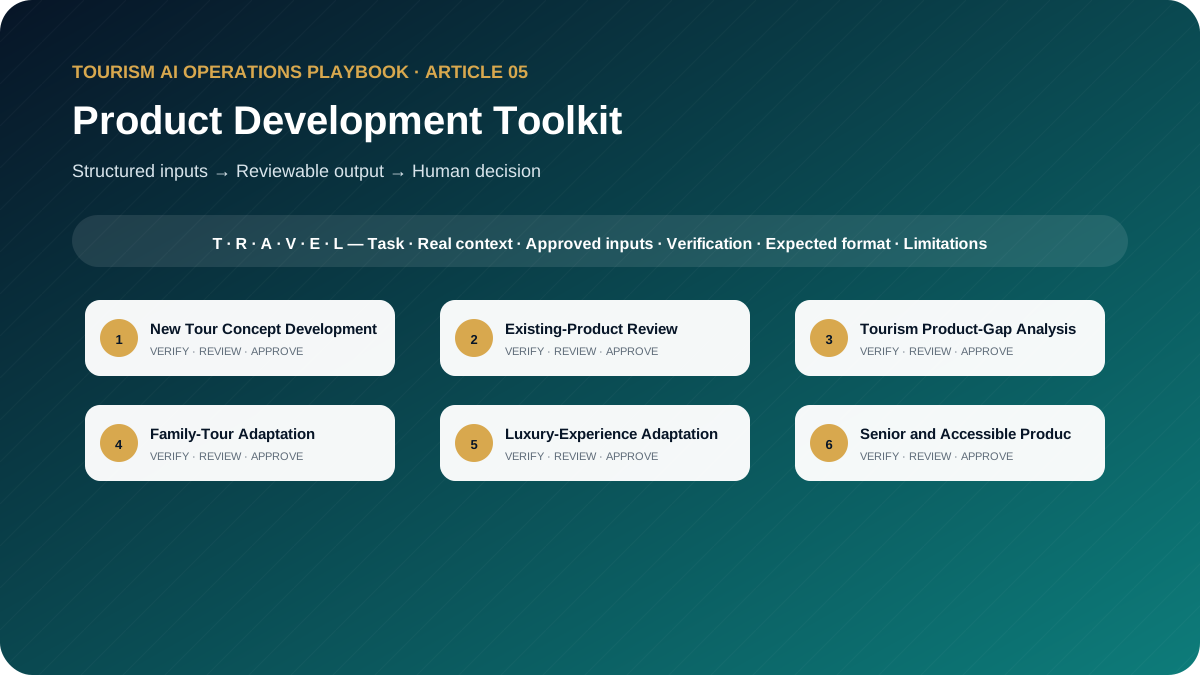
Product Development Toolkit: the professional principle
AI is most useful in tourism product development when it organises evidence, explores options and exposes feasibility questions instead of inventing demand or suppliers.
Target audience
Tourism product managers, tour operators, DMC product teams, destination managers, contracting teams and experience designers.
This is a working guide for people who already understand that tourism is delivered through connected handovers. The prompts are designed to improve preparation, consistency and visibility; they do not transfer authority from the trained employee to the AI system.
Why this topic matters in tourism
A strong tourism product must be desirable, feasible, safe, commercially understandable and deliverable by the destination network. AI is useful for structured ideation and comparison, but weak when asked to invent market evidence, supplier availability or operating conditions.
This toolkit moves from idea to decision. The prompts help teams define a concept, examine an existing product, adapt it for a segment, compare market positioning and run a feasibility gate before investment or launch.
AI may organise information and propose a structure. It must not manufacture the confirmed operational reality. When the source of truth changes, the employee must update the inputs and verify the output again.
Responsible AI rules for this toolkit
- Separate creative concepts from confirmed product components.
- Use verified market, destination and supplier evidence.
- Do not invent demand statistics, competitor inclusions or attraction access.
- Include operational ownership, capacity, seasonality and contingency in every concept.
- Require commercial, operations, safety and product approval before launch.
Companies should adapt these rules to approved tools, information-security controls, local law, supplier contracts and internal authority. When the implications are legal, privacy-related or cybersecurity-related, qualified specialists should be consulted.
The TRAVEL prompting framework
Every template in this playbook follows one memorable structure. The aim is not to make prompts longer for their own sake. It is to place the information, controls and approval points that a tourism professional needs in the right order.
state the professional perspective and the business decision to support.
include the destination, service type, timing, guest journey stage and confirmed constraints.
define the guest or client profile and provide only verified, permitted information.
require source labels, assumptions, uncertainty flags and a check against official or approved records.
specify the exact structure, priority order, tone, length and escalation path.
prohibit invention, protect data and identify who approves the final output.
In one sentence: a professional tourism prompt identifies the task, supplies the real operating context, defines the audience and approved inputs, demands a verifiable structure, explains exceptions and keeps privacy plus final authority with a human.
Ten professional prompt templates
Each prompt contains editable placeholders and a built-in stop rule for missing information. Copy it, replace the placeholders with approved facts and keep the verification and human-approval sections intact. The templates are intentionally detailed because the omitted detail is often where a tourism failure begins.
New Tour Concept Development
Develop differentiated tour concepts around a defined guest problem and destination capability.
When to use it
Use it for a controlled draft before information reaches a guest, supplier, colleague or manager.
Example: A DMC wants a new Abu Dhabi evening experience for repeat visitors.
Required inputs
- destination
- target segment
- guest need
- verified assets
- season
- duration
- budget band
- operating constraints
- brand position
Expected outputs
- three concepts
- value proposition
- journey outline
- required partners
- risks
- evidence gaps
- next validation
New Tour Concept Development
ROLE
Act as a senior tourism product manager in a professional tourism organisation.

TASK
Develop differentiated tour concepts around a defined guest problem and destination capability.

CONTEXT
Destination/service: [Insert confirmed details]
Date, operating stage and guest/client profile: [Insert approved information]
Sources of truth: [List approved systems, confirmations, SOPs or official sources]

INPUTS
Provide: destination; target segment; guest need; verified assets; season; duration; budget band; operating constraints; brand position.
If an essential input is missing, contradictory or unconfirmed, stop and list what is required, its owner and source. Do not guess.

OUTPUT
Return: three concepts; value proposition; journey outline; required partners; risks; evidence gaps; next validation. Separate confirmed facts, assumptions, recommendations and pending items. Label dynamic facts with their source and verification date when supplied.

LIMITS
Label all unconfirmed components and do not invent demand or supplier availability.

PRIVACY AND APPROVAL
Exclude unnecessary personal data, identity or payment details, confidential rates, contracts and security information. Finish with verification actions, unresolved questions and the final approver’s role. The output remains a draft until that person checks it against approved sources.
Replace every placeholder and keep unresolved items visible until an authorised professional reviews them.
Existing-Product Review
Diagnose an existing tour using guest value, delivery, commercial and partner evidence.
When to use it
Use it for a controlled draft before information reaches a guest, supplier, colleague or manager.
Example: A city tour sells well but receives repeated comments about rushing.
Required inputs
- product description
- itinerary
- sales
- feedback
- incidents
- costs allowed
- supplier performance
- competitor evidence
- objectives
Expected outputs
- strengths
- friction points
- evidence table
- redesign options
- quick wins
- test plan
Existing-Product Review
ROLE
Act as a tourism product performance reviewer in a professional tourism organisation.

TASK
Diagnose an existing tour using guest value, delivery, commercial and partner evidence.

CONTEXT
Destination/service: [Insert confirmed details]
Date, operating stage and guest/client profile: [Insert approved information]
Sources of truth: [List approved systems, confirmations, SOPs or official sources]

INPUTS
Provide: product description; itinerary; sales; feedback; incidents; costs allowed; supplier performance; competitor evidence; objectives.
If an essential input is missing, contradictory or unconfirmed, stop and list what is required, its owner and source. Do not guess.

OUTPUT
Return: strengths; friction points; evidence table; redesign options; quick wins; test plan. Separate confirmed facts, assumptions, recommendations and pending items. Label dynamic facts with their source and verification date when supplied.

LIMITS
Separate evidence from interpretation and avoid deleting a component only because feedback volume is low.

PRIVACY AND APPROVAL
Exclude unnecessary personal data, identity or payment details, confidential rates, contracts and security information. Finish with verification actions, unresolved questions and the final approver’s role. The output remains a draft until that person checks it against approved sources.
Replace every placeholder and keep unresolved items visible until an authorised professional reviews them.
Tourism Product-Gap Analysis
Identify credible product gaps from supplied market and operational evidence.
When to use it
Use it for a controlled draft before information reaches a guest, supplier, colleague or manager.
Example: A destination team examines products for French-speaking stopover guests.
Required inputs
- current portfolio
- segments
- demand evidence
- air connectivity
- seasonality
- destination assets
- competitor set
- capability
- constraints
Expected outputs
- gap matrix
- underserved needs
- evidence strength
- concept directions
- feasibility questions
- priority
Tourism Product-Gap Analysis
ROLE
Act as a destination product strategist in a professional tourism organisation.

TASK
Identify credible product gaps from supplied market and operational evidence.

CONTEXT
Destination/service: [Insert confirmed details]
Date, operating stage and guest/client profile: [Insert approved information]
Sources of truth: [List approved systems, confirmations, SOPs or official sources]

INPUTS
Provide: current portfolio; segments; demand evidence; air connectivity; seasonality; destination assets; competitor set; capability; constraints.
If an essential input is missing, contradictory or unconfirmed, stop and list what is required, its owner and source. Do not guess.

OUTPUT
Return: gap matrix; underserved needs; evidence strength; concept directions; feasibility questions; priority. Separate confirmed facts, assumptions, recommendations and pending items. Label dynamic facts with their source and verification date when supplied.

LIMITS
Do not call an idea a market gap without evidence of unmet need and deliverability.

PRIVACY AND APPROVAL
Exclude unnecessary personal data, identity or payment details, confidential rates, contracts and security information. Finish with verification actions, unresolved questions and the final approver’s role. The output remains a draft until that person checks it against approved sources.
Replace every placeholder and keep unresolved items visible until an authorised professional reviews them.
Family-Tour Adaptation
Adapt a confirmed base product for families without reducing it to child entertainment.
When to use it
Use it for a controlled draft before information reaches a guest, supplier, colleague or manager.
Example: A full-day heritage tour needs a version for families with children aged six to twelve.
Required inputs
- base product
- age range
- family structure
- duration
- transport
- meals
- rest
- safety
- learning interests
- price constraints
Expected outputs
- adapted flow
- child and adult value
- pace
- facilities
- safety
- packing notes
- supplier checks
Family-Tour Adaptation
ROLE
Act as a family tourism product designer in a professional tourism organisation.

TASK
Adapt a confirmed base product for families without reducing it to child entertainment.

CONTEXT
Destination/service: [Insert confirmed details]
Date, operating stage and guest/client profile: [Insert approved information]
Sources of truth: [List approved systems, confirmations, SOPs or official sources]

INPUTS
Provide: base product; age range; family structure; duration; transport; meals; rest; safety; learning interests; price constraints.
If an essential input is missing, contradictory or unconfirmed, stop and list what is required, its owner and source. Do not guess.

OUTPUT
Return: adapted flow; child and adult value; pace; facilities; safety; packing notes; supplier checks. Separate confirmed facts, assumptions, recommendations and pending items. Label dynamic facts with their source and verification date when supplied.

LIMITS
Do not assume all families have the same needs or market the product as suitable without facility verification.

PRIVACY AND APPROVAL
Exclude unnecessary personal data, identity or payment details, confidential rates, contracts and security information. Finish with verification actions, unresolved questions and the final approver’s role. The output remains a draft until that person checks it against approved sources.
Replace every placeholder and keep unresolved items visible until an authorised professional reviews them.
Luxury-Experience Adaptation
Redesign a product around privacy, time value, personalisation and service detail.
When to use it
Use it for a controlled draft before information reaches a guest, supplier, colleague or manager.
Example: A standard cultural tour is being considered for a small high-end delegation.
Required inputs
- base product
- guest expectations
- privacy
- transport
- access
- host skills
- dining
- flexibility
- confirmed premium options
- budget
Expected outputs
- experience concept
- signature moments
- service choreography
- privacy controls
- contingency
- validation list
Luxury-Experience Adaptation
ROLE
Act as a luxury travel product specialist in a professional tourism organisation.

TASK
Redesign a product around privacy, time value, personalisation and service detail.

CONTEXT
Destination/service: [Insert confirmed details]
Date, operating stage and guest/client profile: [Insert approved information]
Sources of truth: [List approved systems, confirmations, SOPs or official sources]

INPUTS
Provide: base product; guest expectations; privacy; transport; access; host skills; dining; flexibility; confirmed premium options; budget.
If an essential input is missing, contradictory or unconfirmed, stop and list what is required, its owner and source. Do not guess.

OUTPUT
Return: experience concept; signature moments; service choreography; privacy controls; contingency; validation list. Separate confirmed facts, assumptions, recommendations and pending items. Label dynamic facts with their source and verification date when supplied.

LIMITS
Do not describe a service as exclusive, private or VIP unless contractually confirmed.

PRIVACY AND APPROVAL
Exclude unnecessary personal data, identity or payment details, confidential rates, contracts and security information. Finish with verification actions, unresolved questions and the final approver’s role. The output remains a draft until that person checks it against approved sources.
Replace every placeholder and keep unresolved items visible until an authorised professional reviews them.
Senior and Accessible Product Design
Design an itinerary and service model around verified mobility, sensory and pacing needs.
When to use it
Use it for a controlled draft before information reaches a guest, supplier, colleague or manager.
Example: A heritage district product is adapted for seniors and guests with varied mobility.
Required inputs
- guest requirements
- base concept
- transport
- surfaces
- distances
- seating
- toilets
- audio/visual needs
- carers
- supplier evidence
Expected outputs
- barrier register
- adjusted flow
- assistance plan
- communication
- emergency considerations
- confirmation questions
Senior and Accessible Product Design
ROLE
Act as a inclusive tourism product consultant in a professional tourism organisation.

TASK
Design an itinerary and service model around verified mobility, sensory and pacing needs.

CONTEXT
Destination/service: [Insert confirmed details]
Date, operating stage and guest/client profile: [Insert approved information]
Sources of truth: [List approved systems, confirmations, SOPs or official sources]

INPUTS
Provide: guest requirements; base concept; transport; surfaces; distances; seating; toilets; audio/visual needs; carers; supplier evidence.
If an essential input is missing, contradictory or unconfirmed, stop and list what is required, its owner and source. Do not guess.

OUTPUT
Return: barrier register; adjusted flow; assistance plan; communication; emergency considerations; confirmation questions. Separate confirmed facts, assumptions, recommendations and pending items. Label dynamic facts with their source and verification date when supplied.

LIMITS
Do not claim universal accessibility or make medical assumptions.

PRIVACY AND APPROVAL
Exclude unnecessary personal data, identity or payment details, confidential rates, contracts and security information. Finish with verification actions, unresolved questions and the final approver’s role. The output remains a draft until that person checks it against approved sources.
Replace every placeholder and keep unresolved items visible until an authorised professional reviews them.
Seasonal Tourism Planning
Adapt a product portfolio to climate, daylight, holidays, events and capacity evidence.
When to use it
Use it for a controlled draft before information reaches a guest, supplier, colleague or manager.
Example: A desert and city portfolio is prepared for summer, shoulder and peak winter periods.
Required inputs
- season
- weather source
- daylight
- local calendar
- demand history
- opening periods
- supplier capacity
- guest segments
- risks
Expected outputs
- seasonal changes
- operating windows
- product opportunities
- no-go triggers
- staffing impact
- verification calendar
Seasonal Tourism Planning
ROLE
Act as a seasonality and operations planner in a professional tourism organisation.

TASK
Adapt a product portfolio to climate, daylight, holidays, events and capacity evidence.

CONTEXT
Destination/service: [Insert confirmed details]
Date, operating stage and guest/client profile: [Insert approved information]
Sources of truth: [List approved systems, confirmations, SOPs or official sources]

INPUTS
Provide: season; weather source; daylight; local calendar; demand history; opening periods; supplier capacity; guest segments; risks.
If an essential input is missing, contradictory or unconfirmed, stop and list what is required, its owner and source. Do not guess.

OUTPUT
Return: seasonal changes; operating windows; product opportunities; no-go triggers; staffing impact; verification calendar. Separate confirmed facts, assumptions, recommendations and pending items. Label dynamic facts with their source and verification date when supplied.

LIMITS
Do not present weather or event patterns as guaranteed.

PRIVACY AND APPROVAL
Exclude unnecessary personal data, identity or payment details, confidential rates, contracts and security information. Finish with verification actions, unresolved questions and the final approver’s role. The output remains a draft until that person checks it against approved sources.
Replace every placeholder and keep unresolved items visible until an authorised professional reviews them.
Event-Based Experience Development
Create a complementary experience around a confirmed event without disrupting core logistics.
When to use it
Use it for a controlled draft before information reaches a guest, supplier, colleague or manager.
Example: A DMC explores experiences around a major conference on Yas Island.
Required inputs
- event details verified
- audience
- venue
- arrival patterns
- schedule
- destination assets
- transport
- capacity
- rights restrictions
Expected outputs
- concepts
- pre/post-event flow
- movement plan
- partner needs
- risk
- sale conditions
- go/no-go checklist
Event-Based Experience Development
ROLE
Act as a event tourism product manager in a professional tourism organisation.

TASK
Create a complementary experience around a confirmed event without disrupting core logistics.

CONTEXT
Destination/service: [Insert confirmed details]
Date, operating stage and guest/client profile: [Insert approved information]
Sources of truth: [List approved systems, confirmations, SOPs or official sources]

INPUTS
Provide: event details verified; audience; venue; arrival patterns; schedule; destination assets; transport; capacity; rights restrictions.
If an essential input is missing, contradictory or unconfirmed, stop and list what is required, its owner and source. Do not guess.

OUTPUT
Return: concepts; pre/post-event flow; movement plan; partner needs; risk; sale conditions; go/no-go checklist. Separate confirmed facts, assumptions, recommendations and pending items. Label dynamic facts with their source and verification date when supplied.

LIMITS
Do not imply official event partnership, access or ticket availability without confirmation.

PRIVACY AND APPROVAL
Exclude unnecessary personal data, identity or payment details, confidential rates, contracts and security information. Finish with verification actions, unresolved questions and the final approver’s role. The output remains a draft until that person checks it against approved sources.
Replace every placeholder and keep unresolved items visible until an authorised professional reviews them.
Competitor Product Comparison
Compare verified public competitor products fairly and identify positioning choices.
When to use it
Use it for a controlled draft before information reaches a guest, supplier, colleague or manager.
Example: A tour operator reviews three public city-tour offers before repositioning its own.
Required inputs
- own product
- named competitors
- dated source extracts
- inclusions
- duration
- price only if verified
- reviews
- segment
- objective
Expected outputs
- comparison table
- evidence and date
- differentiation
- blind spots
- questions
- ethical limits
Competitor Product Comparison
ROLE
Act as a tourism market intelligence analyst in a professional tourism organisation.

TASK
Compare verified public competitor products fairly and identify positioning choices.

CONTEXT
Destination/service: [Insert confirmed details]
Date, operating stage and guest/client profile: [Insert approved information]
Sources of truth: [List approved systems, confirmations, SOPs or official sources]

INPUTS
Provide: own product; named competitors; dated source extracts; inclusions; duration; price only if verified; reviews; segment; objective.
If an essential input is missing, contradictory or unconfirmed, stop and list what is required, its owner and source. Do not guess.

OUTPUT
Return: comparison table; evidence and date; differentiation; blind spots; questions; ethical limits. Separate confirmed facts, assumptions, recommendations and pending items. Label dynamic facts with their source and verification date when supplied.

LIMITS
Do not copy proprietary material or guess hidden costs, quality or performance.

PRIVACY AND APPROVAL
Exclude unnecessary personal data, identity or payment details, confidential rates, contracts and security information. Finish with verification actions, unresolved questions and the final approver’s role. The output remains a draft until that person checks it against approved sources.
Replace every placeholder and keep unresolved items visible until an authorised professional reviews them.
Product Feasibility Assessment
Assess whether a product is ready for pilot, revision or rejection.
When to use it
Use it for a controlled draft before information reaches a guest, supplier, colleague or manager.
Example: A new sunrise desert product reaches the final concept-approval meeting.
Required inputs
- concept
- guest need
- itinerary
- suppliers
- capacity
- skills
- transport
- safety
- costing status
- demand evidence
- contingency
Expected outputs
- scorecard
- critical blockers
- assumptions
- pilot requirements
- owners
- gate decision recommendation
Product Feasibility Assessment
ROLE
Act as a cross-functional tourism product gate reviewer in a professional tourism organisation.

TASK
Assess whether a product is ready for pilot, revision or rejection.

CONTEXT
Destination/service: [Insert confirmed details]
Date, operating stage and guest/client profile: [Insert approved information]
Sources of truth: [List approved systems, confirmations, SOPs or official sources]

INPUTS
Provide: concept; guest need; itinerary; suppliers; capacity; skills; transport; safety; costing status; demand evidence; contingency.
If an essential input is missing, contradictory or unconfirmed, stop and list what is required, its owner and source. Do not guess.

OUTPUT
Return: scorecard; critical blockers; assumptions; pilot requirements; owners; gate decision recommendation. Separate confirmed facts, assumptions, recommendations and pending items. Label dynamic facts with their source and verification date when supplied.

LIMITS
A positive concept score cannot override an unresolved safety, legal, capacity or supplier blocker.

PRIVACY AND APPROVAL
Exclude unnecessary personal data, identity or payment details, confidential rates, contracts and security information. Finish with verification actions, unresolved questions and the final approver’s role. The output remains a draft until that person checks it against approved sources.
Replace every placeholder and keep unresolved items visible until an authorised professional reviews them.
Common mistakes to avoid
- Mistake 1: Starting with an attraction list instead of a guest need.
- Mistake 2: Copying a competitor without understanding the delivery model.
- Mistake 3: Designing luxury as simply adding a higher price.
- Mistake 4: Treating accessibility as a late adjustment.
- Mistake 5: Ignoring guide, transport and supplier capacity during peak periods.
A useful internal review question is: “Could a new employee read this output and mistake a proposal for a confirmation?” If the answer is yes, revise the prompt and output labels before use.
Implementation guidance for tourism teams
Run a cross-functional workshop with product, operations, sales and contracting. Use one prompt to create structured options, then score them against guest value, differentiation, feasibility, risk and evidence. Move only the strongest concept into supplier validation and costing.
Choose a low-risk, frequent task with a clear owner and source of truth.
Run realistic anonymised cases, including missing data and operational exceptions.
Document the prompt version, permitted users, tool, reviewer and release criteria.
Track quality, time saved, defects, escalations and employee feedback.
Update the prompt when the process, destination, supplier or risk changes.
Final verification checklist
Use AI to strengthen tourism judgement, not to bypass it
The best result is not the longest response or the most impressive wording. It is an output that helps a trained tourism professional see the situation clearly, find missing information early, communicate consistently and make a controlled decision. Keep the TRAVEL framework, verification table, privacy boundaries and human sign-off visible every time the prompt is adapted.
Questions tourism teams ask
Can AI create a complete tourism product?
It can support concept development and review, but verified destination knowledge, contracting, costing, safety and operational testing remain human responsibilities.
How should competitor information be used?
Record only observable and verified information, cite the source and compare positioning rather than copying protected or uncertain details.
What makes a product feasible?
Confirmed components, realistic timing, capacity, access, skills, transport, safety, contingency, commercial logic and a clear operating owner.
Can AI predict demand?
It can organise supplied data and create hypotheses. It should not manufacture forecasts or present assumptions as market evidence.
When should a product be piloted?
Before full launch, especially when it has new suppliers, complex transfers, unfamiliar guest segments or sensitive operating conditions.
Professional verification reminder: Always compare AI output with approved internal systems, official sources and qualified human judgement before it affects a guest, supplier, employee or commercial commitment.