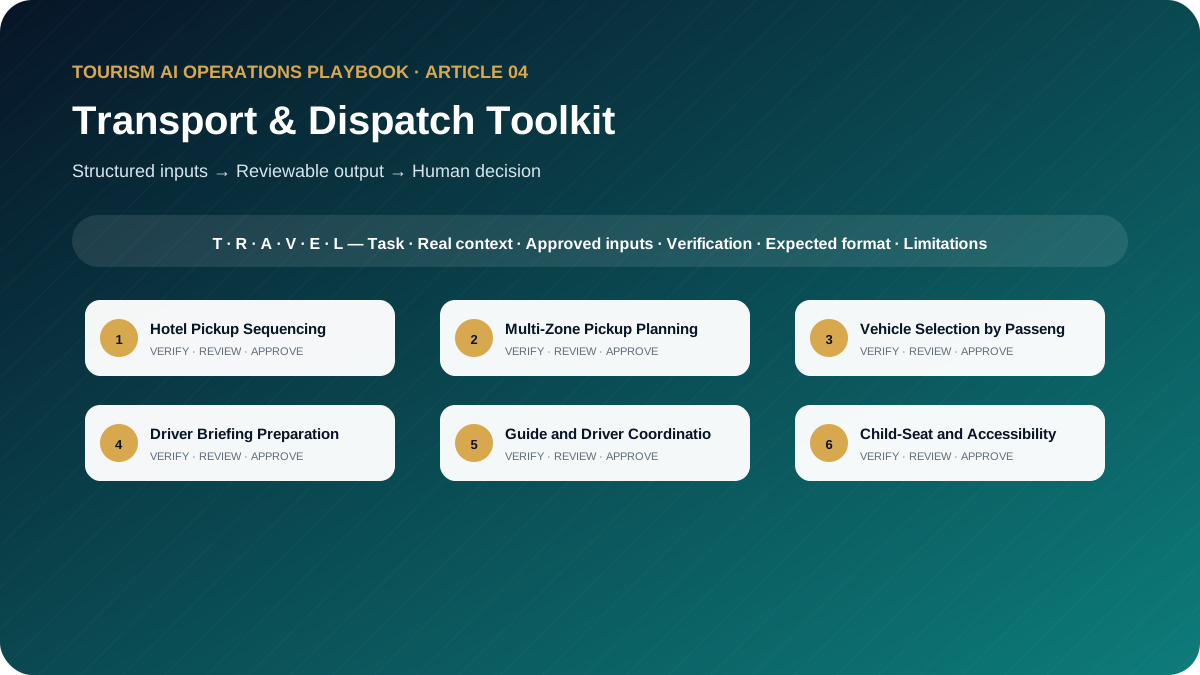
Transport & Dispatch Toolkit: the professional principle
AI can support pickup and fleet planning by testing supplied constraints; dispatchers must still verify routes, capacity, access, availability and live conditions.
Target audience
Transport coordinators, dispatchers, fleet supervisors, DMC operations teams, guides, driver coordinators and tour-operation managers.
This is a working guide for people who already understand that tourism is delivered through connected handovers. The prompts are designed to improve preparation, consistency and visibility; they do not transfer authority from the trained employee to the AI system.
Why this topic matters in tourism
Tourism transport is more than drawing the shortest route. A workable plan must consider pickup windows, hotel access, guest count, luggage, vehicle capacity, child seats, accessibility, driver hours, attraction slots, separate drop-offs and live road conditions. AI can organise the planning logic but cannot replace verified routing or dispatch authority.
These prompts mirror the questions a transport controller asks before releasing a movement. They are designed to complement structured tools such as InfraDispatch, not to advertise or replace them. The output should become a reviewable planning draft, driver briefing or exception report.
AI may organise information and propose a structure. It must not manufacture the confirmed operational reality. When the source of truth changes, the employee must update the inputs and verify the output again.
Responsible AI rules for this toolkit
- Use confirmed hotel locations and approved geocodes.
- Verify live routes, access restrictions and travel times with approved mapping and operational sources.
- Never exceed licensed passenger capacity or ignore luggage, mobility or child-seat requirements.
- Do not expose guest contact details in an unapproved prompt.
- Require dispatcher approval before a route or vehicle plan is issued.
Companies should adapt these rules to approved tools, information-security controls, local law, supplier contracts and internal authority. When the implications are legal, privacy-related or cybersecurity-related, qualified specialists should be consulted.
The TRAVEL prompting framework
Every template in this playbook follows one memorable structure. The aim is not to make prompts longer for their own sake. It is to place the information, controls and approval points that a tourism professional needs in the right order.
state the professional perspective and the business decision to support.
include the destination, service type, timing, guest journey stage and confirmed constraints.
define the guest or client profile and provide only verified, permitted information.
require source labels, assumptions, uncertainty flags and a check against official or approved records.
specify the exact structure, priority order, tone, length and escalation path.
prohibit invention, protect data and identify who approves the final output.
In one sentence: a professional tourism prompt identifies the task, supplies the real operating context, defines the audience and approved inputs, demands a verifiable structure, explains exceptions and keeps privacy plus final authority with a human.
Ten professional prompt templates
Each prompt contains editable placeholders and a built-in stop rule for missing information. Copy it, replace the placeholders with approved facts and keep the verification and human-approval sections intact. The templates are intentionally detailed because the omitted detail is often where a tourism failure begins.
Hotel Pickup Sequencing
Propose a pickup sequence that protects the confirmed arrival commitment.
When to use it
Use it for a controlled draft before information reaches a guest, supplier, colleague or manager.
Example: Eight hotels must feed one city tour with a fixed attraction slot.
Required inputs
- hotels with verified coordinates
- pickup window
- guest count
- loading time
- attraction arrival
- route evidence
- vehicle
- access notes
Expected outputs
- sequence table
- reason
- pickup times as proposals
- total buffer
- risk flags
- verification list
Hotel Pickup Sequencing
ROLE
Act as a tourism transport planner in a professional tourism organisation.

TASK
Propose a pickup sequence that protects the confirmed arrival commitment.

CONTEXT
Destination/service: [Insert confirmed details]
Date, operating stage and guest/client profile: [Insert approved information]
Sources of truth: [List approved systems, confirmations, SOPs or official sources]

INPUTS
Provide: hotels with verified coordinates; pickup window; guest count; loading time; attraction arrival; route evidence; vehicle; access notes.
If an essential input is missing, contradictory or unconfirmed, stop and list what is required, its owner and source. Do not guess.

OUTPUT
Return: sequence table; reason; pickup times as proposals; total buffer; risk flags; verification list. Separate confirmed facts, assumptions, recommendations and pending items. Label dynamic facts with their source and verification date when supplied.

LIMITS
Do not invent locations or live traffic. Mark all times as draft until dispatcher verification.

PRIVACY AND APPROVAL
Exclude unnecessary personal data, identity or payment details, confidential rates, contracts and security information. Finish with verification actions, unresolved questions and the final approver’s role. The output remains a draft until that person checks it against approved sources.
Replace every placeholder and keep unresolved items visible until an authorised professional reviews them.
Multi-Zone Pickup Planning
Decide whether a movement should remain combined or split by operating zone.
When to use it
Use it for a controlled draft before information reaches a guest, supplier, colleague or manager.
Example: Bookings span Abu Dhabi city, Yas Island and Saadiyat with a 60-minute pickup window.
Required inputs
- zone map
- hotels
- guests
- service window
- vehicle options
- route evidence
- maximum zones
- split rules
- cost authority
Expected outputs
- combined plan
- split alternatives
- comparison
- critical constraint
- recommended draft
- approval point
Multi-Zone Pickup Planning
ROLE
Act as a DMC dispatch controller in a professional tourism organisation.

TASK
Decide whether a movement should remain combined or split by operating zone.

CONTEXT
Destination/service: [Insert confirmed details]
Date, operating stage and guest/client profile: [Insert approved information]
Sources of truth: [List approved systems, confirmations, SOPs or official sources]

INPUTS
Provide: zone map; hotels; guests; service window; vehicle options; route evidence; maximum zones; split rules; cost authority.
If an essential input is missing, contradictory or unconfirmed, stop and list what is required, its owner and source. Do not guess.

OUTPUT
Return: combined plan; split alternatives; comparison; critical constraint; recommended draft; approval point. Separate confirmed facts, assumptions, recommendations and pending items. Label dynamic facts with their source and verification date when supplied.

LIMITS
Do not optimise cost by violating pickup windows, capacity or guest-service standards.

PRIVACY AND APPROVAL
Exclude unnecessary personal data, identity or payment details, confidential rates, contracts and security information. Finish with verification actions, unresolved questions and the final approver’s role. The output remains a draft until that person checks it against approved sources.
Replace every placeholder and keep unresolved items visible until an authorised professional reviews them.
Vehicle Selection by Passenger Capacity
Shortlist compliant vehicle categories for a confirmed movement.
When to use it
Use it for a controlled draft before information reaches a guest, supplier, colleague or manager.
Example: A private airport transfer has six guests, nine bags, one infant and a guide.
Required inputs
- passengers
- infants
- child seats
- luggage
- wheelchairs
- equipment
- guide seat
- vehicle capacities
- road and access rules
Expected outputs
- capacity calculation
- suitable categories
- excluded categories
- required equipment
- confirmation checklist
Vehicle Selection by Passenger Capacity
ROLE
Act as a fleet allocation specialist in a professional tourism organisation.

TASK
Shortlist compliant vehicle categories for a confirmed movement.

CONTEXT
Destination/service: [Insert confirmed details]
Date, operating stage and guest/client profile: [Insert approved information]
Sources of truth: [List approved systems, confirmations, SOPs or official sources]

INPUTS
Provide: passengers; infants; child seats; luggage; wheelchairs; equipment; guide seat; vehicle capacities; road and access rules.
If an essential input is missing, contradictory or unconfirmed, stop and list what is required, its owner and source. Do not guess.

OUTPUT
Return: capacity calculation; suitable categories; excluded categories; required equipment; confirmation checklist. Separate confirmed facts, assumptions, recommendations and pending items. Label dynamic facts with their source and verification date when supplied.

LIMITS
Never exceed approved capacity or assume a foldable mobility device fits.

PRIVACY AND APPROVAL
Exclude unnecessary personal data, identity or payment details, confidential rates, contracts and security information. Finish with verification actions, unresolved questions and the final approver’s role. The output remains a draft until that person checks it against approved sources.
Replace every placeholder and keep unresolved items visible until an authorised professional reviews them.
Driver Briefing Preparation
Prepare a concise driver briefing from confirmed movement data.
When to use it
Use it for a controlled draft before information reaches a guest, supplier, colleague or manager.
Example: A driver handles hotel pickups, a mosque stop and a separate airport drop-off.
Required inputs
- driver
- vehicle
- date
- pickups
- contacts through approved channel
- route
- parking
- guest count
- special needs
- guide
- escalation
Expected outputs
- one-page briefing
- movement timeline
- location notes
- must-confirm list
- exception procedure
Driver Briefing Preparation
ROLE
Act as a tourism dispatch supervisor in a professional tourism organisation.

TASK
Prepare a concise driver briefing from confirmed movement data.

CONTEXT
Destination/service: [Insert confirmed details]
Date, operating stage and guest/client profile: [Insert approved information]
Sources of truth: [List approved systems, confirmations, SOPs or official sources]

INPUTS
Provide: driver; vehicle; date; pickups; contacts through approved channel; route; parking; guest count; special needs; guide; escalation.
If an essential input is missing, contradictory or unconfirmed, stop and list what is required, its owner and source. Do not guess.

OUTPUT
Return: one-page briefing; movement timeline; location notes; must-confirm list; exception procedure. Separate confirmed facts, assumptions, recommendations and pending items. Label dynamic facts with their source and verification date when supplied.

LIMITS
Exclude unnecessary guest personal data and do not include unverified route instructions.

PRIVACY AND APPROVAL
Exclude unnecessary personal data, identity or payment details, confidential rates, contracts and security information. Finish with verification actions, unresolved questions and the final approver’s role. The output remains a draft until that person checks it against approved sources.
Replace every placeholder and keep unresolved items visible until an authorised professional reviews them.
Guide and Driver Coordination
Define the handovers and communication points between guide and driver.
When to use it
Use it for a controlled draft before information reaches a guest, supplier, colleague or manager.
Example: A large coach tour requires remote parking and timed guide-driver reconnection.
Required inputs
- movement plan
- guide
- driver
- vehicle
- pickup roles
- parking rules
- guest count
- attraction process
- communication channel
Expected outputs
- pre-service check
- meeting points
- communication timeline
- responsibility matrix
- lost-contact protocol
Guide and Driver Coordination
ROLE
Act as a tour movement coordinator in a professional tourism organisation.

TASK
Define the handovers and communication points between guide and driver.

CONTEXT
Destination/service: [Insert confirmed details]
Date, operating stage and guest/client profile: [Insert approved information]
Sources of truth: [List approved systems, confirmations, SOPs or official sources]

INPUTS
Provide: movement plan; guide; driver; vehicle; pickup roles; parking rules; guest count; attraction process; communication channel.
If an essential input is missing, contradictory or unconfirmed, stop and list what is required, its owner and source. Do not guess.

OUTPUT
Return: pre-service check; meeting points; communication timeline; responsibility matrix; lost-contact protocol. Separate confirmed facts, assumptions, recommendations and pending items. Label dynamic facts with their source and verification date when supplied.

LIMITS
Do not assign tasks that conflict with licence, safety or company role definitions.

PRIVACY AND APPROVAL
Exclude unnecessary personal data, identity or payment details, confidential rates, contracts and security information. Finish with verification actions, unresolved questions and the final approver’s role. The output remains a draft until that person checks it against approved sources.
Replace every placeholder and keep unresolved items visible until an authorised professional reviews them.
Child-Seat and Accessibility Checks
Build a mandatory readiness check for child restraints and mobility needs.
When to use it
Use it for a controlled draft before information reaches a guest, supplier, colleague or manager.
Example: A family and a wheelchair user are booked on the same private vehicle.
Required inputs
- guest requirements confirmed
- ages or restraint category
- wheelchair dimensions
- transfer ability
- assistance
- vehicle
- supplier confirmation
- policy
Expected outputs
- requirement summary
- confirmation questions
- fit check
- loading plan
- unresolved safety items
- no-go conditions
Child-Seat and Accessibility Checks
ROLE
Act as a accessible transport coordinator in a professional tourism organisation.

TASK
Build a mandatory readiness check for child restraints and mobility needs.

CONTEXT
Destination/service: [Insert confirmed details]
Date, operating stage and guest/client profile: [Insert approved information]
Sources of truth: [List approved systems, confirmations, SOPs or official sources]

INPUTS
Provide: guest requirements confirmed; ages or restraint category; wheelchair dimensions; transfer ability; assistance; vehicle; supplier confirmation; policy.
If an essential input is missing, contradictory or unconfirmed, stop and list what is required, its owner and source. Do not guess.

OUTPUT
Return: requirement summary; confirmation questions; fit check; loading plan; unresolved safety items; no-go conditions. Separate confirmed facts, assumptions, recommendations and pending items. Label dynamic facts with their source and verification date when supplied.

LIMITS
Never infer requirements from appearance or age alone; obtain direct and approved confirmation.

PRIVACY AND APPROVAL
Exclude unnecessary personal data, identity or payment details, confidential rates, contracts and security information. Finish with verification actions, unresolved questions and the final approver’s role. The output remains a draft until that person checks it against approved sources.
Replace every placeholder and keep unresolved items visible until an authorised professional reviews them.
Late-Vehicle Response
Prepare a timed response plan for a late or uncontactable vehicle.
When to use it
Use it for a controlled draft before information reaches a guest, supplier, colleague or manager.
Example: A vehicle is absent ten minutes before pickup for an airport departure.
Required inputs
- planned time
- current time
- driver status
- location evidence
- guests
- service deadline
- backups
- contact channels
- authority
Expected outputs
- first five minutes
- next update
- backup trigger
- guest message
- supplier escalation
- incident log
Late-Vehicle Response
ROLE
Act as a transport duty controller in a professional tourism organisation.

TASK
Prepare a timed response plan for a late or uncontactable vehicle.

CONTEXT
Destination/service: [Insert confirmed details]
Date, operating stage and guest/client profile: [Insert approved information]
Sources of truth: [List approved systems, confirmations, SOPs or official sources]

INPUTS
Provide: planned time; current time; driver status; location evidence; guests; service deadline; backups; contact channels; authority.
If an essential input is missing, contradictory or unconfirmed, stop and list what is required, its owner and source. Do not guess.

OUTPUT
Return: first five minutes; next update; backup trigger; guest message; supplier escalation; incident log. Separate confirmed facts, assumptions, recommendations and pending items. Label dynamic facts with their source and verification date when supplied.

LIMITS
Do not report a new ETA without evidence or promise compensation.

PRIVACY AND APPROVAL
Exclude unnecessary personal data, identity or payment details, confidential rates, contracts and security information. Finish with verification actions, unresolved questions and the final approver’s role. The output remains a draft until that person checks it against approved sources.
Replace every placeholder and keep unresolved items visible until an authorised professional reviews them.
Route-Risk Analysis
Challenge a planned route for access, timing and operational failure points.
When to use it
Use it for a controlled draft before information reaches a guest, supplier, colleague or manager.
Example: A coach route crosses an event zone and includes a hotel with restricted bus access.
Required inputs
- route stops
- vehicle class
- verified travel times
- closures
- event restrictions
- parking
- turning
- loading
- weather
- backup routes
Expected outputs
- risk-by-leg table
- critical bottlenecks
- verification calls
- backup logic
- dispatcher decision
Route-Risk Analysis
ROLE
Act as a tourism route-risk reviewer in a professional tourism organisation.

TASK
Challenge a planned route for access, timing and operational failure points.

CONTEXT
Destination/service: [Insert confirmed details]
Date, operating stage and guest/client profile: [Insert approved information]
Sources of truth: [List approved systems, confirmations, SOPs or official sources]

INPUTS
Provide: route stops; vehicle class; verified travel times; closures; event restrictions; parking; turning; loading; weather; backup routes.
If an essential input is missing, contradictory or unconfirmed, stop and list what is required, its owner and source. Do not guess.

OUTPUT
Return: risk-by-leg table; critical bottlenecks; verification calls; backup logic; dispatcher decision. Separate confirmed facts, assumptions, recommendations and pending items. Label dynamic facts with their source and verification date when supplied.

LIMITS
Use current approved road information; do not claim live conditions from general knowledge.

PRIVACY AND APPROVAL
Exclude unnecessary personal data, identity or payment details, confidential rates, contracts and security information. Finish with verification actions, unresolved questions and the final approver’s role. The output remains a draft until that person checks it against approved sources.
Replace every placeholder and keep unresolved items visible until an authorised professional reviews them.
Separate Drop-Off Planning
Design a controlled multi-drop return plan after a shared tour.
When to use it
Use it for a controlled draft before information reaches a guest, supplier, colleague or manager.
Example: A shared evening tour ends with city hotels, Yas hotels and an airport passenger.
Required inputs
- drop-off locations
- guest groups anonymised
- time constraints
- route evidence
- guide position
- vehicle hours
- safety rules
- luggage
Expected outputs
- drop order
- estimated draft windows
- handover points
- guest communication
- exceptions
- final confirmation list
Separate Drop-Off Planning
ROLE
Act as a guest movement planner in a professional tourism organisation.

TASK
Design a controlled multi-drop return plan after a shared tour.

CONTEXT
Destination/service: [Insert confirmed details]
Date, operating stage and guest/client profile: [Insert approved information]
Sources of truth: [List approved systems, confirmations, SOPs or official sources]

INPUTS
Provide: drop-off locations; guest groups anonymised; time constraints; route evidence; guide position; vehicle hours; safety rules; luggage.
If an essential input is missing, contradictory or unconfirmed, stop and list what is required, its owner and source. Do not guess.

OUTPUT
Return: drop order; estimated draft windows; handover points; guest communication; exceptions; final confirmation list. Separate confirmed facts, assumptions, recommendations and pending items. Label dynamic facts with their source and verification date when supplied.

LIMITS
Do not change a contracted drop-off or split guests without approval.

PRIVACY AND APPROVAL
Exclude unnecessary personal data, identity or payment details, confidential rates, contracts and security information. Finish with verification actions, unresolved questions and the final approver’s role. The output remains a draft until that person checks it against approved sources.
Replace every placeholder and keep unresolved items visible until an authorised professional reviews them.
Daily Fleet-Performance Reporting
Analyse planned versus actual fleet delivery and identify actionable patterns.
When to use it
Use it for a controlled draft before information reaches a guest, supplier, colleague or manager.
Example: A fleet supervisor reviews 35 movements across coaches, minibuses and private vehicles.
Required inputs
- movements
- planned and actual times
- distance if approved
- vehicle
- capacity
- delays
- cause evidence
- complaints
- recovery
- downtime
Expected outputs
- KPI table
- variance
- utilisation
- cause categories
- recurring risks
- actions
- data-quality notes
Daily Fleet-Performance Reporting
ROLE
Act as a tourism fleet performance analyst in a professional tourism organisation.

TASK
Analyse planned versus actual fleet delivery and identify actionable patterns.

CONTEXT
Destination/service: [Insert confirmed details]
Date, operating stage and guest/client profile: [Insert approved information]
Sources of truth: [List approved systems, confirmations, SOPs or official sources]

INPUTS
Provide: movements; planned and actual times; distance if approved; vehicle; capacity; delays; cause evidence; complaints; recovery; downtime.
If an essential input is missing, contradictory or unconfirmed, stop and list what is required, its owner and source. Do not guess.

OUTPUT
Return: KPI table; variance; utilisation; cause categories; recurring risks; actions; data-quality notes. Separate confirmed facts, assumptions, recommendations and pending items. Label dynamic facts with their source and verification date when supplied.

LIMITS
Do not infer driver fault from a delay code alone.

PRIVACY AND APPROVAL
Exclude unnecessary personal data, identity or payment details, confidential rates, contracts and security information. Finish with verification actions, unresolved questions and the final approver’s role. The output remains a draft until that person checks it against approved sources.
Replace every placeholder and keep unresolved items visible until an authorised professional reviews them.
Common mistakes to avoid
- Mistake 1: Optimising distance while missing the attraction arrival commitment.
- Mistake 2: Treating every passenger seat as usable without luggage or equipment checks.
- Mistake 3: Combining distant zones into an unrealistic pickup run.
- Mistake 4: Failing to plan separate drop-offs or guide positioning.
- Mistake 5: Using AI travel-time estimates as live traffic confirmation.
A useful internal review question is: “Could a new employee read this output and mistake a proposal for a confirmation?” If the answer is yes, revise the prompt and output labels before use.
Implementation guidance for tourism teams
Create a standard input sheet containing verified locations, passenger counts, service windows, capacity rules and special requirements. Use the prompts to produce a draft, then validate it in the dispatch tool and with the assigned driver. Record actual timings so planning rules improve over time.
Choose a low-risk, frequent task with a clear owner and source of truth.
Run realistic anonymised cases, including missing data and operational exceptions.
Document the prompt version, permitted users, tool, reviewer and release criteria.
Track quality, time saved, defects, escalations and employee feedback.
Update the prompt when the process, destination, supplier or risk changes.
Final verification checklist
Use AI to strengthen tourism judgement, not to bypass it
The best result is not the longest response or the most impressive wording. It is an output that helps a trained tourism professional see the situation clearly, find missing information early, communicate consistently and make a controlled decision. Keep the TRAVEL framework, verification table, privacy boundaries and human sign-off visible every time the prompt is adapted.
Questions tourism teams ask
Can AI calculate the best pickup route?
It can propose a sequence from verified inputs, but live travel time, access, road rules and operational feasibility must be checked in approved tools.
How does this connect with InfraDispatch?
The prompts can prepare, challenge and explain a dispatch plan, while InfraDispatch provides a structured operational concept for pickup, route and briefing workflows.
Can AI select the vehicle?
It can shortlist suitable vehicle categories from approved capacity rules. Dispatch must confirm the actual vehicle, licence, condition, availability and driver.
What about child seats and accessibility?
They must be treated as mandatory planning constraints and confirmed with the supplier, never as optional notes.
What data should be in a fleet report?
Planned versus actual timing, utilisation, delays, causes, service failures, recovery actions and recurring improvement opportunities.
Professional verification reminder: Always compare AI output with approved internal systems, official sources and qualified human judgement before it affects a guest, supplier, employee or commercial commitment.