
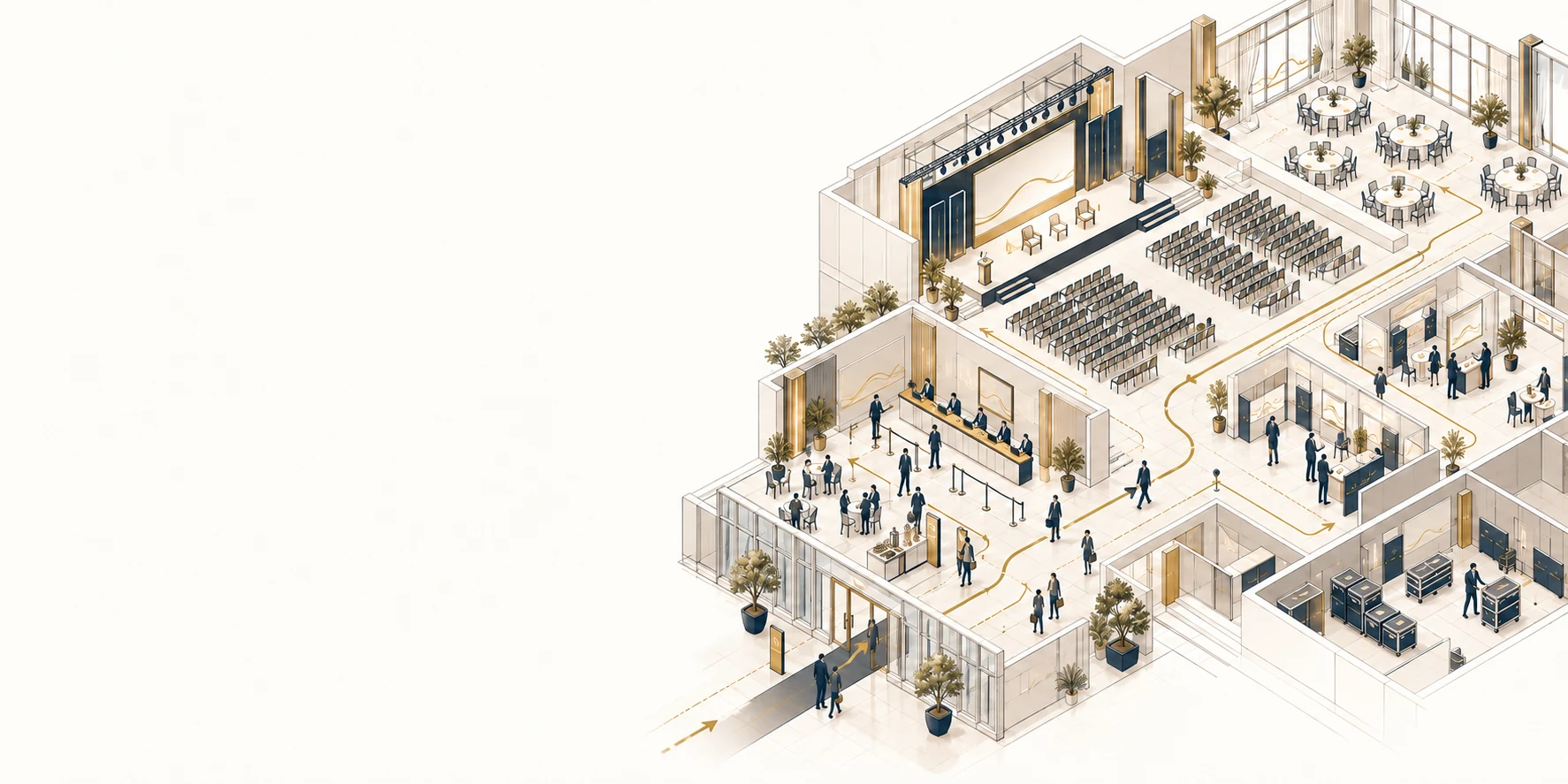
- Who this helps
- Venue coordinators, MICE movement teams and registration leads.
- What you can do
- Control the handover from coach arrival through delegate flow to registration and conference entry.
#Estimated article reading time
Managing MICE Venue Arrivals, Registration and Delegate Flow in Abu Dhabi
The delegates still need to:
- Reach the correct venue entrance
- Leave the coach safely
- Pass through security
- Find registration
- Receive the correct badge
- Locate the conference hall
- Understand the programme
- Move between sessions
- Reach lunch and networking areas
- Find the evening departure point
- Return to the correct hotel
For the delegate, this should feel like a natural sequence.
For the operations team, it requires careful coordination between:
- The movement control room
- Hotel dispatchers
- Drivers and onboard hosts
- Venue management
- Security
- Registration
- Signage teams
- Conference organisers
- Speakers and VIP teams
- Catering
- Technical production
- Accessibility support
- Emergency and medical teams
This is why venue operations should not begin when the first coach reaches the entrance.
They begin during the planning stage, when the DMC and event organiser examine the venue from the delegate’s point of view.
Where will coaches wait?
How many can unload safely at one time?
What happens if security is slow?
Can the registration desks process 500 people before the opening session?
Which entrance will wheelchair users follow?
Where will late delegates go?
What happens if the ballroom changes?
Where will coaches wait for the return journey?
A beautiful venue can still produce a poor guest experience when movement is not designed properly.
The venue should not feel like the end of a transport movement. It should feel like the beginning of a well-prepared event experience.
#The operating scenario
Illustrative scenario
Operational teaching scenario, not a documented incident. Uncited figures and outcomes are illustrative assumptions.
- Situation
This article continues the fictional Abu Dhabi conference used throughout the series:
- Evidence
- 500 international delegates
- Four participating hotels
- Twelve coach movements
- Two standby vehicles
- One main conference venue
- A plenary session
- Four breakout rooms
- A registration and exhibition area
- Speakers and VIP guests
- Delegates requiring mobility support
- Lunch and networking sessions
- An evening cultural function
- Return movements to four hotels
The venue in this scenario is fictional, but the operating situations are realistic.
Abu Dhabi offers major conference spaces ranging from hotel ballrooms to large purpose-built venues. For example, ADNEC Centre Abu Dhabi states that ICC Abu Dhabi can accommodate up to 6,000 delegates, while its Conference Halls A and B have a combined maximum capacity of 1,600. Large capacity, however, does not automatically mean that every entrance, registration point or coach bay can receive all guests at the same moment.
Every event should therefore have its own approved access plan based on:
- The contracted venue space
- The specific entrance
- Security procedures
- Registration capacity
- Coach access
- Other events operating at the venue
- Parking restrictions
- Accessibility
- Traffic conditions
- Emergency requirements
This article provides a practical DMC operating model.
The venue’s official procedures and instructions must always take priority.
Official reference: ADNEC Centre Abu Dhabi
Check the approved delegate requirements, venue confirmation, access or capacity limits and the latest movement or registration record.
- Decision
Decide whether the planned venue handover remains feasible or needs an approved alternative before making a guest promise.
- Action
Coordinate the venue, registration and movement owners; communicate the approved arrangement and record unresolved dependencies.
- Verification
Confirm the delegate reaches the intended service point and that the responsible venue or registration team has accepted the handover.
#Begin with a complete venue-operations handover
The venue team should not receive only a programme and a final delegate number.
It needs a complete operating brief.
The handover should connect:
- Sales commitments
- Contracted venue spaces
- Guest movements
- Registration
- Security
- Catering
- Technical production
- Accessibility
- VIP protocol
- Transport
- Evening functions
- Emergency plans
#The venue-operations handover should confirm
- Event name
- Event date
- Total expected attendance
- Delegate categories
- Arrival waves
- Coach numbers
- Vehicle types
- Arrival windows
- Coach unloading locations
- Vehicle holding areas
- Registration opening time
- Registration capacity
- Security opening time
- Session start time
- VIP and speaker arrivals
- Accessibility requirements
- Luggage or equipment movements
- Catering periods
- Ballroom allocations
- Breakout-room allocations
- Evening departure plan
- Return hotel movements
- Client approval authority
- Incident escalation process
#Practical scenario
Illustrative scenario
Operational teaching scenario, not a documented incident. Uncited figures and outcomes are illustrative assumptions.
- Situation
Sales confirms that the venue package includes:
- Evidence
- Main ballroom
- Registration foyer
- Four breakout rooms
- Lunch area
- Coach access
Operations later discovers that “coach access” means only a short unloading window.
The venue does not allow twelve coaches to wait beside the entrance.
No remote holding area has been confirmed.
The transport plan assumed that every vehicle could arrive early and remain outside until needed.
Check the approved delegate requirements, venue confirmation, access or capacity limits and the latest movement or registration record.
- Decision
Decide whether the planned venue handover remains feasible or needs an approved alternative before making a guest promise.
- Action
#Primary response
The venue movement lead should arrange an urgent operational review with:
- Venue management
- Transport controller
- Security
- Registration lead
- Client representative
- DMC project manager
The review should confirm:
- How many coaches can enter simultaneously?
- How long can each coach remain?
- Where do early coaches wait?
- Who calls vehicles forward?
- What route do coaches follow?
- Where do they go after unloading?
- Where do return coaches stage?
- What happens if the bay becomes unavailable?
#Backup plan
The signed venue or event handover should include:
- Primary coach entrance
- Secondary coach entrance
- Maximum coach-bay capacity
- Maximum dwell time
- Vehicle holding location
- Driver communication channel
- Coach-call authority
- Alternative arrival route
- Accessible drop-off point
- VIP drop-off point
- Return staging location
- Verification
Confirm the delegate reaches the intended service point and that the responsible venue or registration team has accepted the handover.
#Commercial lesson
A venue package may include space without including every operational service required to use that space effectively.
Sales should confirm whether the price includes:
- Traffic marshals
- Additional security
- Registration furniture
- Signage stands
- Temporary barriers
- Extra venue staff
- Extended access hours
- Parking
- Coach holding
- Technical support
- Medical coverage
- Cleaning after extended operations
Related reading
For the sales, confirmation and client-approval workflow behind the event, read:
#Conduct a physical venue inspection
A floor plan is useful.
It cannot show everything the team will experience on event day.
A physical venue inspection should follow the same path as the delegate:
- Coach approach
- Drop-off point
- Venue entrance
- Security
- Registration
- Main conference hall
- Breakout rooms
- Lunch area
- Restrooms and prayer facilities
- Accessible routes
- Evening departure point
- Return coach loading
The inspection should also follow the operational path used by:
- Staff
- Speakers
- VIP guests
- Suppliers
- Luggage
- Exhibition materials
- Emergency teams
#Practical scenario
Illustrative scenario
Operational teaching scenario, not a documented incident. Uncited figures and outcomes are illustrative assumptions.
- Situation
The venue floor plan shows that the main ballroom is close to registration.
- Evidence
During the inspection, the operations team discovers that guests must:
- Leave the registration foyer
- Walk through a shared public concourse
- Pass another event
- Use an escalator
- Turn through two unmarked corridors
- Enter the ballroom from the rear
The distance is manageable.
The wayfinding is not.
Check the approved delegate requirements, venue confirmation, access or capacity limits and the latest movement or registration record.
- Decision
Decide whether the planned venue handover remains feasible or needs an approved alternative before making a guest promise.
- Action
#Primary response
The team should map every decision point and identify where delegates could:
- Turn in the wrong direction
- Follow another event
- Enter a restricted area
- Miss the accessible route
- Create a bottleneck
- Block other venue users
The map should show:
- Sign location
- Staff position
- Walking time
- Accessible alternative
- Emergency exit restrictions
- Peak-flow direction
#Backup plan
Prepare additional:
- Directional signs
- Floor markings
- Staffed junctions
- Digital-map messages
- Accessible-route signs
- Ballroom-door signs
- Overflow registration signs
- Verification
Confirm the delegate reaches the intended service point and that the responsible venue or registration team has accepted the handover.
#Practical inspection question
At every point, ask:
What would a first-time visitor do here without a staff member?
When the answer is “probably become confused,” the operation needs a sign, a person or a clearer route.
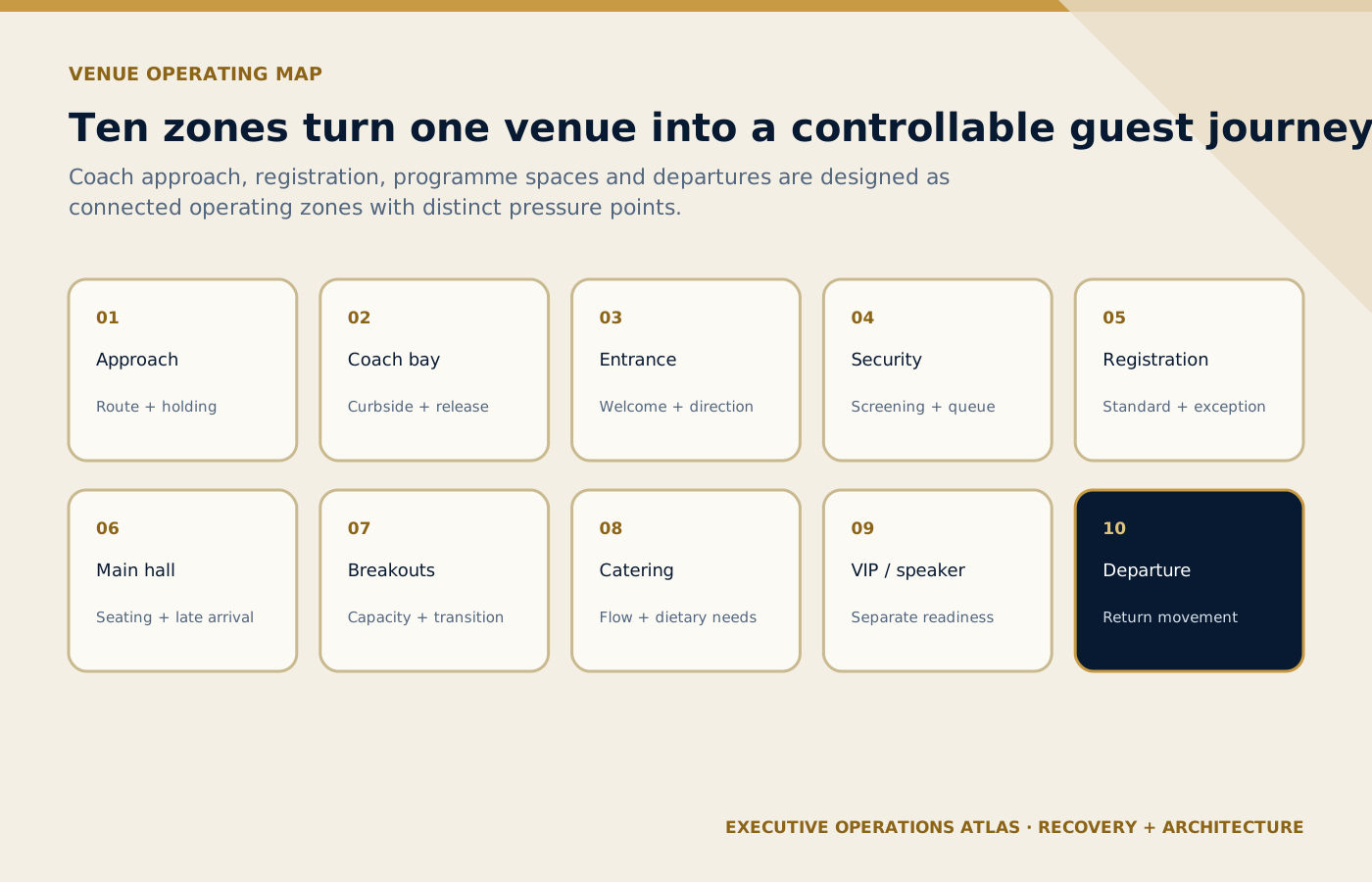
The venue becomes controllable when each guest-flow zone has a defined purpose, pressure point and handoff.
On small screens, scroll the diagram horizontally to read its labels.
#Build the venue map around operational zones
The venue should be divided into zones that have clear owners.
A practical zoning structure may include:
#Zone A: Coach approach and holding
Controls vehicles before they enter the unloading area.
#Zone B: Coach bay and curbside
Controls unloading, luggage and vehicle clearance.
#Zone C: Venue entrance
Welcomes guests and directs them toward security.
#Zone D: Security screening
Manages queues and entry requirements.
#Zone E: Registration
Confirms attendance and distributes badges or materials.
#Zone F: Main conference hall
Controls seating, doors and session access.
#Zone G: Breakout rooms
Directs delegates between smaller sessions.
#Zone H: Catering and networking
Manages lunch, refreshments and crowd distribution.
#Zone I: VIP and speaker operations
Handles private arrivals, green rooms and programme calls.
#Zone J: Departure and return movements
Controls hotel and evening-function coaches.
#Practical scenario
Illustrative scenario
Operational teaching scenario, not a documented incident. Uncited figures and outcomes are illustrative assumptions.
- Situation
A guest arrives at the coach bay and asks a staff member:
- Evidence
Where do I register?
The staff member works for transport and answers:
I think it is upstairs.
The delegate follows the escalator and reaches the wrong exhibition hall.
The transport employee was friendly.
The answer was not confirmed.
Check the approved delegate requirements, venue confirmation, access or capacity limits and the latest movement or registration record.
- Decision
Decide whether the planned venue handover remains feasible or needs an approved alternative before making a guest promise.
- Action
#Primary response
Every zone employee should know:
- Their own zone
- The next guest destination
- The correct direction
- The person to contact when unsure
- The nearest accessible route
- The escalation point
#Backup plan
Give each employee a pocket or mobile venue guide containing:
- Zone map
- Registration location
- Main hall
- Breakout rooms
- Restrooms
- Prayer rooms
- Hospitality desk
- Medical point
- Accessible route
- Departure point
- Key contact numbers
- Verification
#Operational lesson
A venue works better when every employee understands the next two steps in the delegate journey—not only their own position.
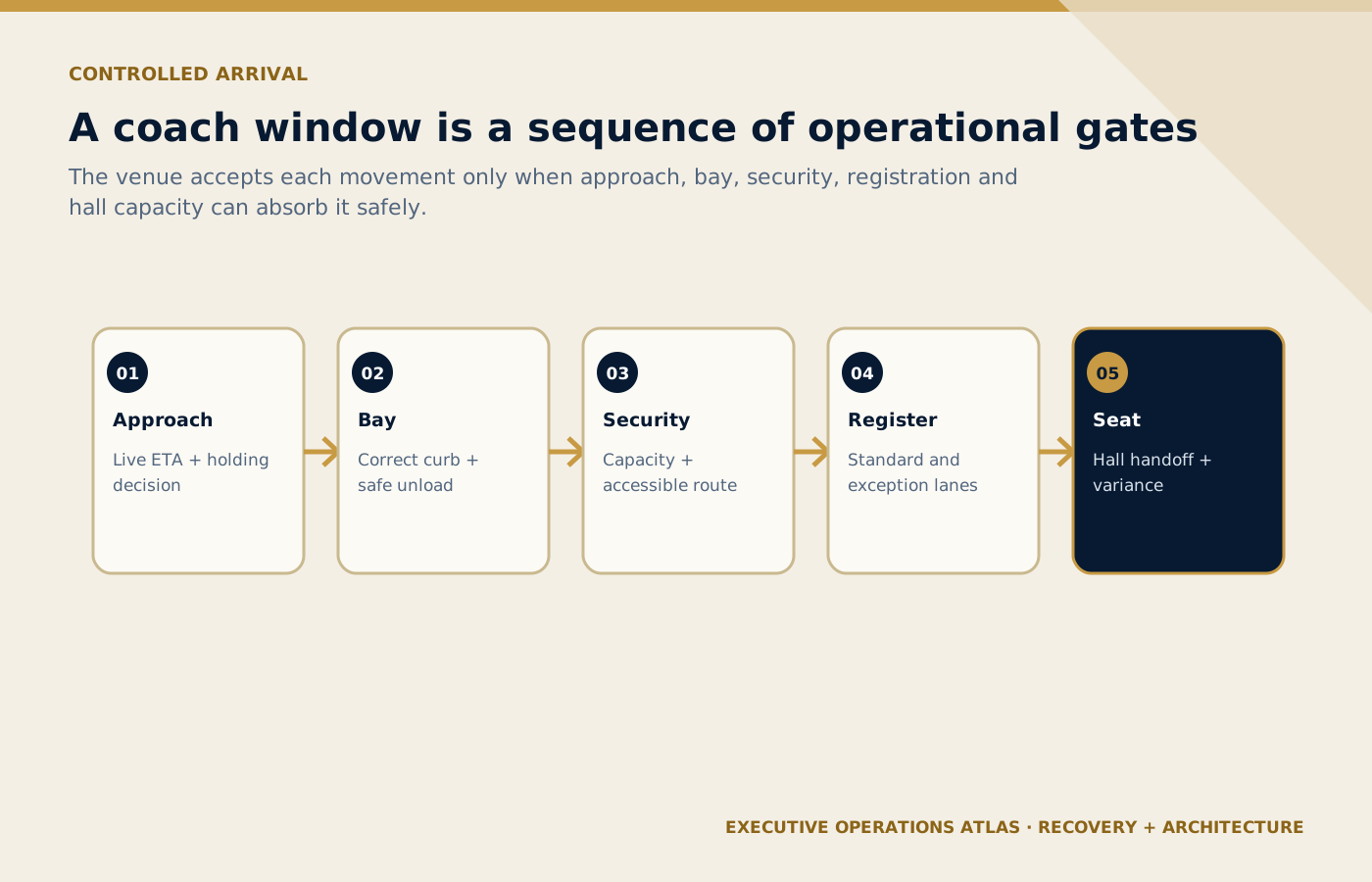
What to learnControlled arrival window Each coach wave is released only when the next venue gates can absorb it safely.
On small screens, scroll the diagram horizontally to read its labels.
Confirm the delegate reaches the intended service point and that the responsible venue or registration team has accepted the handover.
#Create controlled coach-arrival windows
Twelve coaches should not be told to arrive at the venue at the same time unless the venue has confirmed that it can receive them safely.
Coach arrivals should be planned around:
- Unloading capacity
- Security-processing capacity
- Registration capacity
- Walking time
- Session opening
- Venue traffic
- Other events
- Accessible arrivals
- VIP movements
#Illustrative arrival plan
| Arrival window | Movements | Expected delegates | Registration allocation |
|---|---|---|---|
| 07:45–07:55 | BLUE 01–02 | 82 | Registration Zone A |
| 07:55–08:05 | GREEN 01–02 | 88 | Registration Zone B |
| 08:05–08:15 | RED 01–03 | 126 | Main registration lanes |
| 08:15–08:25 | GOLD 01–02 | 76 | Registration Zone C |
| 08:25–08:40 | Remaining movements | 128 | Main and overflow lanes |
Scroll horizontally to read every column. Keyboard: focus the table, then use the arrow keys.
What to learn: Read each row across to connect Arrival window with Movements, Expected delegates, Registration allocation. Compare the rows to identify the relevant arrival window for your situation; use the accompanying section to interpret the result.
These timings are examples only.
The real sequence must reflect the actual venue and programme.
#Practical scenario
Illustrative scenario
Operational teaching scenario, not a documented incident. Uncited figures and outcomes are illustrative assumptions.
- Situation
All four hotels are told:
- Evidence
Coaches should leave at 07:30.
The hotels are different distances from the venue.
Some coaches arrive at 07:50.
Others arrive at 08:10.
Six vehicles reach the coach bay within eight minutes.
The venue can safely unload only two coaches at a time.
Check the approved delegate requirements, venue confirmation, access or capacity limits and the latest movement or registration record.
- Decision
Decide whether the planned venue handover remains feasible or needs an approved alternative before making a guest promise.
- Action
#Primary response
The venue controller should:
- Accept the first two approved movements.
- Direct the others to the confirmed holding area.
- Inform onboard hosts.
- Call forward one movement at a time.
- Keep the drop-off lane clear.
- Update registration about the revised arrival pattern.
- Ask hotel dispatchers to hold later movements where possible.
#Backup plan
Every movement should have:
- Target arrival window
- Earliest permitted arrival
- Latest safe arrival
- Holding location
- Venue call contact
- Alternative route
- Release authority
#Suggested onboard message
The venue is receiving another movement, so we will hold briefly before approaching the entrance. Your registration remains ready, and our venue team will meet us at the coach bay.
- Verification
#Operational lesson
A coach waiting at a controlled holding location creates less confusion than a coach waiting with its doors closed beside 500 arriving delegates.
Confirm the delegate reaches the intended service point and that the responsible venue or registration team has accepted the handover.
#Confirm coach holding before event day
Drivers should never be told:
Wait somewhere nearby until we call you.
“Nearby” may mean:
- An unsafe road
- A restricted area
- A hotel entrance
- A private car park
- A location where buses cannot turn
- A place affected by traffic enforcement
- A location too far away for a fast recall
At a major venue such as ADNEC Centre Abu Dhabi, different car parks and access points serve different areas. Its visitor information identifies several car parks and entrances, demonstrating why transport instructions should name the exact access point rather than using only the venue name.
Official reference: ADNEC getting here
#Practical scenario
Illustrative scenario
Operational teaching scenario, not a documented incident. Uncited figures and outcomes are illustrative assumptions.
- Situation
Three coaches arrive 25 minutes early.
- Evidence
The venue asks them to leave the coach bay.
One driver parks on a nearby street.
Another returns toward the hotel.
The third enters a public parking area where coach access is difficult.
When the venue calls the vehicles back:
- One arrives in five minutes.
- One takes 20 minutes.
- One cannot exit easily.
Check the approved delegate requirements, venue confirmation, access or capacity limits and the latest movement or registration record.
- Decision
Decide whether the planned venue handover remains feasible or needs an approved alternative before making a guest promise.
- Action
#Primary response
The transport controller should immediately establish:
- The location of every coach
- The safest return sequence
- Which movement is most urgent
- Whether later hotel departures should be adjusted
- Whether a standby vehicle is closer
#Backup plan
The transport plan should specify:
- Primary holding location
- Secondary holding location
- Driver map
- GPS pin
- Maximum holding capacity
- Toilet and rest arrangements where relevant
- Venue contact
- Recall method
- Expected return time
- Route restrictions
- Verification
Confirm the delegate reaches the intended service point and that the responsible venue or registration team has accepted the handover.
#Practical communication
The instruction should be:
Hold at Location H1. Remain available on Transport Channel 2. Do not return to the venue until called by the venue transport controller. Expected recall time is 08:25.
This is clearer than:
Stay close.
#Prepare for road congestion and route disruption
A venue arrival plan must include the journey immediately outside the venue.
Traffic can be affected by:
- Peak commuting periods
- Road works
- Accidents
- Government or VIP movements
- Another large event
- Temporary restrictions
- Weather
- Vehicle breakdowns
- Security controls
Abu Dhabi Mobility states that its traffic-management services include organising traffic at event venues, reinforcing the importance of coordinating high-volume movements with the appropriate venue and transport authorities rather than relying only on normal navigation applications.
Official reference: Abu Dhabi Mobility traffic management
#Practical scenario
Illustrative scenario
Operational teaching scenario, not a documented incident. Uncited figures and outcomes are illustrative assumptions.
- Situation
A road incident slows three hotel movements.
- Evidence
The first coach will arrive 20 minutes late.
Two later coaches are following the same route.
If all three continue unchanged, they will reach the venue together.
Check the approved delegate requirements, venue confirmation, access or capacity limits and the latest movement or registration record.
- Decision
Decide whether the planned venue handover remains feasible or needs an approved alternative before making a guest promise.
- Action
#Primary response
The movement control room should:
- Confirm the location of all affected vehicles.
- Check the alternative approved route.
- Inform the venue.
- Protect the first movement’s registration access.
- Delay later hotel releases where useful.
- Reallocate registration staff.
- Consider moving the session opening or seating process only when approved.
#Backup plan
Every hotel-to-venue movement should have:
- Primary route
- Alternative route
- Route decision authority
- Latest safe departure
- Latest safe arrival
- Venue notification contact
- Driver communication channel
- Guest delay message
#Suggested guest message
Traffic near the venue is moving more slowly than planned. The venue team has been informed and is preparing to receive us through the confirmed entrance. We will update you again as we approach.
- Verification
#Operational lesson
A route change should not be made by twelve drivers independently.
One transport controller should issue the approved direction.
Confirm the delegate reaches the intended service point and that the responsible venue or registration team has accepted the handover.
#Open the venue through a readiness check
The event should not open simply because the published registration time has arrived.
The venue lead should confirm that the delegate journey is ready.
#Venue opening checklist
- Coach entrance open
- Traffic staff positioned
- Security ready
- Registration systems active
- Badges sorted
- Signage installed
- Main hall accessible
- Breakout rooms confirmed
- Speakers briefed
- Accessibility routes clear
- Catering points ready
- Medical and emergency contacts confirmed
- Staff communication tested
- Client representative present
- Control room active
#Practical scenario
Illustrative scenario
Operational teaching scenario, not a documented incident. Uncited figures and outcomes are illustrative assumptions.
- Situation
The first coach arrives at 07:45.
- Evidence
Registration is scheduled to open at 07:45.
The computers are still restarting after a network update.
Badges are present, but they are not organised by surname.
Security is ready and allows delegates into the registration foyer.
Within ten minutes, 80 people are waiting without clear instructions.
Check the approved delegate requirements, venue confirmation, access or capacity limits and the latest movement or registration record.
- Decision
Decide whether the planned venue handover remains feasible or needs an approved alternative before making a guest promise.
- Action
#Primary response
The venue lead should activate the registration holding plan:
- Welcome delegates before they enter the queue.
- Separate pre-registered and exception cases.
- Use manual attendance lists where practical.
- Offer a clear waiting instruction.
- Protect the main entrance from overcrowding.
- Delay the next coach call if necessary.
- Give guests an update time.
#Backup plan
The opening plan should identify:
- Earliest coach arrival
- Registration readiness deadline
- Manual registration method
- Temporary badge process
- Holding area
- Overflow queue
- Staff announcement
- Decision to delay later arrivals
#Suggested guest message
Welcome. Our registration system is completing a short technical restart. Please join the queue according to your surname, and our team will begin manual check-in while the system returns. The opening session remains on schedule, and we will keep you updated.
- Verification
#Operational lesson
“Registration opens at 07:45” should mean it is ready to receive guests before 07:45—not that staff begin preparing at that time.
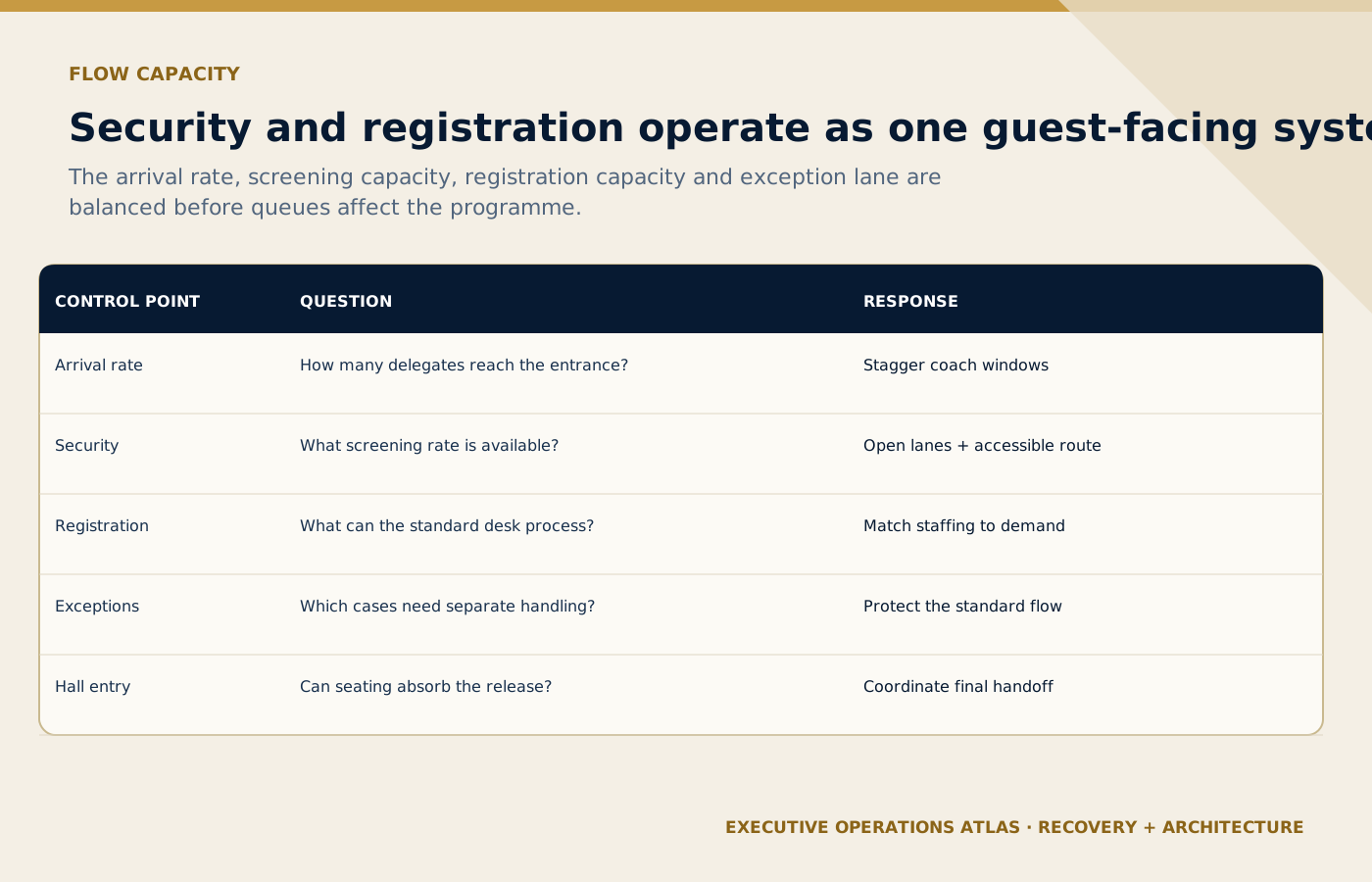
What to learnSecurity and registration flow Security and registration work as one capacity system so queues do not consume the programme or guest confidence.
On small screens, scroll the diagram horizontally to read its labels.
Confirm the delegate reaches the intended service point and that the responsible venue or registration team has accepted the handover.
#Design security and registration as one flow
Security and registration should not be planned separately.
A fast registration process cannot help when security admits only a few guests at a time.
A fast security process can create congestion when registration is not ready.
The flow should consider:
- Number of security lanes
- Bag checks
- Restricted items
- Badge requirements
- Pre-registration
- On-site registration
- VIP access
- Speaker access
- Accessibility
- Groups arriving together
#Practical scenario
Illustrative scenario
Operational teaching scenario, not a documented incident. Uncited figures and outcomes are illustrative assumptions.
- Situation
Security can process approximately 40 delegates every ten minutes.
- Evidence
Registration can process 80.
Coaches deliver 100 delegates within ten minutes.
The registration desks remain partly empty while a long security queue grows outside.
Guests believe registration is badly organised.
The real bottleneck is security.
Check the approved delegate requirements, venue confirmation, access or capacity limits and the latest movement or registration record.
- Decision
Decide whether the planned venue handover remains feasible or needs an approved alternative before making a guest promise.
- Action
#Primary response
The venue lead should:
- Inform arriving coaches about the current processing time.
- Slow later coach arrivals.
- Use additional approved security lanes where available.
- Move staff to organise the queue.
- Separate guests with different requirements when permitted.
- Protect accessible and priority routes.
- Keep delegates informed.
#Backup plan
Before the event, calculate:
- Expected guests per coach
- Security capacity per interval
- Registration capacity per interval
- Maximum safe queue
- Overflow location
- Weather-protected waiting
- Additional lane activation point
- Coach-delay trigger
- Verification
Confirm the delegate reaches the intended service point and that the responsible venue or registration team has accepted the handover.
#Practical formula
The slowest step determines the real arrival capacity.
If security can process 40 guests every ten minutes, delivering 100 guests every ten minutes will create a queue even when registration is extremely fast.
#Suggested guest message
Security is currently processing a high arrival wave. Please keep your event confirmation and identification ready and follow the queue team. Registration desks are open immediately after screening.
#Prepare for registration technology failure
Digital registration can improve speed and visibility.
It can also fail.
Possible issues include:
- Internet outage
- QR code not recognised
- Badge printer failure
- Duplicate registration
- Wrong badge category
- Missing names
- Mobile-phone battery failure
- App login problems
- Last-minute delegate additions
#Practical scenario
Illustrative scenario
Operational teaching scenario, not a documented incident. Uncited figures and outcomes are illustrative assumptions.
- Situation
The registration system stops connecting to the server.
- Evidence
One hundred delegates are approaching.
Several have QR codes, but the scanners cannot validate them.
The team continues trying the same scanner repeatedly.
The queue grows.
Check the approved delegate requirements, venue confirmation, access or capacity limits and the latest movement or registration record.
- Decision
Decide whether the planned venue handover remains feasible or needs an approved alternative before making a guest promise.
- Action
#Primary response
The registration lead should activate the offline process:
- Stop pretending the system is functioning.
- Open the printed or downloaded delegate list.
- Separate standard delegates from exceptions.
- Mark attendance manually.
- Issue pre-printed badges.
- Use temporary badges for confirmed exceptions.
- Record all manual entries for later system reconciliation.
- Inform the control room.
#Backup plan
The registration desk should have:
- Offline delegate list
- Pre-printed badges
- Blank badge stock
- Manual attendance sheets
- Pens and labels
- Alphabetical queue signs
- Spare printers
- Spare chargers
- Mobile connectivity backup where approved
- Exception-desk procedure
- Data-reconciliation owner
#Suggested guest message
Our digital check-in system is temporarily offline, so we are completing registration manually. Please proceed to the desk for your surname. Your conference access will not be affected.
- Verification
Confirm the delegate reaches the intended service point and that the responsible venue or registration team has accepted the handover.
#Practical scenario: badge is printed incorrectly
Illustrative scenario
Operational teaching scenario, not a documented incident. Uncited figures and outcomes are illustrative assumptions.
- Situation
A senior speaker receives a standard delegate badge.
- Evidence
The badge does not provide access to the green room.
Check the approved delegate requirements, venue confirmation, access or capacity limits and the latest movement or registration record.
- Decision
Decide whether the planned venue handover remains feasible or needs an approved alternative before making a guest promise.
- Action
#Response
The registration employee should:
- Apologise without blaming another team.
- Confirm the correct category.
- Replace the badge.
- Inform VIP or speaker operations.
- Check whether similar records are affected.
- Correct the database later.
- Verification
#Operational lesson
A technical problem should not become a guest-service problem simply because the team has no manual alternative.
Confirm the delegate reaches the intended service point and that the responsible venue or registration team has accepted the handover.
#Separate standard registration from exceptions
One difficult case should not stop a full registration queue.
Create separate handling for:
- Name not found
- Wrong organisation
- Unpaid registration
- Badge-category issue
- VIP upgrade
- Speaker status
- Replacement delegate
- Guest accompanying a delegate
- Accessibility request
- Lost invitation
- Duplicate record
#Practical scenario
Illustrative scenario
Operational teaching scenario, not a documented incident. Uncited figures and outcomes are illustrative assumptions.
- Situation
A delegate’s name does not appear in the registration system.
- Evidence
The employee spends eight minutes calling the client while the main queue stops.
Twenty guests wait behind one unresolved case.
Check the approved delegate requirements, venue confirmation, access or capacity limits and the latest movement or registration record.
- Decision
Decide whether the planned venue handover remains feasible or needs an approved alternative before making a guest promise.
- Action
#Primary response
The employee should say:
Let me move you to our registration-support desk so we can confirm the details without delaying you or the other delegates.
The delegate is then assisted at the exception desk.
#Backup plan
Registration should include:
- Standard check-in desks
- Exception desk
- Speaker and VIP desk
- Accessibility support point
- Group leader or client help desk
- Manual badge station
- Verification
#Operational lesson
The exception desk is not where difficult guests are sent away.
It is where complex cases receive more time and attention without stopping the main flow.
Confirm the delegate reaches the intended service point and that the responsible venue or registration team has accepted the handover.
#Manage VIP and speaker arrivals separately when needed
Speakers and VIP guests may require:
- Dedicated entrance
- Security coordination
- Private registration
- Green-room access
- Media handling
- Presentation checks
- Protocol support
- Personal escort
- Separate vehicle timing
ADNEC Centre Abu Dhabi lists dedicated VIP facilities within its venue options, but the exact entrance, access rights and protocol arrangements depend on the contracted event plan.
Official reference: ADNEC space listing
#Practical scenario
Illustrative scenario
Operational teaching scenario, not a documented incident. Uncited figures and outcomes are illustrative assumptions.
- Situation
A keynote speaker arrives with the main delegate coach.
- Evidence
The speaker must be on stage in 25 minutes.
The general security and registration queue will take approximately 20 minutes.
The presentation has not yet been tested.
Check the approved delegate requirements, venue confirmation, access or capacity limits and the latest movement or registration record.
- Decision
Decide whether the planned venue handover remains feasible or needs an approved alternative before making a guest promise.
- Action
#Primary response
The venue speaker coordinator should:
- Meet the speaker at the coach.
- Confirm the authorised access route.
- Complete registration through the agreed speaker process.
- Escort the speaker to the green room or technical desk.
- Transfer presentation materials.
- Confirm session timing.
- Inform the conference producer.
#Backup plan
Every critical speaker should have:
- Arrival movement
- Named venue contact
- Mobile number
- Access category
- Green-room location
- Session time
- Technical deadline
- Presentation backup
- Replacement or delayed-session plan
- Verification
Confirm the delegate reaches the intended service point and that the responsible venue or registration team has accepted the handover.
#Practical scenario: speaker is late
Illustrative scenario
Operational teaching scenario, not a documented incident. Uncited figures and outcomes are illustrative assumptions.
- Situation
The speaker’s car is delayed.
- Evidence
The session begins in 15 minutes.
Check the approved delegate requirements, venue confirmation, access or capacity limits and the latest movement or registration record.
- Decision
Decide whether the planned venue handover remains feasible or needs an approved alternative before making a guest promise.
- Action
#Response options
Adjust the session sequence
Move another speaker or agenda item forward.
Begin with the moderator
Use opening remarks or audience engagement.
Connect remotely
Use only when the technical plan supports it.
Use the backup speaker
Apply when agreed by the programme owner.
- Verification
Confirm the delegate reaches the intended service point and that the responsible venue or registration team has accepted the handover.
#Suggested client update
The keynote speaker is expected approximately ten minutes after the planned stage time. The recommended option is to begin with the moderator’s opening and the second agenda segment, then introduce the keynote on arrival. Programme approval is required now.
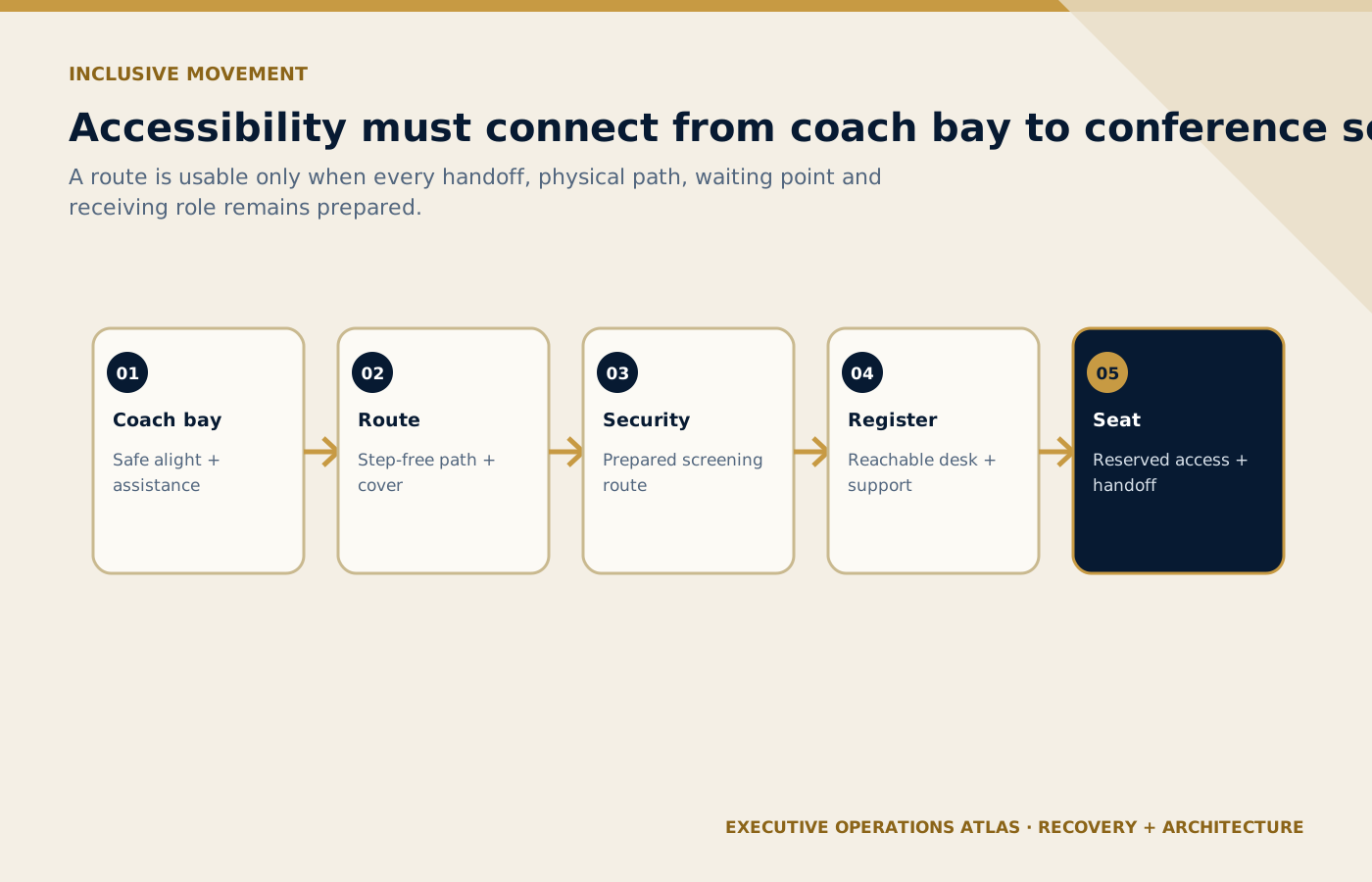
Accessibility remains effective only when every physical path and receiving role is prepared for the full movement.
On small screens, scroll the diagram horizontally to read its labels.
#Connect accessibility from coach bay to conference seat
Accessibility should be reviewed as a complete route.
The route may include:
- Coach step or lift
- Curb
- Entrance
- Security
- Registration counter
- Lift
- Conference hall
- Seating
- Breakout room
- Catering
- Restroom
- Departure point
ADNEC Centre Abu Dhabi states that many of its meeting facilities are designed with special-needs access, and its visitor information recognises mobility devices as essential accessibility equipment. Exact routes and support should still be confirmed for the contracted space and event layout.
Official reference: ADNEC accessibility and venue information
#Practical scenario
Illustrative scenario
Operational teaching scenario, not a documented incident. Uncited figures and outcomes are illustrative assumptions.
- Situation
A wheelchair user arrives at the approved accessible drop-off point.
- Evidence
The main registration desk is reached by an escalator.
A lift exists, but the temporary event signage does not show it.
The guest and companion wait while staff search for the route.
Check the approved delegate requirements, venue confirmation, access or capacity limits and the latest movement or registration record.
- Decision
Decide whether the planned venue handover remains feasible or needs an approved alternative before making a guest promise.
- Action
#Primary response
The accessibility coordinator should:
- Meet the guest at the vehicle.
- Use the verified step-free route.
- Keep the companion with the guest.
- Complete registration at an accessible-height desk or alternative location.
- Escort the guest to the reserved seating area.
- Confirm the route for lunch and departure.
#Backup plan
The venue file should show:
- Accessible drop-off
- Step-free entrance
- Lift
- Accessible registration
- Accessible restrooms
- Reserved seating
- Emergency evacuation plan
- Accessible departure point
- Named support employee
- Verification
Confirm the delegate reaches the intended service point and that the responsible venue or registration team has accepted the handover.
#Practical scenario: accessible route becomes blocked
Illustrative scenario
Operational teaching scenario, not a documented incident. Uncited figures and outcomes are illustrative assumptions.
- Situation
A supplier places equipment in the corridor used for wheelchair access.
- Evidence
Check the approved delegate requirements, venue confirmation, access or capacity limits and the latest movement or registration record.
- Decision
Decide whether the planned venue handover remains feasible or needs an approved alternative before making a guest promise.
- Action
#Response
- Stop using the blocked route.
- Ask venue operations to clear it immediately.
- Activate the verified secondary route.
- Position staff at both ends.
- Inform affected delegates.
- Record the obstruction.
#Suggested guest message
The usual accessible route is being cleared. We will guide you through the alternative step-free route, which reaches the same registration area.
- Verification
#Operational lesson
Accessibility should not depend on finding a helpful employee at the last moment.
The route should be designed and tested before delegates arrive.
Confirm the delegate reaches the intended service point and that the responsible venue or registration team has accepted the handover.
#Deploy staff according to pressure points
Venue staffing should not be based only on job titles.
It should be based on where congestion, confusion and risk are likely to occur.
#Possible venue team
Venue movement lead
Controls the complete delegate flow.
Coach-bay controller
Receives and releases vehicles.
Traffic and holding coordinator
Controls coach staging.
Welcome staff
Direct delegates from the entrance.
Security-queue coordinators
Organise screening flow.
Registration lead
Controls check-in and exceptions.
Wayfinding staff
Cover important junctions.
Hall-door coordinators
Manage conference entry.
Breakout-room hosts
Support session transitions.
Speaker and VIP coordinator
Controls priority movements.
Accessibility coordinator
Supports approved requirements.
Floaters
Respond to unexpected pressure.
#Practical scenario
Illustrative scenario
Operational teaching scenario, not a documented incident. Uncited figures and outcomes are illustrative assumptions.
- Situation
The staffing plan assigns eight employees to registration and one to the coach bay.
- Evidence
Registration works efficiently.
At the coach bay:
- Two coaches unload together.
- A third coach approaches.
- Delegates cross the vehicle route.
- One driver waits for instructions.
- Luggage blocks the curb.
The highest risk has fewer staff than the easiest process.
Check the approved delegate requirements, venue confirmation, access or capacity limits and the latest movement or registration record.
- Decision
Decide whether the planned venue handover remains feasible or needs an approved alternative before making a guest promise.
- Action
#Primary response
The venue lead should move one or more floaters to:
- Protect the walking route
- Manage the third vehicle
- Assist with unloading
- Clear the curb
- Communicate with drivers
#Backup plan
The deployment plan should identify:
- Primary position
- Backup position
- Peak time
- Supervisor
- Break coverage
- Communication channel
- Trigger for reassignment
- Verification
Confirm the delegate reaches the intended service point and that the responsible venue or registration team has accepted the handover.
#Related reading
For matching employees to movement complexity, languages, timing and service requirements, read:
For preparation, communication, timing, safety and service-recovery standards, read:
#Use signage to reduce questions before they are asked
Venue signage should help delegates understand:
- Where they are
- Where they need to go
- Which route to follow
- Which session they are attending
- Where they will depart later
Signs should be placed before decision points.
#Important sign locations
- Coach bay
- Venue entrance
- Security split
- Registration
- Exception desk
- Main hall
- Breakout corridors
- Catering area
- Restrooms
- Prayer rooms
- VIP route
- Accessible route
- Return coach point
- Evening-function departure
#Practical scenario
Illustrative scenario
Operational teaching scenario, not a documented incident. Uncited figures and outcomes are illustrative assumptions.
- Situation
A sign reading Conference Registration is placed directly beside the registration desks.
- Evidence
It confirms that guests have arrived.
It does not help them find registration from the venue entrance.
Check the approved delegate requirements, venue confirmation, access or capacity limits and the latest movement or registration record.
- Decision
Decide whether the planned venue handover remains feasible or needs an approved alternative before making a guest promise.
- Action
#Primary response
The signage plan should work backwards:
- Sign at coach bay
- Sign inside entrance
- Sign before security
- Sign after security
- Sign at registration split
#Backup plan
Prepare:
- Spare arrows
- Blank directional cards
- Replacement-room signs
- Entrance-change signs
- Registration-delay notices
- Coach-departure signs
- Accessible-route signs
- Floor-plan QR code
- Portable sign stands
- Verification
Confirm the delegate reaches the intended service point and that the responsible venue or registration team has accepted the handover.
#Practical scenario: ballroom changes
Illustrative scenario
Operational teaching scenario, not a documented incident. Uncited figures and outcomes are illustrative assumptions.
- Situation
The main session moves from Ballroom A to Hall C.
- Evidence
The original signs remain in place.
Check the approved delegate requirements, venue confirmation, access or capacity limits and the latest movement or registration record.
- Decision
Decide whether the planned venue handover remains feasible or needs an approved alternative before making a guest promise.
- Action
#Response
- Remove or cover every old ballroom sign.
- Install new signs at the earliest decision point.
- Position staff along the route.
- Update digital schedules.
- Inform hotel and transport teams.
- Check the accessible route.
- Send one approved guest message.
#Suggested guest message
Today’s main session will take place in Hall C rather than Ballroom A. Please follow the updated conference signs after registration. Our team is positioned along the route to assist you.
- Verification
Confirm the delegate reaches the intended service point and that the responsible venue or registration team has accepted the handover.
#Protect the opening session from late-arrival pressure
Some delegates will arrive late because of:
- Traffic
- Missed coach
- Long registration
- Flight arrival
- Personal delay
- Speaker commitments
- Accessibility processing
The late-arrival plan should protect both:
- The delegate
- The session already in progress
#Practical scenario
Illustrative scenario
Operational teaching scenario, not a documented incident. Uncited figures and outcomes are illustrative assumptions.
- Situation
The opening session begins at 09:00.
- Evidence
A recovery coach arrives at 09:12 with 18 delegates.
The main ballroom doors are closed for a keynote presentation.
Opening the main doors will distract the speaker and audience.
Check the approved delegate requirements, venue confirmation, access or capacity limits and the latest movement or registration record.
- Decision
Decide whether the planned venue handover remains feasible or needs an approved alternative before making a guest promise.
- Action
#Primary response
The venue team should:
- Receive the late group quietly.
- Complete or verify registration.
- Hold guests in a comfortable area.
- Coordinate with the hall-door manager.
- Admit the group during an approved transition.
- Offer a viewing screen or alternative where available.
#Backup plan
Confirm before the event:
- Late-arrival entrance
- Holding location
- Safe admission points
- Hall-door authority
- Session-viewing alternative
- Speaker or VIP exception
#Suggested message
The opening presentation is currently in progress. We will admit the group during the next suitable transition so that you can enter comfortably without interrupting the session. Please remain with our team here.
- Verification
#Operational lesson
Respecting the session does not mean making late delegates feel punished.
Confirm the delegate reaches the intended service point and that the responsible venue or registration team has accepted the handover.
#Control session transitions and breakout movements
A conference programme may look orderly on paper:
- Main session
- Coffee break
- Four breakout sessions
- Lunch
- Afternoon plenary
In practice, 500 people moving simultaneously can create:
- Escalator queues
- Blocked corridors
- Wrong-room entry
- Late session starts
- Overcrowded rooms
- Accessibility problems
- Confusion about language tracks
#Practical scenario
Illustrative scenario
Operational teaching scenario, not a documented incident. Uncited figures and outcomes are illustrative assumptions.
- Situation
The main session finishes five minutes late.
- Evidence
Delegates have ten minutes to reach four breakout rooms.
Most guests leave through one ballroom door.
One breakout room is much closer than the others.
The nearest room becomes overcrowded because delegates assume it is their session.
Check the approved delegate requirements, venue confirmation, access or capacity limits and the latest movement or registration record.
- Decision
Decide whether the planned venue handover remains feasible or needs an approved alternative before making a guest promise.
- Action
#Primary response
The hall-door and wayfinding teams should:
- Open the planned exit doors.
- Separate delegates by track.
- Display large session signs.
- Position staff before corridor splits.
- Keep accessible routes open.
- Inform breakout hosts about the late release.
- Delay session starts consistently when approved.
#Backup plan
The transition plan should include:
- Exit-door allocation
- Track colours
- Room capacity
- Overflow room
- Walking time
- Accessibility route
- Late-start rule
- Staff positions
- Delegate announcement
- Verification
Confirm the delegate reaches the intended service point and that the responsible venue or registration team has accepted the handover.
#Suggested stage announcement
Your next sessions begin in 15 minutes. Please follow the colour shown on your badge and the signs outside the ballroom: BLUE for Hall A, GREEN for Hall B, GOLD for Hall C and RED for Hall D.
#Practical scenario: breakout room reaches capacity
Illustrative scenario
Operational teaching scenario, not a documented incident. Uncited figures and outcomes are illustrative assumptions.
- Situation
One session is more popular than expected.
- Evidence
The room becomes full.
Check the approved delegate requirements, venue confirmation, access or capacity limits and the latest movement or registration record.
- Decision
Decide whether the planned venue handover remains feasible or needs an approved alternative before making a guest promise.
- Action
#Response options
Open an overflow room
Use a video or audio feed when prepared.
Redirect delegates to a repeated session
Use when the programme includes another time.
Offer an alternative track
Use only with clear information.
#Suggested guest message
This session has reached its approved capacity. The same topic will be repeated at 15:00 in Hall B. Our team can also guide you to the related session beginning now in Hall D.
- Verification
Close access safely
Do not allow delegates to block exits or sit in unsafe locations.
Confirm the delegate reaches the intended service point and that the responsible venue or registration team has accepted the handover.
#Manage lunch and refreshment flow
Catering breaks can create some of the largest crowds of the day.
The plan should consider:
- Number of buffet points
- Menu type
- Seating
- Dietary requirements
- Queue direction
- Clearing capacity
- Speaker and VIP meals
- Accessibility
- Session return time
#Practical scenario
Illustrative scenario
Operational teaching scenario, not a documented incident. Uncited figures and outcomes are illustrative assumptions.
- Situation
Five hundred delegates leave the plenary hall at the same time.
- Evidence
One buffet line is immediately visible.
Two additional buffet stations are positioned around a corner.
Most delegates join the first queue.
Guests believe catering capacity is insufficient even though two stations remain underused.
Check the approved delegate requirements, venue confirmation, access or capacity limits and the latest movement or registration record.
- Decision
Decide whether the planned venue handover remains feasible or needs an approved alternative before making a guest promise.
- Action
#Primary response
The catering-flow team should:
- Direct delegates to every available station.
- Use signs before the first queue forms.
- Open multiple ballroom exits.
- Position staff at hidden buffet points.
- Keep accessible seating available.
- Monitor dietary stations.
- Communicate the next session time.
#Backup plan
The catering plan should identify:
- Number of service points
- Guests per service point
- Queue direction
- Dietary desk
- Accessible tables
- Overflow seating
- Staff meals
- Speaker meals
- Service-recovery stock
- Late-arrival meals
- Verification
Confirm the delegate reaches the intended service point and that the responsible venue or registration team has accepted the handover.
#Practical scenario: dietary meal is missing
Illustrative scenario
Operational teaching scenario, not a documented incident. Uncited figures and outcomes are illustrative assumptions.
- Situation
A delegate has a confirmed allergy requirement.
- Evidence
The special meal is not available at the dietary station.
Check the approved delegate requirements, venue confirmation, access or capacity limits and the latest movement or registration record.
- Decision
Decide whether the planned venue handover remains feasible or needs an approved alternative before making a guest promise.
- Action
#Response
- Do not advise the guest to “choose something that looks safe.”
- Contact the catering supervisor.
- Confirm ingredients through the authorised process.
- Provide a verified alternative.
- Keep the guest informed.
- Record the failure for corrective action.
#Suggested guest message
We are confirming a suitable meal directly with the catering supervisor so that we do not make assumptions about the ingredients. Please remain with us, and we will update you shortly.
- Verification
#Operational lesson
A catering delay is inconvenient.
An incorrect allergy answer can be dangerous.
Confirm the delegate reaches the intended service point and that the responsible venue or registration team has accepted the handover.
#Prepare for a ballroom or session change
Programme changes may result from:
- Technical failure
- Capacity
- Security
- Venue operations
- Speaker request
- Client decision
- Air-conditioning issue
- Water leak
- Production change
#Practical scenario
Illustrative scenario
Operational teaching scenario, not a documented incident. Uncited figures and outcomes are illustrative assumptions.
- Situation
Thirty minutes before the afternoon plenary, the technical team reports that the main hall’s sound system cannot be restored in time.
- Evidence
An alternative hall is available.
It is farther from the exhibition area and has a different entrance.
Check the approved delegate requirements, venue confirmation, access or capacity limits and the latest movement or registration record.
- Decision
Decide whether the planned venue handover remains feasible or needs an approved alternative before making a guest promise.
- Action
#Primary response
The event director should decide whether to:
- Move the session
- Delay the session
- Use temporary equipment
- Modify the programme
Once approved, the venue team should:
- Issue a numbered programme update.
- Confirm the alternative hall is ready.
- Move technical and speaker requirements.
- Change signs.
- Reposition staff.
- Update digital channels.
- Confirm accessibility.
- Inform hotel and transport teams if the end time changes.
- Remove all old directions.
#Backup plan
The venue plan should identify:
- Secondary plenary hall
- Secondary breakout rooms
- Portable signage
- Staff-redeployment plan
- Technical-transfer process
- Accessible route
- Guest message
- Transport impact
#Suggested guest message
The afternoon plenary will take place in Hall C. Please follow the GOLD signs after lunch. The start time remains 14:00, and our team is positioned along the route.
- Verification
#Operational lesson
Guests can accept a room change.
They become frustrated when the change is communicated late or differently by each employee.
Confirm the delegate reaches the intended service point and that the responsible venue or registration team has accepted the handover.
#Help a lost or confused delegate
A delegate may become lost because:
- The venue is large
- Signs are unclear
- The guest entered through another door
- A room changed
- The delegate followed another event
- The guest has limited language confidence
- The digital map is unavailable
#Practical scenario
Illustrative scenario
Operational teaching scenario, not a documented incident. Uncited figures and outcomes are illustrative assumptions.
- Situation
A delegate calls the hotel desk and says:
- Evidence
I am inside the venue, but I cannot find our conference.
The hotel representative is not at the venue and cannot identify the guest’s location.
Check the approved delegate requirements, venue confirmation, access or capacity limits and the latest movement or registration record.
- Decision
Decide whether the planned venue handover remains feasible or needs an approved alternative before making a guest promise.
- Action
#Primary response
The hotel desk should connect the guest to the venue help point rather than giving unverified directions.
The venue employee should ask:
- What can you see?
- Which hall or sign is nearby?
- Which entrance did you use?
- Are you near a café, registration desk or numbered hall?
- Do you have the event badge?
#Backup plan
Create a central guest-help point with:
- Visible branding
- Venue map
- Language support
- Registration access
- Transport information
- Lost-property contact
- Emergency escalation
#Suggested message
Please remain beside the Hall 4 sign. A conference representative wearing the event badge will meet you there within five minutes.
- Verification
#Operational lesson
Giving a specific meeting instruction is better than sending a confused guest through several more directions.
Confirm the delegate reaches the intended service point and that the responsible venue or registration team has accepted the handover.
#Control lost property and items left on coaches
Common lost items include:
- Phones
- Laptops
- Conference badges
- Passports
- Bags
- Jackets
- Translation devices
- Presentation equipment
- Gifts
The lost-property process should connect:
- Coach teams
- Venue operations
- Hotel desks
- Security
- Registration
- Client representatives
#Practical scenario
Illustrative scenario
Operational teaching scenario, not a documented incident. Uncited figures and outcomes are illustrative assumptions.
- Situation
A delegate reports that a laptop was left on BLUE 03.
- Evidence
The coach has already left the venue for another movement.
The hospitality desk sends a general message to all drivers.
Several people begin contacting the transport supplier separately.
Check the approved delegate requirements, venue confirmation, access or capacity limits and the latest movement or registration record.
- Decision
Decide whether the planned venue handover remains feasible or needs an approved alternative before making a guest promise.
- Action
#Primary response
One person should own the case.
The lost-property record should include:
- Guest name
- Contact details
- Item description
- Movement code
- Seat location
- Time reported
- Coach and driver
- Current vehicle location
- Search result
- Handover arrangement
#Backup plan
The control room should:
- Contact the assigned coach through the transport controller.
- Ask the driver to search only when safely parked.
- Record the result.
- Secure the item.
- Arrange a documented return.
- Protect guest privacy.
#Suggested guest message
We have contacted the assigned vehicle through our transport controller. The driver will check the coach when safely parked, and we will update you by 15:30.
- Verification
Confirm the delegate reaches the intended service point and that the responsible venue or registration team has accepted the handover.
#Important rule
Do not ask a driver to search for an item while driving.
#Respond properly to a medical situation
Medical situations require calm coordination and qualified support.
The event team should know:
- Venue medical point
- Venue emergency procedure
- Emergency contact route
- Nearest safe access for responders
- Guest companion
- Incident privacy requirements
- Movement impact
#Practical scenario
Illustrative scenario
Operational teaching scenario, not a documented incident. Uncited figures and outcomes are illustrative assumptions.
- Situation
A delegate becomes unwell during a coffee break.
- Evidence
Several employees gather around.
One person begins asking the guest detailed questions in front of others.
Another employee calls the hotel.
Nobody contacts the venue medical team.
Check the current incident record, verified guest-contact status, location and approved safety or escalation procedure.
- Decision
Decide which authorised responder or escalation owner must take over; do not substitute an unverified assumption for an assessment.
- Action
#Primary response
The nearest trained employee should:
- Contact venue medical or emergency support.
- Keep the surrounding area clear.
- Protect the guest’s privacy.
- Identify a companion where appropriate.
- Inform the venue lead.
- Follow qualified medical instructions.
- Record only confirmed facts.
- Adjust the guest’s transport later if needed.
#Backup plan
The event file should identify:
- Medical contact
- Emergency route
- Incident lead
- Companion procedure
- Guest-property control
- Client-notification level
- Recovery vehicle
- Hotel handover
- Verification
Confirm the responsible team has accepted the handover and record the verified status before closing the operational incident.
#Suggested announcement
A public announcement is usually unnecessary unless directed by authorised venue or emergency personnel.
Other delegates can be told:
Our venue team is assisting a guest. Please keep this area clear and continue toward the next refreshment station.
#Operational lesson
The DMC team coordinates care.
Medical decisions belong to qualified professionals.
#Follow the venue emergency plan
The DMC should not invent its own evacuation process.
It should align its staff and guest responsibilities with the venue’s approved emergency plan.
#Practical scenario
Illustrative scenario
Operational teaching scenario, not a documented incident. Uncited figures and outcomes are illustrative assumptions.
- Situation
An alarm sounds during a breakout session.
- Evidence
Some delegates begin leaving.
Others remain seated because they believe it is a test.
A guide tells guests:
Do not worry. It is probably nothing.
This is unsafe because the guide does not have confirmed information.
Check the approved delegate requirements, venue confirmation, access or capacity limits and the latest movement or registration record.
- Decision
Decide whether the planned venue handover remains feasible or needs an approved alternative before making a guest promise.
- Action
#Primary response
Staff should:
- Follow venue instructions.
- Direct delegates calmly toward the approved exit.
- Avoid lifts when prohibited.
- Support accessibility procedures.
- Keep exits clear.
- Avoid making unverified statements.
- Move to the assigned assembly point.
- Assist with delegate accountability only when safe and instructed.
#Backup plan
Before the event, every staff member should know:
- Alarm response
- Nearest approved exit
- Assembly point
- Accessibility evacuation process
- Venue command authority
- Communication restrictions
- Re-entry authority
- Verification
Confirm the delegate reaches the intended service point and that the responsible venue or registration team has accepted the handover.
#Suggested staff language
Please follow the venue team to the designated exit. Remain calm and do not return for personal items.
#Operational lesson
Guest reassurance should never contradict official safety instructions.
#Plan evening-function departures before the day begins
An evening function may use:
- Another venue
- Different clothing
- Different coach groups
- Optional attendance
- VIP cars
- Separate return times
- Outdoor access
- Cultural-site rules
- Meal confirmations
#Practical scenario
Illustrative scenario
Operational teaching scenario, not a documented incident. Uncited figures and outcomes are illustrative assumptions.
- Situation
The conference ends at 17:00.
- Evidence
Dinner coaches depart at 18:00.
Some delegates want to return to the hotel first.
Others remain at the venue.
Several ask whether they can join a coach from another hotel.
The original movement plan assumes everyone travels directly from the conference venue.
Check the approved delegate requirements, venue confirmation, access or capacity limits and the latest movement or registration record.
- Decision
Decide whether the planned venue handover remains feasible or needs an approved alternative before making a guest promise.
- Action
#Primary response
The evening movement should identify:
- Direct-to-function guests
- Hotel-return guests
- VIP movements
- Independent travellers
- Optional attendees
- Final return hotels
#Backup plan
Use separate movement identities:
- DINNER DIRECT 01
- HOTEL RETURN BLUE
- VIP DINNER 01
- DINNER SWEEP
- HOTEL RETURN LATE
#Suggested guest message
Delegates travelling directly to the evening function should meet at the East Coach Bay by 17:40. Guests returning to their hotel first should follow their hotel movement signs. Please do not board another movement without confirming the change with the event team.
- Verification
Confirm the delegate reaches the intended service point and that the responsible venue or registration team has accepted the handover.
#Practical scenario: evening venue is not ready
Illustrative scenario
Operational teaching scenario, not a documented incident. Uncited figures and outcomes are illustrative assumptions.
- Situation
The dinner venue requests a 30-minute delay.
- Evidence
Delegates are already gathering at the coach bay.
Check the approved delegate requirements, venue confirmation, access or capacity limits and the latest movement or registration record.
- Decision
Decide whether the planned venue handover remains feasible or needs an approved alternative before making a guest promise.
- Action
#Response options
Hold delegates inside
Use a comfortable venue area with refreshments where available.
Delay the coach call
Keep guests away from the loading point until vehicles are ready.
Return selected guests to hotels
Use only when timing and transport capacity support it.
#Suggested message
The evening venue has requested a slightly later arrival. Please remain in the conference hospitality area, where refreshments are available. Boarding will begin at 18:10, and we will update you again at 17:55.
- Verification
Confirm the delegate reaches the intended service point and that the responsible venue or registration team has accepted the handover.
#Control the return movement to hotels
The return movement may be harder than the morning arrival.
Delegates may:
- Leave sessions at different times
- Continue networking
- Visit exhibitions
- Attend private meetings
- Change dinner plans
- Travel independently
- Forget the departure location
#Practical scenario
Illustrative scenario
Operational teaching scenario, not a documented incident. Uncited figures and outcomes are illustrative assumptions.
- Situation
Four hotel coaches are planned for 17:30.
- Evidence
At 17:25:
- Eight delegates are still in meetings.
- Two speakers are with media.
- Ten guests want to travel directly to dinner.
- One client executive asks to hold every coach.
- Several delegates think departure is 18:00.
Check the approved delegate requirements, venue confirmation, access or capacity limits and the latest movement or registration record.
- Decision
Decide whether the planned venue handover remains feasible or needs an approved alternative before making a guest promise.
- Action
#Primary response
The venue movement lead should separate:
- Main hotel departures
- Speaker recovery
- Dinner-direct movement
- Independent travellers
- Late sweep movement
The main coaches should not automatically wait for every unresolved guest.
#Backup plan
Each return movement should include:
- First call
- Final call
- Latest safe release
- Missing-guest owner
- Sweep vehicle
- Hotel receiving contact
- Independent-travel record
#Suggested delegate message
Hotel return coaches depart from the East Coach Bay at 17:30. Please arrive by 17:15 and follow your hotel sign. A limited recovery movement is reserved for approved programme requirements and should not be treated as an alternative to the scheduled departure.
- Verification
Confirm the delegate reaches the intended service point and that the responsible venue or registration team has accepted the handover.
#Practical scenario: delegate misses the coach
Illustrative scenario
Operational teaching scenario, not a documented incident. Uncited figures and outcomes are illustrative assumptions.
- Situation
The guest arrives ten minutes after the main movement departs.
- Evidence
Check the approved delegate requirements, venue confirmation, access or capacity limits and the latest movement or registration record.
- Decision
Decide whether the planned venue handover remains feasible or needs an approved alternative before making a guest promise.
- Action
#Response
- Welcome the delegate calmly.
- Confirm the hotel.
- Check the sweep vehicle.
- Consider another compatible movement.
- Confirm expected waiting time.
- Update the hotel.
- Record the recovery movement.
#Suggested message
Your main hotel coach has departed. We have a recovery movement scheduled, and I am confirming the exact departure time now. Please remain at the hospitality desk so that we can keep you updated.
- Verification
Confirm the delegate reaches the intended service point and that the responsible venue or registration team has accepted the handover.
#Use FACT for venue escalation
Venue problems become harder to solve when employees send incomplete messages.
Use the FACT format:
#F — Facts
What has been confirmed?
#A — Affected movement
Which delegates, room, vehicle or programme item is affected?
#C — Clock
When is a decision required?
#T — Treatment options
What practical options are available?
#Practical scenario
Illustrative scenario
Operational teaching scenario, not a documented incident. Uncited figures and outcomes are illustrative assumptions.
- Situation
A coordinator sends:
- Evidence
Registration is very busy. Please advise.
The control room does not know:
- How many guests are waiting
- Which movements are arriving
- How long the queue is
- Whether security or registration is the bottleneck
- Whether later coaches can be delayed
Check the approved delegate requirements, venue confirmation, access or capacity limits and the latest movement or registration record.
- Decision
Decide whether the planned venue handover remains feasible or needs an approved alternative before making a guest promise.
- Action
Coordinate the venue, registration and movement owners; communicate the approved arrangement and record unresolved dependencies.
- Verification
Confirm the delegate reaches the intended service point and that the responsible venue or registration team has accepted the handover.
#Better escalation
Registration currently has approximately 90 delegates waiting. Security is processing normally, but two badge printers are offline. BLUE 03 and GREEN 02 are due within ten minutes with 84 additional delegates. Manual registration can process approximately 30 guests in that period. We recommend holding GREEN 02 at the hotel for ten minutes and opening the printed-badge station. Decision required by 08:05.
#Backup plan
The venue escalation chart should define:
Level 1: Local correction
Example: replacing a directional sign.
Level 2: Venue-control coordination
Example: moving staff to a growing queue.
Level 3: Client or event-director decision
Example: changing the programme or hiring extra services.
Level 4: Emergency response
Example: medical, safety or security emergency.
#Keep guest communication calm and useful
Delegates do not need to hear every operational detail.
They need:
- Accurate information
- A clear instruction
- A place to go
- A time for the next update
- A visible person who can help
#Practical scenario
Illustrative scenario
Operational teaching scenario, not a documented incident. Uncited figures and outcomes are illustrative assumptions.
- Situation
The main hall is not ready.
- Evidence
A representative tells guests:
There is a technical problem backstage, and the client has not decided what to do.
This exposes internal confusion without helping the delegate.
Check the approved delegate requirements, venue confirmation, access or capacity limits and the latest movement or registration record.
- Decision
Decide whether the planned venue handover remains feasible or needs an approved alternative before making a guest promise.
- Action
Coordinate the venue, registration and movement owners; communicate the approved arrangement and record unresolved dependencies.
- Verification
Confirm the delegate reaches the intended service point and that the responsible venue or registration team has accepted the handover.
#Better message
The opening session will begin 15 minutes later than planned. Please remain in the exhibition and refreshment area. The ballroom doors will open at 09:10, and our next announcement will be made at 09:00.
#Communication templates should exist for
- Coach-bay congestion
- Security delay
- Registration outage
- Ballroom change
- Session delay
- Full breakout room
- Catering delay
- Medical incident area closure
- Evening departure change
- Return coach delay
#Operational lesson
Soft communication is not vague communication.
A friendly message can still be precise.
Related reading
For a broader understanding of how small touchpoints shape the guest’s impression of the destination, read:
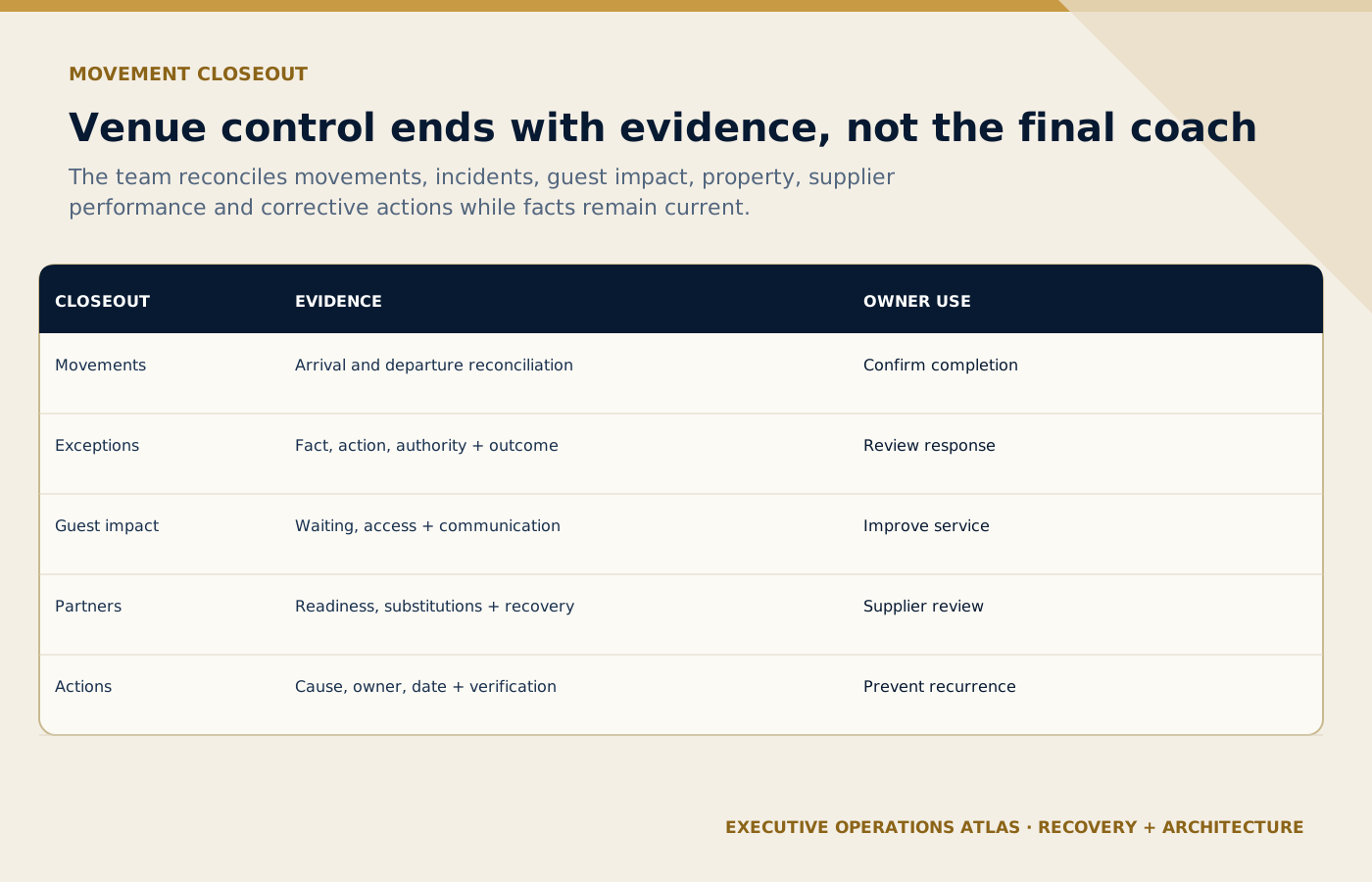
The operation closes through reconciled movements, current facts, guest-impact evidence and owned corrective actions.
On small screens, scroll the diagram horizontally to read its labels.
#Close the venue movement with evidence
The event day is not complete when the final coach leaves.
The venue control team should record:
- Actual coach arrivals
- Unloading delays
- Security processing
- Registration performance
- Badge problems
- VIP and speaker movements
- Accessibility delivery
- Session changes
- Catering issues
- Lost-property cases
- Medical incidents
- Return movements
- Additional costs
- Supplier performance
- Guest complaints
- Open follow-up actions
#Practical scenario
Illustrative scenario
Operational teaching scenario, not a documented incident. Uncited figures and outcomes are illustrative assumptions.
- Situation
All sessions finish and every delegate returns to a hotel.
- Evidence
The report says:
Venue operations successful.
A deeper review finds:
- Six coaches arrived outside their allocated windows.
- Registration technology failed for 20 minutes.
- One accessible route was blocked.
- Two ballroom signs remained incorrect after a change.
- A speaker reached the stage only three minutes before the session.
- Three return coaches departed with incorrect counts.
- Several guests received inconsistent dinner instructions.
The event was completed.
The system still needs improvement.
Check the approved delegate requirements, venue confirmation, access or capacity limits and the latest movement or registration record.
- Decision
Decide whether the planned venue handover remains feasible or needs an approved alternative before making a guest promise.
- Action
Coordinate the venue, registration and movement owners; communicate the approved arrangement and record unresolved dependencies.
- Verification
Confirm the delegate reaches the intended service point and that the responsible venue or registration team has accepted the handover.
#Corrective-action questions
Ask:
- Why did coaches miss their windows?
- Was the holding location practical?
- Was registration backup sufficient?
- Were staff deployed to the real pressure points?
- Did every programme change have one version?
- Were accessible routes inspected?
- Were return movements controlled?
- Which guest messages caused confusion?
- Which costs should be included next time?
- Which suppliers require a performance review?
#Related reading
For turning operating performance into a visible live dashboard, read:
#A practical venue-operations checklist
#Seven to fourteen days before
- Complete the physical venue inspection.
- Confirm contracted spaces.
- Confirm coach access.
- Confirm holding locations.
- Confirm security and registration capacity.
- Confirm signage positions.
- Confirm accessibility routes.
- Confirm VIP and speaker entrances.
- Confirm catering flow.
- Confirm emergency procedures.
- Confirm evening departure area.
- Confirm return coach staging.
- Confirm event permissions and venue requirements.
- Confirm client approval authority.
#Seventy-two hours before
- Reconcile delegate numbers.
- Confirm arrival waves.
- Confirm hotel departure schedule.
- Confirm coach details.
- Confirm staff deployment.
- Confirm registration system.
- Download offline delegate lists.
- Print backup badges.
- Confirm programme version.
- Review room capacities.
- Review speaker movements.
- Review dietary requests.
- Review accessibility requirements.
#Twenty-four hours before
- Walk the venue route again.
- Check every sign.
- Test communications.
- Confirm registration equipment.
- Confirm security opening.
- Confirm venue control room.
- Confirm coach-bay staff.
- Confirm holding locations.
- Confirm emergency contacts.
- Confirm catering timings.
- Confirm return movements.
- Issue the final operating version.
#Before the first coach
- Open venue control.
- Position staff.
- Test radios or group communications.
- Confirm entrance.
- Confirm coach bay.
- Confirm security.
- Confirm registration.
- Confirm main hall.
- Confirm accessible route.
- Confirm signage.
- Confirm VIP and speaker readiness.
- Confirm the first hotel departures.
#During arrivals
- Receive coaches by movement code.
- Record actual arrival.
- Complete safe unloading.
- Clear the vehicle.
- Monitor security.
- Monitor registration.
- Control overflow.
- Update later arrivals.
- Protect accessibility.
- Record exceptions.
#During the programme
- Monitor session changes.
- Control breakout transitions.
- Monitor catering flow.
- Support speakers.
- Maintain signage.
- Manage lost property.
- Prepare return movements.
- Update hotel desks.
- Protect the approved programme version.
#Before departure
- Confirm return coach staging.
- Confirm driver availability.
- Display hotel movement signs.
- Issue first and final calls.
- Complete passenger counts.
- Record independent travellers.
- Assign recovery vehicles.
- Inform receiving hotels.
- Release vehicles in sequence.
#After the final departure
- Confirm hotel receipts.
- Close open delegate cases.
- Reconcile lost property.
- Record incidents.
- Record additional services.
- Review supplier performance.
- Prepare the venue operations report.
- Assign corrective actions.
#The idea behind strong venue operations
A successful venue day is not only about opening the ballroom doors and beginning the programme on time.
It is about connecting every step around the programme.
The coach reaches the correct bay.
The delegate knows where to walk.
Security is ready.
Registration has a backup.
The badge is correct.
The accessible route is clear.
The speaker reaches the stage.
The lunch queue keeps moving.
The session change is easy to understand.
The return coach is simple to find.
When something changes, the delegate receives one calm and useful explanation.
That is the real purpose of venue movement control:
To turn a large conference venue into a journey that feels clear, human and easy to follow from the coach bay to the conference seat—and safely back to the hotel again.
Connect this guide to your next step
Continue with related methods and the wider series.
- Series guideAbu Dhabi MICE Operations in Practice
Explore the complete series and its reading order.
- Related guideFrom Hotel Lobby to Coach Door
Managing MICE Hospitality Desks, Delegate Readiness and Controlled Departures in Abu Dhabi
- Related guideBefore the Delegate Reaches the Hotel
It continues while the delegate moves through immigration, waits for baggage, searches for the event sign, meets the airport representative and boards the transfer vehicle.
Put this article into practice
- Control the handover from coach arrival through delegate flow to registration and conference entry.
- Complete the physical venue inspection.
- Confirm contracted spaces.
- Confirm coach access.
Your next step
Use this connected method when you are ready to prepare backup options, escalation decisions and recovery communication for changes to the approved programme.
Continue to When the MICE Plan Changes