

- Who this helps
- Guide supervisors, tourism quality managers and trainers.
- What you can do
- Use a ten-pillar framework to define guide-quality measures, review field evidence and target coaching and improvement.
#Estimated article reading time
#Why tour guide quality needs a better system
A great tour guide does far more than speak into a microphone. A great guide prepares before the day starts, reads the booking carefully, understands the route, checks attraction rules, coordinates with the driver, welcomes guests with confidence, manages time, protects safety, tells meaningful stories, handles problems calmly, and documents what happened after the service.
Related reading: If you want to separate guide quality from role confusion, read Gate Man, Sign Man, Transfer Guide, Hotel Rep, Travel Desk, Tour Leader and Tour Guide. For storytelling preparation, continue with Beyond the Script.
Guest feedback is important. A five-star review matters. A complaint matters. A returning customer matters. But these indicators do not always show the full reality of the tour. Sometimes a guide receives a high review because they were friendly, even if timing, safety, or SOP compliance was weak. Sometimes a guide receives a lower review because of traffic, weather, attraction congestion, or late guests, even though they handled the pressure professionally.
The goal is not to punish guides. The goal is to improve quality, recognize strong performance, and identify where support is needed.
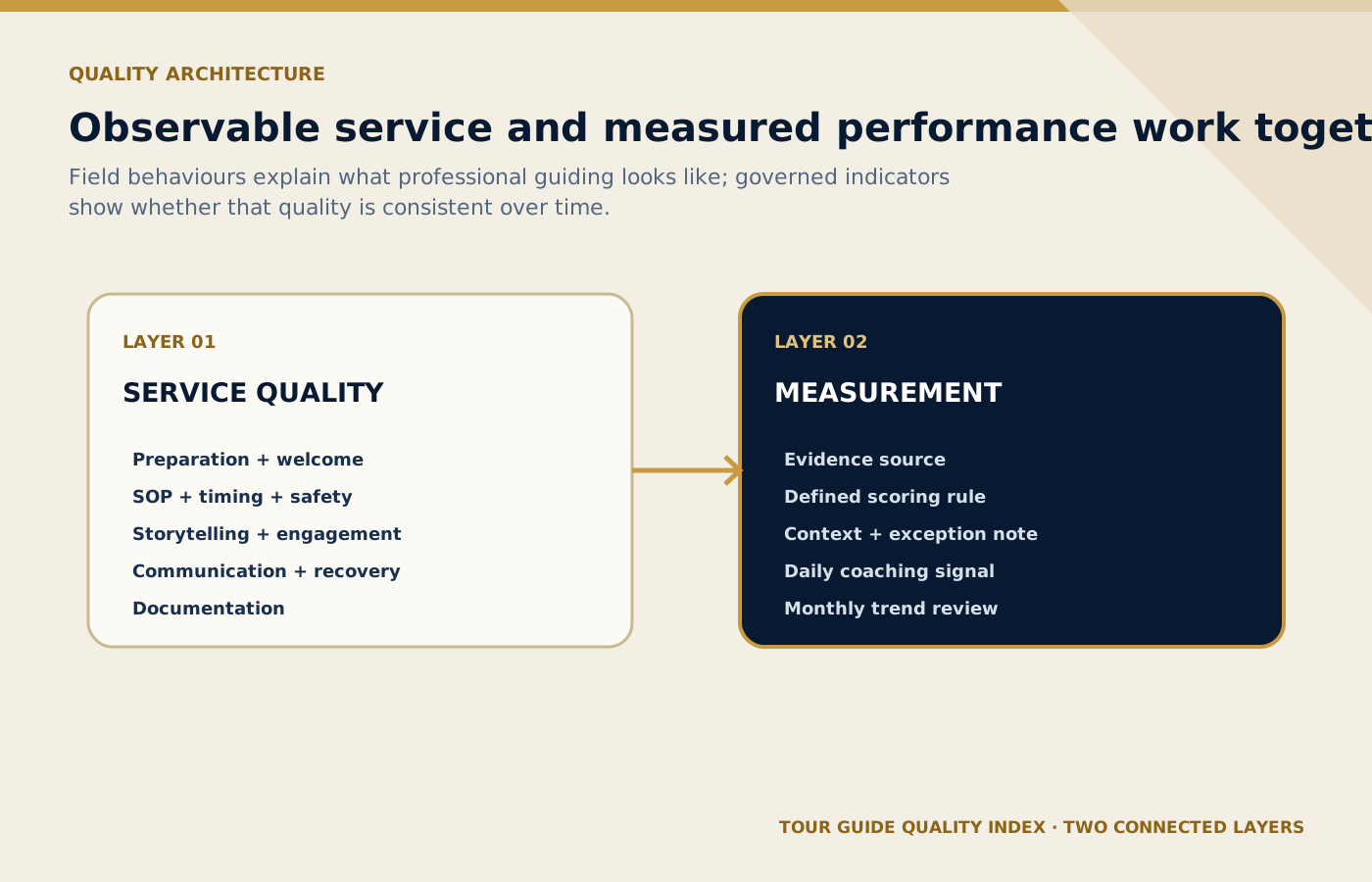
The service layer defines professional behaviour in the field; the measurement layer makes patterns visible without replacing supervisor judgement.
On small screens, scroll the diagram horizontally to read its labels.
#The two layers of the Tour Guide Quality Index
The framework works in two connected layers. The first layer is the service quality pillar layer: the practical behaviours that make a guide professional in the field. The second layer is the KPI layer: the measurable indicators that help supervisors and companies track performance over time.
The service pillars explain what good guiding looks like. The KPIs explain how to measure it consistently.
#Pre-Tour Readiness
Pre-Tour Readiness measures a guide’s practical field behaviour, decision quality, and impact on the guest experience. It should be scored with evidence and context: what happened, how the guide acted, and how the action affected the guest and operation.
Preparation, clarity, timing, safety, communication, guest comfort, and how the guide protects the experience in real conditions.
Use observable actions, not only personal opinion. The score should support coaching and operational learning.
#Maged Prepared Before the Pressure Started
Maged reviewed the booking, mosque rules, ticket sequence, lobby instruction, and driver contact before a French city tour. When one guest needed dress-code adjustment, he handled it at the hotel before the group reached the entrance.
#Guest Welcome
Guest Welcome measures a guide’s practical field behaviour, decision quality, and impact on the guest experience. It should be scored with evidence and context: what happened, how the guide acted, and how the action affected the guest and operation.
Preparation, clarity, timing, safety, communication, guest comfort, and how the guide protects the experience in real conditions.
Use observable actions, not only personal opinion. The score should support coaching and operational learning.
#Asmaa Changed the Mood in the First Five Minutes
A mixed group arrived quiet after a longer pickup route. Asmaa smiled, introduced herself, explained the plan, timing, highlights, and dress-code reminder before heavy history. The mood changed because the group felt someone was in control.
#SOP Compliance
SOP Compliance measures a guide’s practical field behaviour, decision quality, and impact on the guest experience. It should be scored with evidence and context: what happened, how the guide acted, and how the action affected the guest and operation.
Preparation, clarity, timing, safety, communication, guest comfort, and how the guide protects the experience in real conditions.
Use observable actions, not only personal opinion. The score should support coaching and operational learning.
#Ahmed Protected the Mosque Rule Without Embarrassing Guests
At Sheikh Zayed Grand Mosque, Ahmed explained the dress code calmly as a cultural and religious requirement, not a personal judgement. Guests adjusted, entry stayed smooth, and dignity was protected.
#Storytelling
Storytelling measures a guide’s practical field behaviour, decision quality, and impact on the guest experience. It should be scored with evidence and context: what happened, how the guide acted, and how the action affected the guest and operation.
Preparation, clarity, timing, safety, communication, guest comfort, and how the guide protects the experience in real conditions.
Use observable actions, not only personal opinion. The score should support coaching and operational learning.
#John Turned Qasr Al Watan Into a Conversation
John connected Qasr Al Watan with governance, craftsmanship, symbolism, knowledge, and national identity. Guests asked questions because the stop became meaningful, not only beautiful.
#Timing Discipline
Timing Discipline measures a guide’s practical field behaviour, decision quality, and impact on the guest experience. It should be scored with evidence and context: what happened, how the guide acted, and how the action affected the guest and operation.
Preparation, clarity, timing, safety, communication, guest comfort, and how the guide protects the experience in real conditions.
Use observable actions, not only personal opinion. The score should support coaching and operational learning.
#Moamen Kept a Photo-Loving Group on Schedule
Moamen handled repeated photo stops with clear expectations, friendly reminders, and driver coordination. He protected the final drop-off without making guests feel rushed.
#Safety Management
Safety Management measures a guide’s practical field behaviour, decision quality, and impact on the guest experience. It should be scored with evidence and context: what happened, how the guide acted, and how the action affected the guest and operation.
Preparation, clarity, timing, safety, communication, guest comfort, and how the guide protects the experience in real conditions.
Use observable actions, not only personal opinion. The score should support coaching and operational learning.
#Asmaa Noticed Heat Fatigue Before It Became an Incident
During a hot outdoor stop, Asmaa noticed a guest slowing down. She shortened the explanation, moved the group into shade, and created a water break before the situation became an incident.
#Communication
Communication measures a guide’s practical field behaviour, decision quality, and impact on the guest experience. It should be scored with evidence and context: what happened, how the guide acted, and how the action affected the guest and operation.
Preparation, clarity, timing, safety, communication, guest comfort, and how the guide protects the experience in real conditions.
Use observable actions, not only personal opinion. The score should support coaching and operational learning.
#Ahmed Turned a Late Family Into a Controlled Operation
A family was delayed while the driver and other guests waited. Ahmed updated operations, informed the driver, adjusted first-stop timing, and explained politely to the group without blaming anyone.
#Service Recovery
Service Recovery measures a guide’s practical field behaviour, decision quality, and impact on the guest experience. It should be scored with evidence and context: what happened, how the guide acted, and how the action affected the guest and operation.
Preparation, clarity, timing, safety, communication, guest comfort, and how the guide protects the experience in real conditions.
Use observable actions, not only personal opinion. The score should support coaching and operational learning.
#Maged Recovered the Tour After Traffic Pressure
Traffic pushed the tour behind schedule. Maged stayed calm, adjusted the visit order, protected the most important stops, and explained the new plan clearly.
#Guest Engagement
Guest Engagement measures a guide’s practical field behaviour, decision quality, and impact on the guest experience. It should be scored with evidence and context: what happened, how the guide acted, and how the action affected the guest and operation.
Preparation, clarity, timing, safety, communication, guest comfort, and how the guide protects the experience in real conditions.
Use observable actions, not only personal opinion. The score should support coaching and operational learning.
#John Changed the Style When Children Lost Focus
John noticed children losing attention during a family tour. He shifted to short questions, small stories, and simple visual clues so the children rejoined the experience.
#Documentation
Documentation measures a guide’s practical field behaviour, decision quality, and impact on the guest experience. It should be scored with evidence and context: what happened, how the guide acted, and how the action affected the guest and operation.
Preparation, clarity, timing, safety, communication, guest comfort, and how the guide protects the experience in real conditions.
Use observable actions, not only personal opinion. The score should support coaching and operational learning.
#Moamen’s Report Fixed a Repeated Pickup Confusion
After a hotel pickup confusion, Moamen documented the exact location problem and recommended future instructions. Operations updated the note and reduced the chance of repeat confusion.
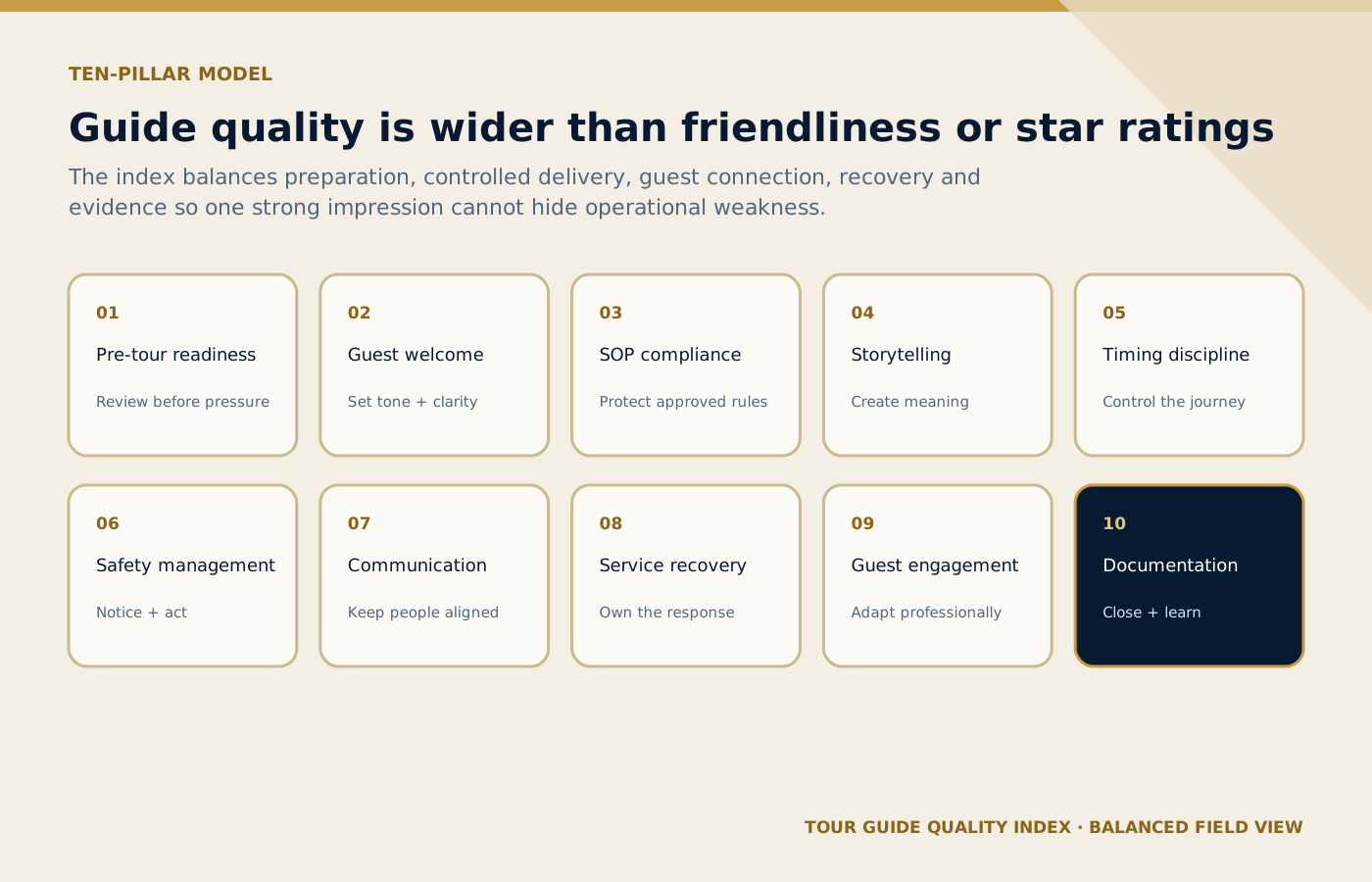
A balanced field view prevents friendliness or one guest rating from hiding weaknesses in safety, timing, compliance, recovery or documentation.
On small screens, scroll the diagram horizontally to read its labels.
#From quality pillars to measurable KPIs
The ten pillars explain the behaviours of an excellent guide. A professional quality system also needs measurable KPI families: customer satisfaction and feedback, operational efficiency and punctuality, professionalism and knowledge, engagement and communication, and optional sales contribution where relevant.
Sales contribution can be useful in some business models, especially where guides support optional tours, upgrades, retail, or future bookings. However, it should be treated as an optional business layer, not the heart of guide quality. The foundation must always be guest care, safety, professionalism, and destination respect.
#How to score the Tour Guide Quality Index
A simple scoring system can use a 1–10 scale. The score should support coaching, not replace professional judgement. The higher-weight pillars carry stronger operational risk: SOP compliance, timing, safety, and service recovery can strongly affect the full guest experience and company reputation.
| Pillar | Recommended weight |
|---|---|
| Pre-Tour Readiness | 10% |
| Guest Welcome | 8% |
| SOP Compliance | 12% |
| Storytelling | 10% |
| Timing Discipline | 12% |
| Safety Management | 12% |
| Communication | 10% |
| Service Recovery | 10% |
| Guest Engagement | 8% |
| Documentation | 8% |
Scroll horizontally to read every column. Keyboard: focus the table, then use the arrow keys.
What to learn: Read each row across to connect Pillar with Recommended weight. Compare the rows to identify the relevant pillar for your situation; use the accompanying section to interpret the result.
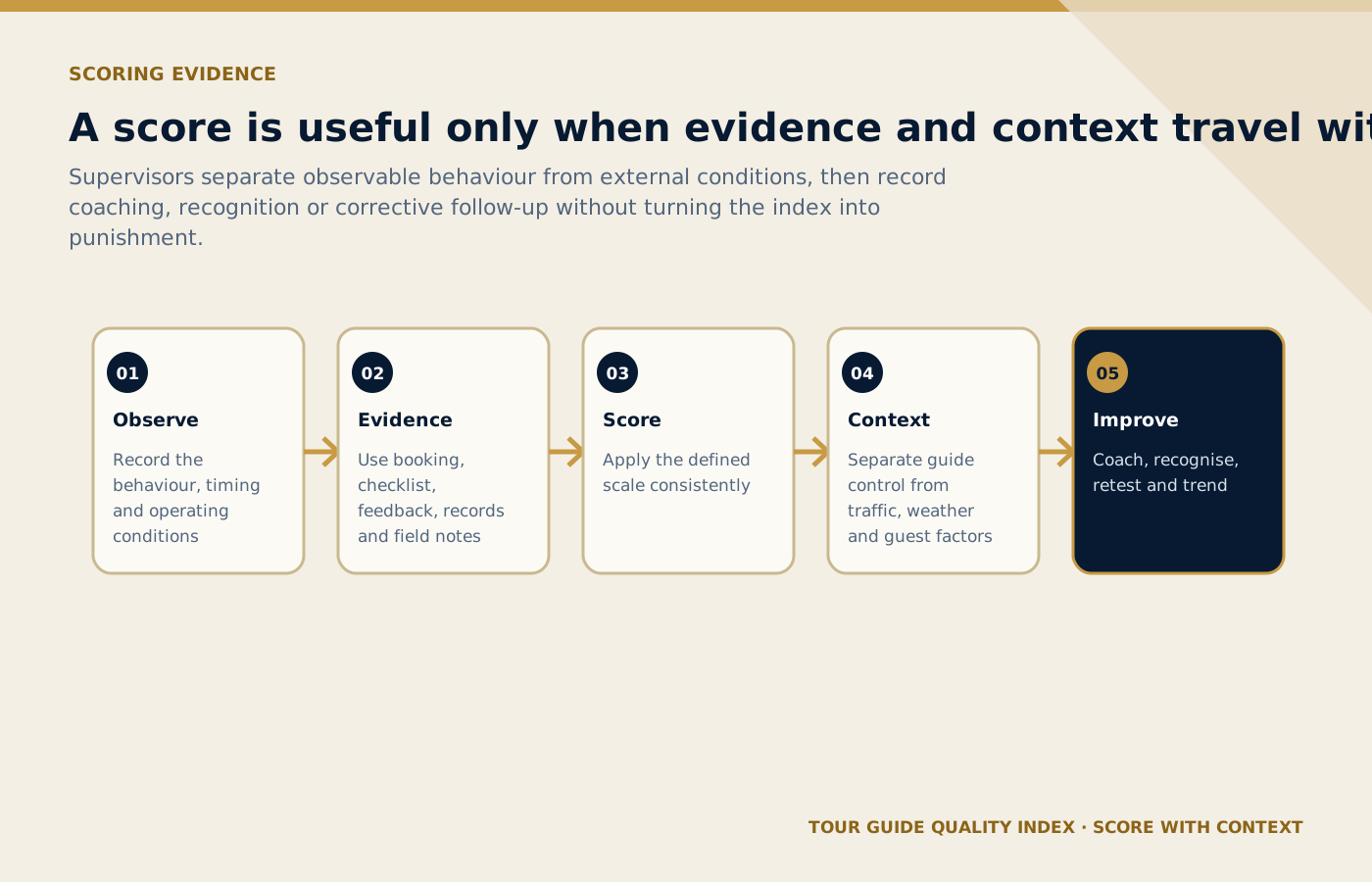
Scores travel with observable evidence and operating context so the index supports fair coaching, recognition and controlled follow-up.
On small screens, scroll the diagram horizontally to read its labels.
#Daily vs monthly tracking
Not every KPI needs the same tracking rhythm. Daily tracking is best for complaints, delays, incidents, guest issues, service recovery notes, lost items, and operational problems. Monthly tracking is best for CSAT, NPS, repeat customer rate, guide quality score, knowledge score, engagement score, and training trends.
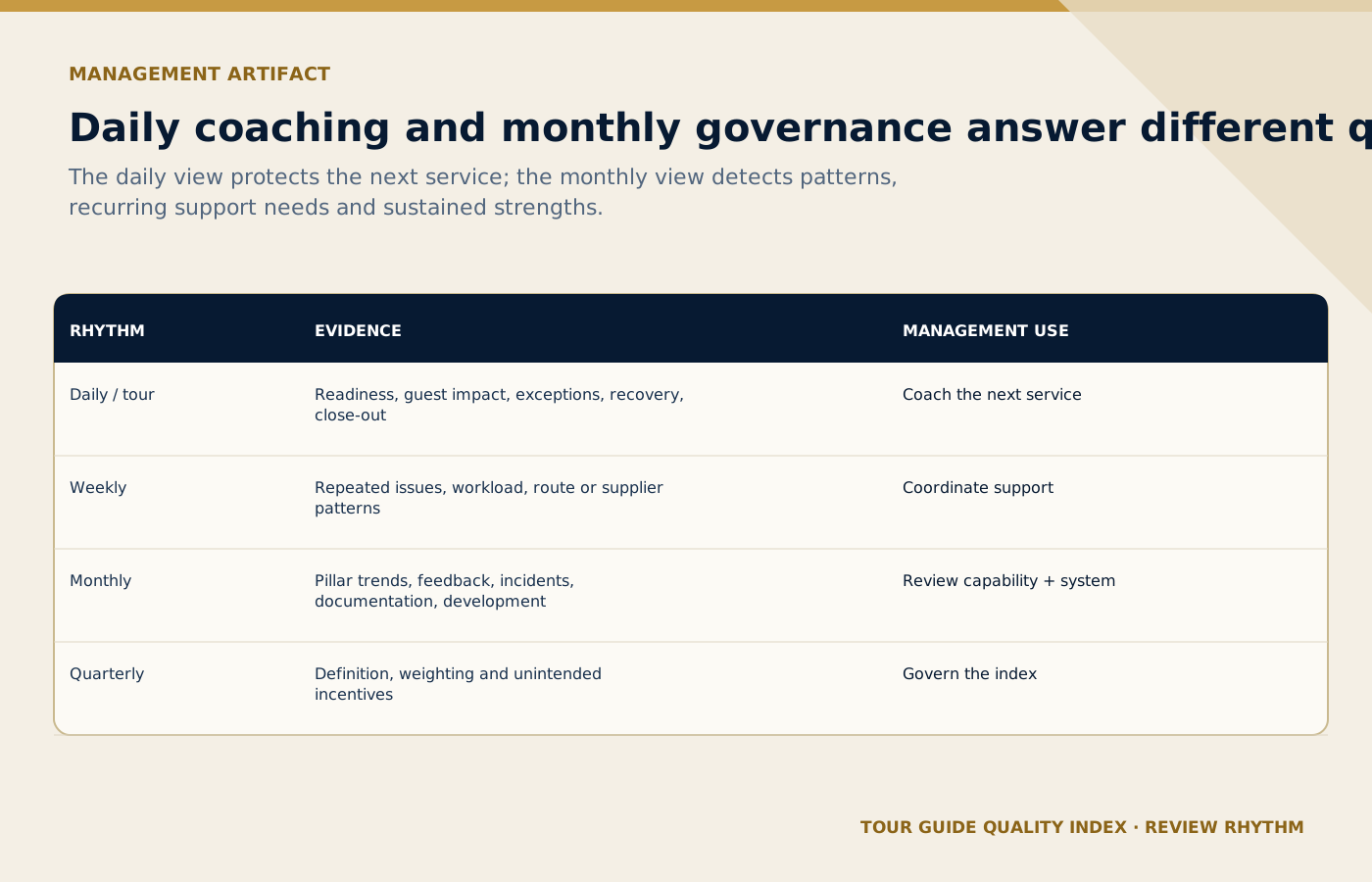
Daily review protects the next service while longer review cycles identify recurring system patterns, development needs and unintended scoring incentives.
On small screens, scroll the diagram horizontally to read its labels.
#Workbook recommendation
To make the framework practical, each service can become one row in an Excel workbook: service date, booking reference, tour type, guide name, driver name, guest count, pickup location, route, KPI scores, final quality score, complaint flag, recovery flag, guest feedback, supervisor notes, and follow-up action.
The dashboard can show average guide score, score by pillar, score by guide, complaints by route, repeated issues, monthly trends, and training priorities.
#Final reflection
A great tour guide does not only speak. A great guide prepares, welcomes, protects standards, tells stories, manages time, watches safety, communicates clearly, recovers problems, engages the group, and documents what happened.
The Tour Guide Quality Index gives tourism teams a practical way to move from informal judgement to structured quality management. It helps supervisors coach better, helps guides understand expectations, helps companies identify operational weaknesses, and helps guests receive a more consistent experience.
#Explore the connected product thinking
The same structured thinking behind the Tour Guide Quality Index also supports InfraDispatch: clear planning, stronger communication, route logic, and better field execution.
Connect this guide to your next step
Continue with related methods and the wider series.
- Related guideBeyond the Script: How Great Tour Guides Turn Key Facts into Experiences Guests Remember
Why the best tour guides do not memorise every word — and what they should prepare instead
- Related guideTourism Operations Roles: Responsibilities and Differences
A clear comparison of tourism operations roles, responsibilities, decision rights and the handovers between them.
- Related guideFrom Airport Arrival to Final Farewell | Destination Experience Journey Map
A practical long-form article built around Abu Dhabi destination operations, guest journey mapping, tour guide quality, dispatch planning, service recovery and pricing discipline.
Put this article into practice
- Define the quality criteria before assessing a guide.
- Collect field observations and guest evidence across the ten pillars.
- Calibrate scoring and separate a single incident from a recurring pattern.
- Agree a coaching action and a follow-up observation with an owner.
Your next step
Use this connected method when you are ready to prepare a storytelling system that supports accurate content, flexible delivery and guest engagement.
Review Beyond the Script: How Great Tour Guides Turn Key Facts into Experiences Guests Remember