

- Who this helps
- Tourism process owners, guest-experience teams and SOP writers.
- What you can do
- Map the guest experience and turn pain points and moments of truth into operational requirements for the SOP.
#The guest does not experience departments
A guest books through one company, receives a message from another, meets a representative wearing a third brand, travels in a supplier’s vehicle, checks into a hotel, joins an excursion, and contacts a call centre when something changes.
Internally, these may be separate contracts, departments, systems, and procedures. To the guest, they become one journey.
This creates an important risk in SOP design. Teams write procedures around internal responsibility:
- Reservations sends confirmation.
- Operations assigns transport.
- The airport team meets the guest.
- The driver completes the transfer.
- The hotel handles check-in.
Every team may complete its step, yet the guest may still receive contradictory times, unclear meeting instructions, repeated questions, inaccessible transport, silence during delay, or a handoff in which no one appears responsible.
Customer journey mapping helps the organization see the experience across those boundaries. It does not replace process mapping. It adds a different lens: what the guest is trying to achieve, what the guest sees and feels, which information is needed, where trust increases or decreases, and how backstage operations create the visible moment.
ISO 23592:2021 describes a service-excellence model focused on outstanding customer experience. ISO/TS 24082:2021 addresses activities for designing excellent service. ISO 21902:2021 establishes requirements and recommendations for accessible tourism across the supply chain. Together, these sources reinforce a practical principle: service design must consider the complete experience, not only internal task completion.
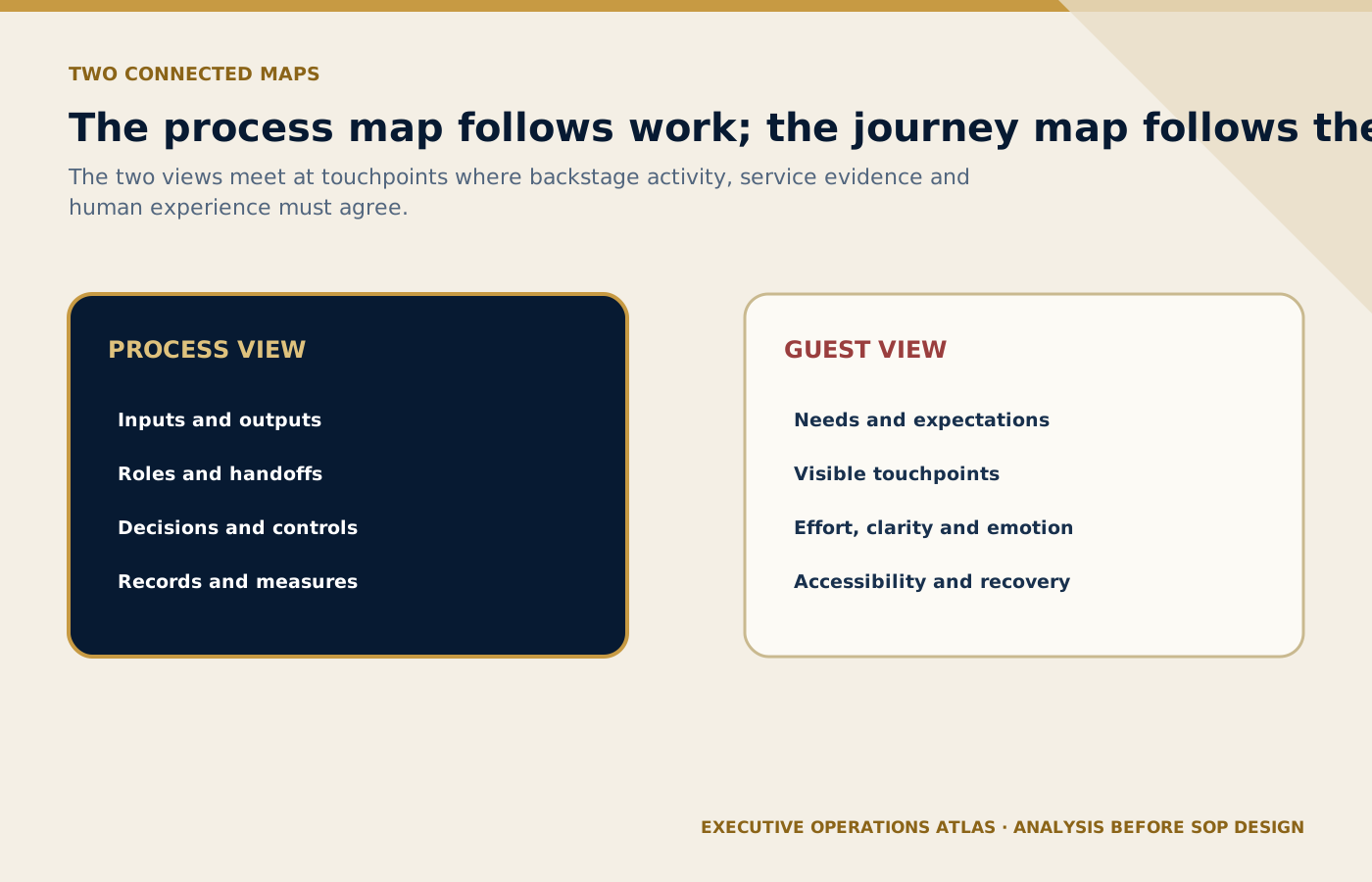
Process and journey maps meet at the touchpoints where operating controls and guest experience must agree.
On small screens, scroll the diagram horizontally to read its labels.
#Process map and journey map: connected but different
A process map asks:
- What triggers the work?
- Which inputs, activities, roles, decisions, and outputs are involved?
- Where are the controls, records, and measures?
A journey map asks:
- What is the guest trying to do?
- What does the guest see, hear, receive, and understand?
- What does the guest need physically, emotionally, informationally, and functionally?
- Where does the guest wait, repeat information, or lose confidence?
- Which moments matter most to trust and memory?
The maps should be connected. The guest’s need for a clear meeting point should link to the backstage process that creates, verifies, and sends the instruction. The guest’s need for accessible transport should link to requirement capture, supplier confirmation, assignment, readiness, and field delivery. The guest’s need for honest delay information should link to monitoring, authority, message templates, update frequency, and evidence.
Procedures, Processes and Process Maps: What Is the Difference? provides the process foundation.
#Define the journey and the guest outcome
Avoid mapping “the tourist experience” as one enormous journey. Choose a clear scenario, segment, and boundary.
Example journey:
An international conference delegate travels from pre-arrival communication through airport meeting, transfer, hotel arrival, daily event movements, disruption, departure, and post-service feedback.
The outcome might be:
The delegate can understand and navigate each stage, receive the promised support, move safely and accessibly, know what happens next, and trust that the operating team will respond when conditions change.
Define variations that materially affect the journey:
- first-time vs repeat visitor;
- individual vs group;
- guest language;
- mobility, sensory, cognitive, or other access requirements;
- child, older traveler, or unaccompanied participant;
- VIP, speaker, crew, or standard delegate;
- private vs shared transport;
- direct booking vs B2B partner; and
- normal vs disrupted service.
Do not use personas to stereotype nationality, age, disability, or spending level. Personas should represent relevant needs and behaviors supported by evidence.
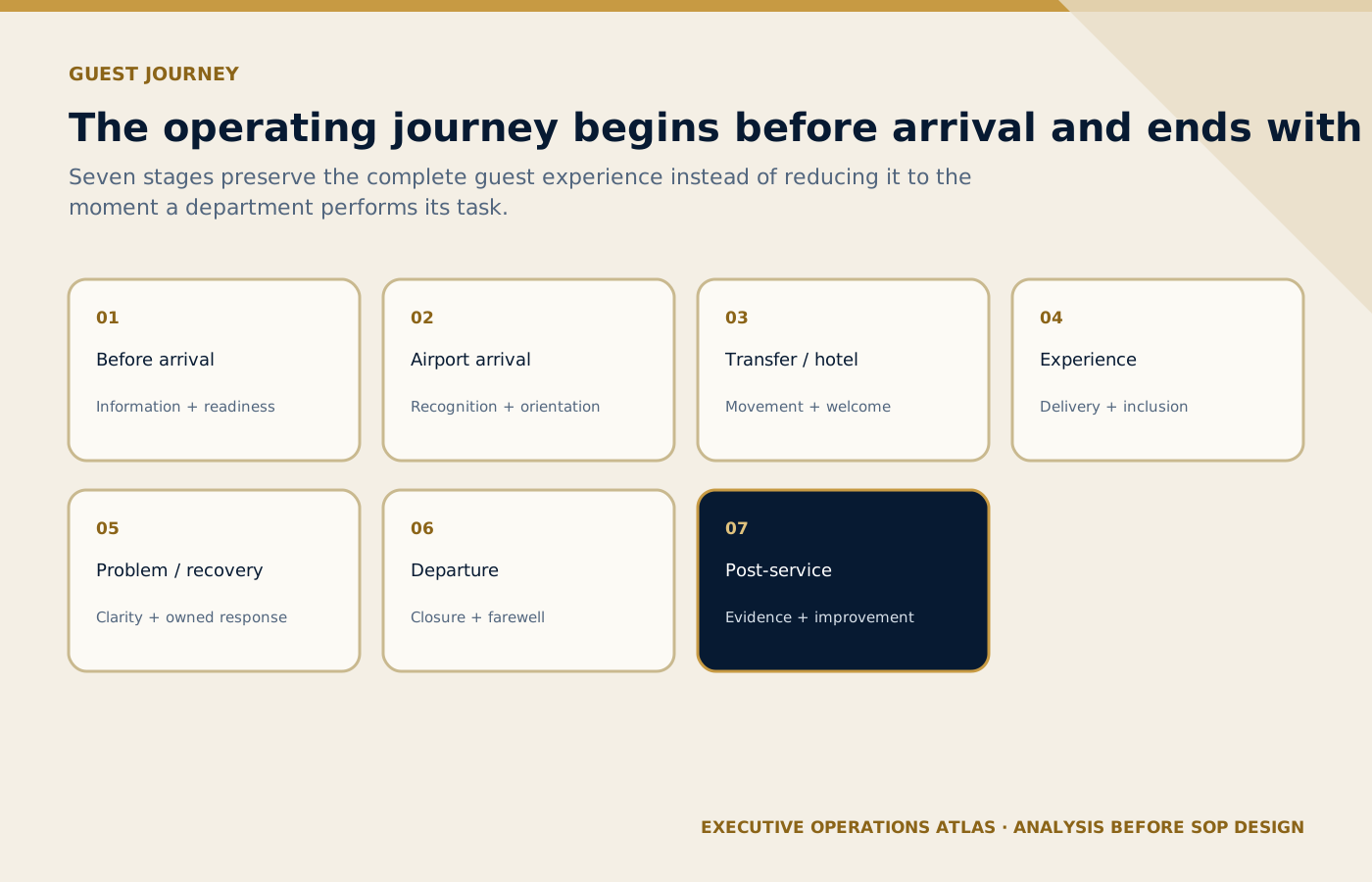
The complete journey begins before the guest arrives and closes only when service evidence reaches improvement.
On small screens, scroll the diagram horizontally to read its labels.
#Build the journey in stages
#Before arrival
The guest needs confidence that the booking is correct and the arrival process is understandable.
Possible touchpoints:
- confirmation;
- itinerary or programme;
- pickup instructions;
- visa or entry information where within company scope;
- accessibility and assistance confirmation;
- emergency and after-hours contact;
- what-to-bring guidance; and
- change notifications.
Backstage controls include information validation, approved templates, translation review, timing, privacy, client approval, and version control.
#Airport arrival
The guest needs to find the team, understand the next step, receive appropriate assistance, and know what happens if baggage or immigration takes longer.
Touchpoints include signage, representative visibility, meeting point, greeting, luggage coordination, waiting, and the route to the vehicle.
Backstage controls include flight monitoring, terminal verification, staff positioning, manifest control, guest search, baggage-delay response, accessible route/vehicle readiness, and dispatch communication.
The existing portfolio article Before the Delegate Reaches the Hotel provides a detailed operational application.
#Transfer and hotel arrival
The guest needs the correct vehicle, a professional introduction, safe and comfortable movement, relevant information, and a smooth handoff to the hotel.
Backstage controls include vehicle/driver/guide assignment, loading, luggage count, child-seat or accessibility checks, route monitoring, hotel approach, arrival status, and completion evidence.
#Experience or event delivery
The guest needs a realistic programme, clear meeting times, prepared staff, understandable commentary, reliable tickets, appropriate pacing, and support when plans change.
Backstage controls include itinerary feasibility, supplier confirmation, guide briefing, attraction rules, capacity, timing, communication, and service recovery.
#Problem and recovery
The guest needs acknowledgment, truthful information, a realistic next step, continuity of care, and a sense that someone owns the problem.
Backstage controls include incident categorization, escalation, decision authority, approved response options, update timing, evidence, recovery cost, and closure.
#Departure and final farewell
The guest needs accurate pickup timing, confidence about luggage and flight requirements, punctual movement, and a clear final handoff.
Departure is often more time-sensitive than arrival. The process must account for flight, terminal, travel time, group readiness, vehicle loading, and contingency.
#Post-service learning
The guest may receive a thank-you, feedback request, complaint response, or lost-property update. Internally, the company closes records, analyzes performance, reviews suppliers, and converts learning into change.
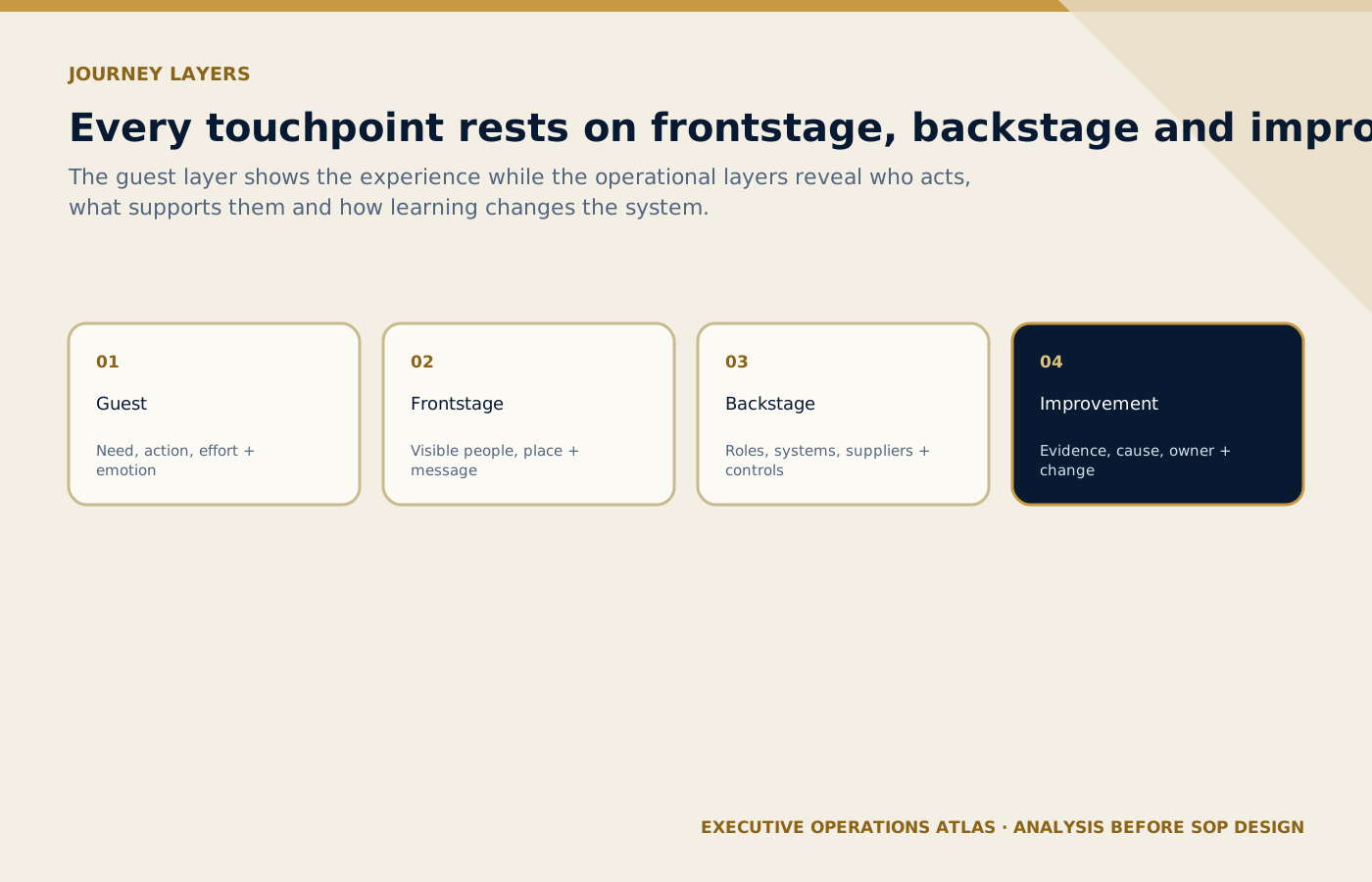
Visible service rests on backstage people, systems, suppliers and a learning route that changes the controlled method.
On small screens, scroll the diagram horizontally to read its labels.
#Add the backstage layers
A useful tourism journey map has more than a line of emotions.
#Guest layer
- goal;
- action;
- touchpoint/channel;
- question or information need;
- physical and accessibility need;
- emotion or confidence;
- pain point; and
- desired experience.
#Frontstage layer
- employee or supplier the guest sees;
- visible action;
- spoken or written communication;
- timing or service standard; and
- recovery behavior.
#Backstage layer
- process activity;
- owner;
- system and source of truth;
- supplier dependency;
- decision/authority;
- risk/control;
- record; and
- measure.
#Improvement layer
- identified gap;
- proposed change;
- owner;
- priority;
- validation method; and
- effect on the SOP, instruction, checklist, form, template, training, or KPI.
This structure connects experience insight to implementable operating change.
#Use evidence to build the journey
#Guest research
Use interviews, feedback, complaint narratives, survey comments, accessibility feedback, and observation. Ask about the sequence, not only satisfaction.
Questions include:
- What were you trying to do?
- What did you expect next?
- Which instruction was clear or unclear?
- When did you feel uncertain?
- Did you know who was responsible?
- Were your access or communication needs understood?
- What helped restore confidence?
#Operational evidence
Use timelines, manifests, call logs, message histories, incident records, supplier confirmations, and system timestamps. Protect personal information and obtain appropriate authorization.
#Employee and supplier insight
Front-line people often know where guests become confused. They also understand constraints that journey workshops may overlook: airport access, hotel loading points, venue security, route conditions, system limits, staffing windows, and contract boundaries.
#Direct observation
Walk the journey where possible. Try to find the meeting point using the actual message. Follow the accessible route. Observe where signage stops. Watch the hotel-departure flow. Test a contact channel after hours.
Do not assume that a documented service is findable or usable.
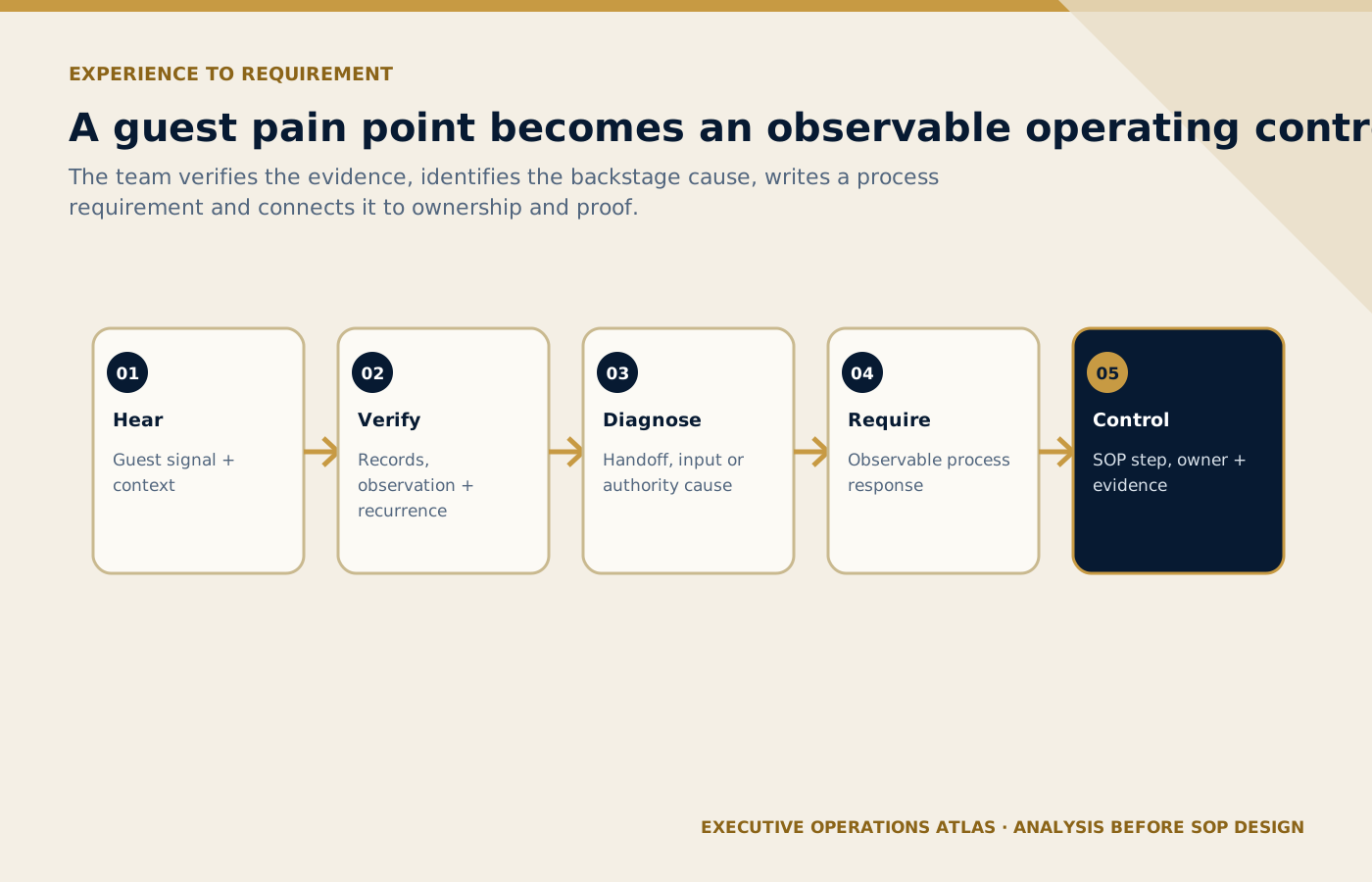
Experience evidence becomes useful when it produces an observable response, accountable owner and proof of control.
On small screens, scroll the diagram horizontally to read its labels.
#Translate guest pain points into process requirements
#Pain point: “I did not know where to meet the representative.”
Do not solve this only by rewriting the message.
Check:
- who owns meeting-point accuracy;
- how terminal or location changes are monitored;
- whether the message uses guest-friendly landmarks;
- translation and accessibility;
- when the message is sent;
- whether the representative’s sign is consistent;
- what the guest does if the team is not visible; and
- how the company tests the instruction.
#Pain point: “I repeated my needs to several people.”
Map requirement capture, consent, privacy, handoff, supplier acceptance, and field confirmation. Repetition may indicate that teams do not trust the data or cannot access it.
#Pain point: “No one told us why the coach was late.”
Map detection, escalation, decision authority, communication ownership, update interval, approved message, and alternative. The issue may be missing operational information, not employee attitude.
#Pain point: “Everyone completed a form, but nobody owned the problem.”
Clarify case ownership, handoff acceptance, closure, and follow-up. Documentation without accountability creates administrative service rather than recovery.
#Design accessible journeys as a system
Accessibility cannot be a final checklist item. It must flow through policy, product information, booking, communication, transport, venue/hotel interfaces, staff competence, supplier confirmation, emergency planning, and feedback.
Ask at each stage:
- Can the guest obtain and understand the information?
- Can the guest communicate requirements through an appropriate channel?
- Is consent and privacy handled correctly?
- Does the next provider receive and accept the requirement?
- Is the physical route and service suitable?
- Is a dignified alternative available if the plan fails?
- Are employees trained to assist without assumptions?
- Is the outcome recorded and reviewed?
ISO 21902 applies across tourism stakeholders and the supply chain. Organizations still need to validate local accessibility obligations, infrastructure, and individual arrangements with qualified expertise.
#Add emotion without becoming vague
Emotional mapping is useful when it leads to an operating question.
| Guest state | Operational interpretation |
|---|---|
| Uncertain before arrival | Confirmation, timing, contact, or expectation may be unclear. |
| Anxious at meeting point | Visibility, location, wait information, or ownership may be weak. |
| Frustrated during delay | Detection, update timing, explanation, or alternatives may be inadequate. |
| Excluded | Access needs may not have been captured, accepted, or delivered. |
| Reassured during recovery | Ownership, empathy, truthful information, and next action are working. |
| Confident at departure | Timing, readiness, instructions, and handoff are controlled. |
Scroll horizontally to read every column. Keyboard: focus the table, then use the arrow keys.
What to learn: Read each row across to connect Guest state with Operational interpretation. Compare the rows to identify the relevant guest state for your situation; use the accompanying section to interpret the result.
Do not invent emotions for a decorative curve. Use guest evidence and state uncertainty where research is limited.
#Convert the journey into SOP content
The journey map should change the procedure.
- Purpose and scope: include the intended guest outcome, not only internal completion.
- Definitions: clarify guest-facing terms that employees use differently.
- Responsibilities: assign communication and continuity of care across handoffs.
- Inputs: include access, language, contact, and expectation information.
- Procedure: place guest touchpoints and backstage actions in the same sequence.
- Exceptions: define what the guest is told, by whom, and when.
- Tools: design messages, signage, checklists, forms, and briefings around use.
- Records: capture facts and consent proportionately.
- KPIs: combine operational, guest, accessibility, and recovery measures.
- Training: practice communication and handoffs, not only system steps.
SOP Writing Part 4: Exception and Escalation Management expands the disruption layer.
#Measure the journey without reducing it to one score
Use a balanced set of indicators:
- booking/requirement completeness;
- pre-arrival message delivery and error rate;
- guest-location time;
- pickup and arrival performance;
- access-requirement confirmation and delivery;
- handoff acceptance;
- avoidable guest contacts or repeated information;
- delay-update timeliness;
- complaint and recovery themes;
- first-contact or end-to-end resolution where appropriate;
- supplier performance; and
- qualitative guest and employee insight.
The existing Tour Guide Quality Index shows how multiple quality dimensions can be made observable without pretending one number tells the entire story.
#Common mistakes
#Mapping a marketing persona instead of an operating journey
The map describes interests and social media but does not connect to service delivery, decisions, or records.
#Treating every guest as the same
Important variations disappear. Segment by needs relevant to the process.
#Mapping only visible touchpoints
The organization cannot implement improvement because backstage owners, systems, suppliers, and controls are missing.
#Adding emotion without evidence
The map becomes a colorful assumption. Combine guest and operational data.
#Solving communication problems with more messages
Guests receive repeated or conflicting updates. Fix source information and ownership first.
#Ignoring accessibility until the end
The company offers improvised assistance rather than a designed, dignified journey.
#Creating improvement ideas with no document impact
The workshop ends with sticky notes. Assign owners and specify which process, document, tool, training, or measure changes.
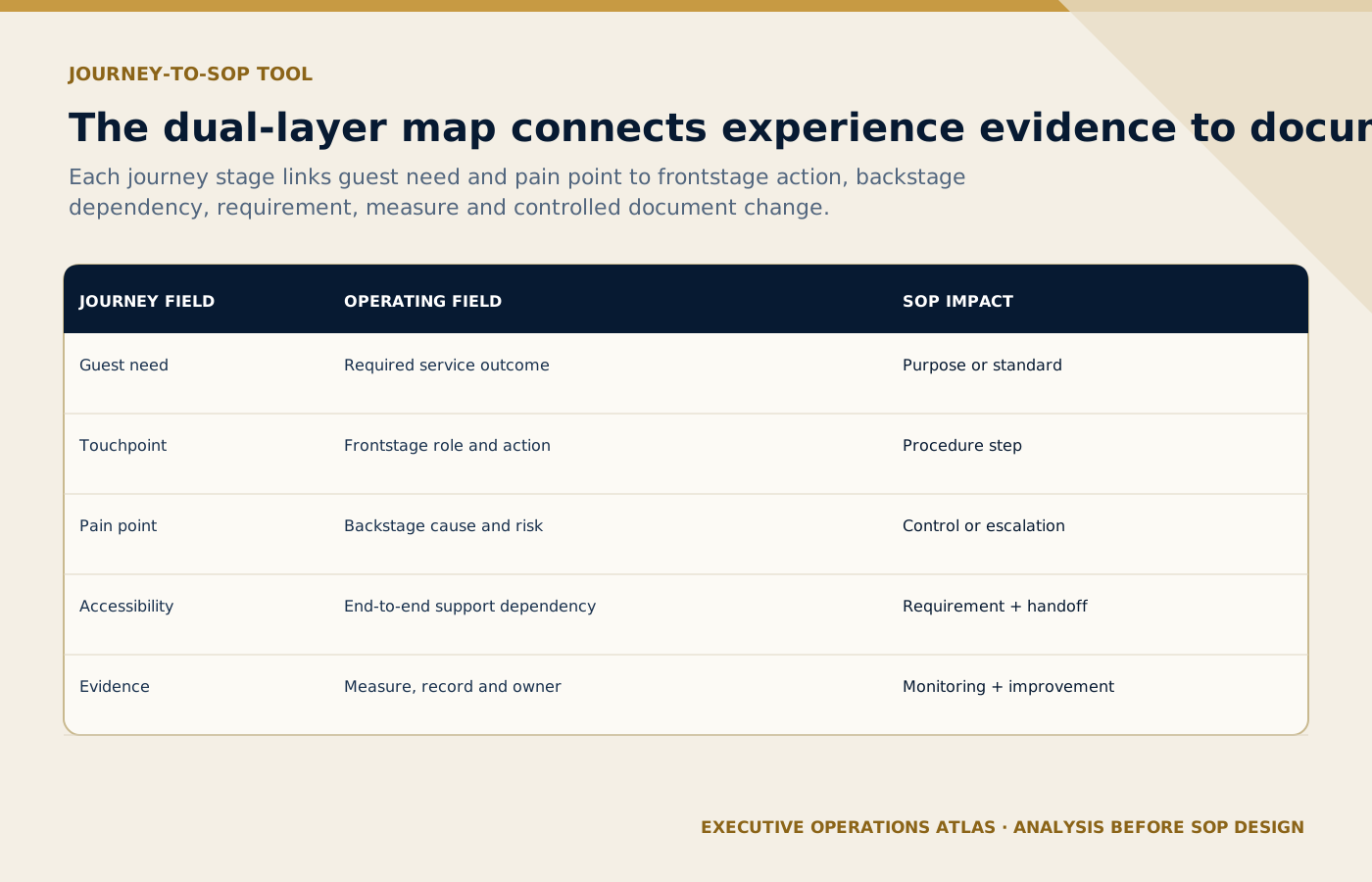
The tool links each guest-stage signal to the frontstage action, backstage dependency and controlled document impact.
On small screens, scroll the diagram horizontally to read its labels.
#Practical tool: Dual-Layer Tourism Journey-to-SOP Map
For each journey stage, complete both guest and operating fields.
| Guest/experience field | Backstage/SOP field |
|---|---|
| Guest goal | Process objective/output |
| Guest action | Process activity |
| Touchpoint/channel | Role, system, supplier |
| Information needed | Required input/source/verification |
| Access/communication need | Requirement capture, acceptance, and control |
| Question or uncertainty | Clarification owner and response standard |
| Emotion/confidence evidence | Risk, control, and recovery requirement |
| Pain point | Root process or handoff condition |
| Desired experience | Service standard and observable behavior |
| Recovery need | Trigger, authority, message, alternative, and evidence |
| Feedback | Record, KPI, review, and improvement action |
Scroll horizontally to read every column. Keyboard: focus the table, then use the arrow keys.
What to learn: Read each row across to connect Guest/experience field with Backstage/SOP field. Compare the rows to identify the relevant guest/experience field for your situation; use the accompanying section to interpret the result.
Test the map with one real guest journey and one disruption scenario before converting it into procedure changes.
#Final perspective
An SOP should help the organization deliver an intended experience, not only complete internal tasks.
Journey mapping makes the guest visible inside process design. It connects information, access, emotion, communication, trust, and recovery to the backstage roles, systems, suppliers, decisions, records, and measures that produce them.
When the journey and process are mapped together, the company can write procedures that work for operations and make sense to the person travelling through them.
- Procedures, Processes and Process Maps: What Is the Difference?
- Never Write an SOP Before Mapping the Process
- SOP Writing Part 4: Exception and Escalation Management
- Existing portfolio: From Airport Arrival to Final Farewell
- Existing portfolio: The Guest Experience AI Toolkit
#Sources and further reading
Primary standards, institutional guidance and professional references used to support this article.
- ISO 23592:2021, Service excellence — Principles and model
- ISO/TS 24082:2021, Designing excellent service
- ISO 21902:2021, Accessible tourism for all
- ISO 22483:2020, Hotels — Service requirements
- UN Tourism, Policy and Destination Management
- UN Tourism, Abu Dhabi QUEST recognition
Editorial note: Journey examples are illustrative. Guest research, accessibility information, personal data, and observations must be collected and used under applicable consent, privacy, ethical, contractual, and legal requirements.
Connect this guide to your next step
Continue with related methods and the wider series.
- Related guideNever Write an SOP Before Mapping the Process
An SOP written from memory usually documents the official story. A process map built from observation reveals the real work, hidden handoffs, workarounds, delays, and decisions the procedure must control.
- Related guideHow to Write a Professional SOP: Part 2 — The Procedure
Turn policy intent and mapped work into instructions that identify the actor, action, sequence, decision, time standard, evidence, and exception path.
- Related guideThe Integrated SOP Creation Model: ITIL + PMP + Lean Six Sigma
Combine service value, project delivery, flow, variation, documented information, risk, testing, competence, measurement, audit, and improvement into one practical SOP lifecycle.
Put this article into practice
- Map the guest experience and turn pain points and moments of truth into operational requirements for the SOP.
- Verify the supplied facts and record any missing evidence before acting.
- Name the accountable owner and confirm the decision or approval limits.
- Test the result in the operating context and retain the verification record.
Your next step
Use this connected method when you are ready to build a consistent SOP structure that connects roles, procedure, exceptions, records, measures and revision control.
Review How to Write a Professional SOP: Part 1 — Structure