

- Who this helps
- DMC operators, travel desk agents, tour coordinators and quotation teams.
- What you can do
- Follow the seven-article path to connect tour costs, break-even, selling-price decisions and client-ready quotations.
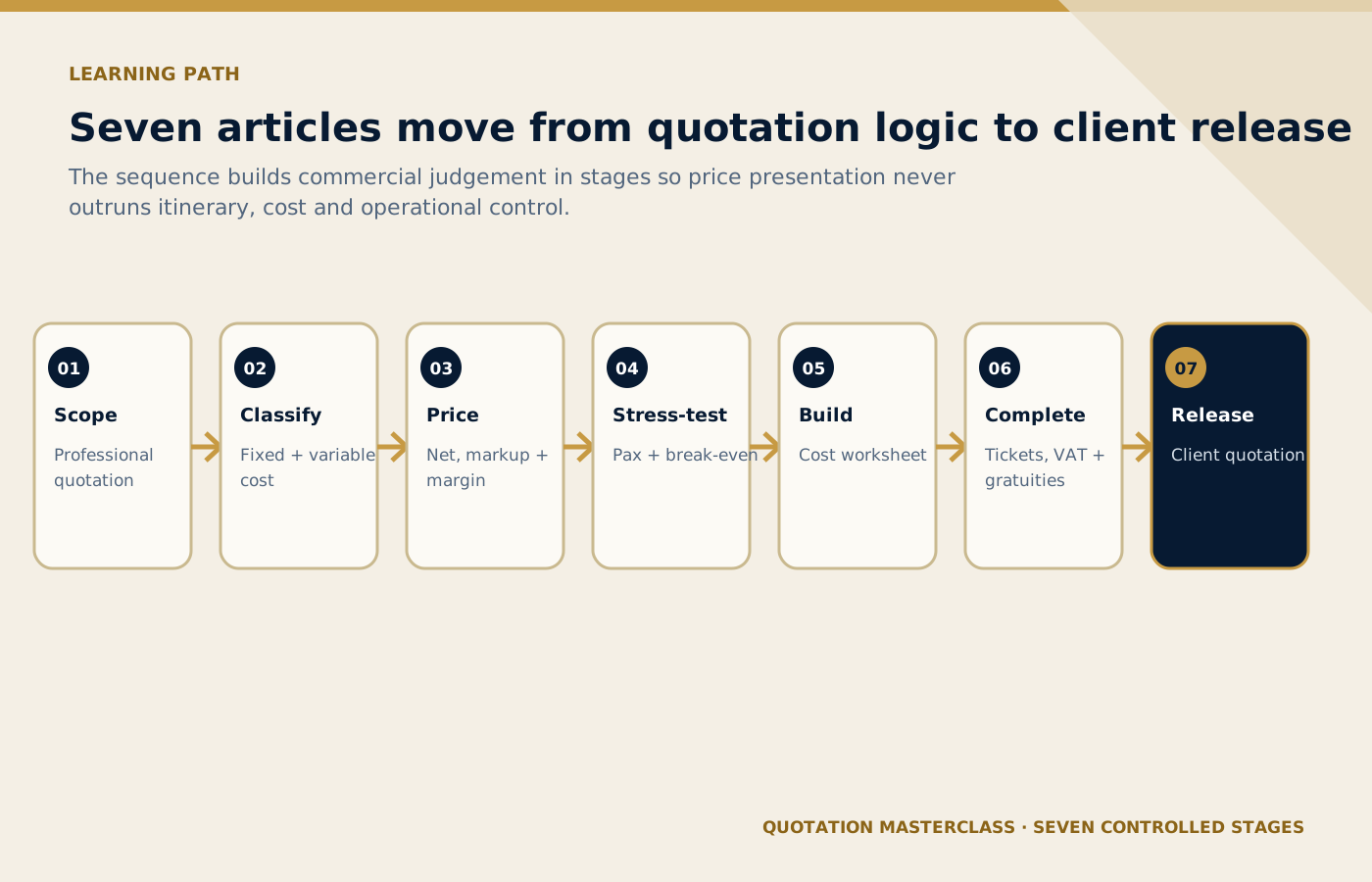
The seven articles build commercial judgement in sequence so client presentation never outruns cost and delivery control.
On small screens, scroll the diagram horizontally to read its labels.
A practical seven-article learning path for DMC operators, travel desk agents, tour coordinators and corporate tourism teams. The series explains how to build city tour quotations with stronger internal cost control, clearer client presentation and Abu Dhabi-based operational examples.
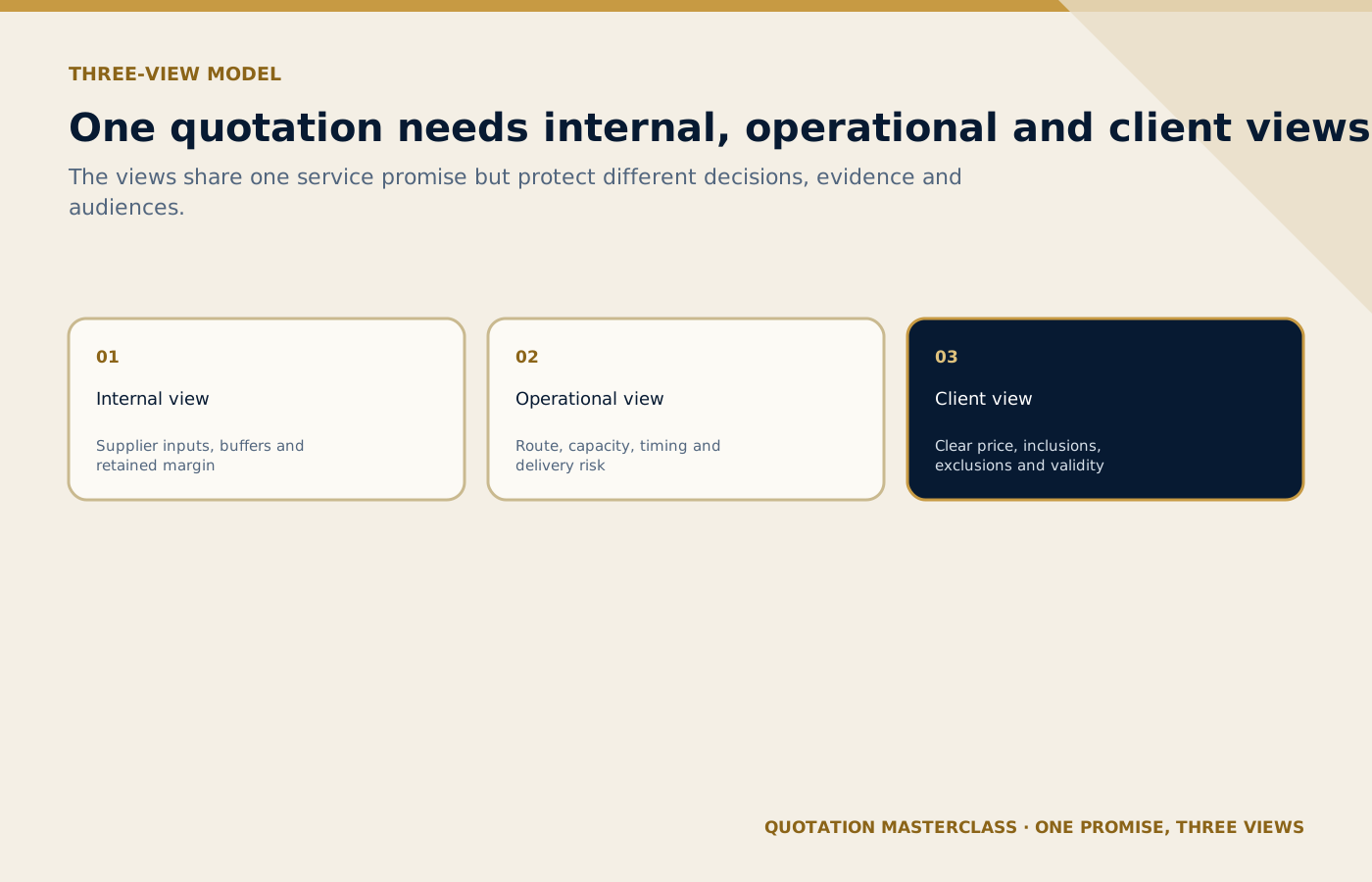
One service promise needs separate internal, operational and client views because each protects a different decision and audience.
On small screens, scroll the diagram horizontally to read its labels.
#How to use this series
Read the articles in order if you are learning quotation logic from the beginning. If you are a DMC supervisor or corporate travel manager, use the series as a training framework for travel desk agents, tour coordinators and junior product staff.
Cost structure, supplier assumptions, operational buffers and margin control.
Pickup logic, attraction timing, guide requirement and delivery risk.
Clear inclusions, exclusions, validity, price and service promise.
Connect this guide to your next step
Continue with related methods and the wider series.
- Related guideFixed vs Variable Costs in Tour Pricing
How tourism teams separate fixed and variable city-tour costs to improve pricing decisions and commercial review.
- Related guideNet Cost, Selling Price, Markup and Margin
A tourism pricing guide to net cost, selling price, markup and margin, with controls for clearer commercial decisions.
- Related guideParticipant Estimation and Break-Even Risk
How participant estimates, break-even logic and demand risk support safer tour pricing and operating commitments.
Put this article into practice
- Record the tour scope and verified supplier inputs.
- Separate fixed and variable costs using consistent units.
- Test participant assumptions, break-even, markup and margin.
- Release the quotation only after checking scope and commercial terms.
Your next step
Use this connected method when you are ready to separate fixed and variable costs and explain how participant numbers affect the cost base and pricing review.
Continue to Fixed vs Variable Costs in Tour Pricing