

- Who this helps
- DMC sales teams, quotation specialists, contracting teams and account managers.
- What you can do
- Use approved commercial inputs to structure quotation drafts and client communication for authorised review.
#Target audience
DMC sales teams, travel consultants, product and contracting teams, quotation specialists, account managers and small tour operators.
This is a working guide for people who already understand that tourism is delivered through connected handovers. The prompts are designed to improve preparation, consistency and visibility; they do not transfer authority from the trained employee to the AI system.
#Why this topic matters in tourism
Tourism sales communication must be persuasive without creating unauthorised promises. AI can improve structure, clarity and preparation, but commercial figures and conditions must come from approved calculations, contracts and management decisions.
This toolkit separates the commercial message from the commercial truth. It helps users draft professional documents around approved rates, inclusions and terms while preventing the model from inventing the details that create financial or contractual exposure.
AI may organise information and propose a structure. It must not manufacture the confirmed operational reality. When the source of truth changes, the employee must update the inputs and verify the output again.
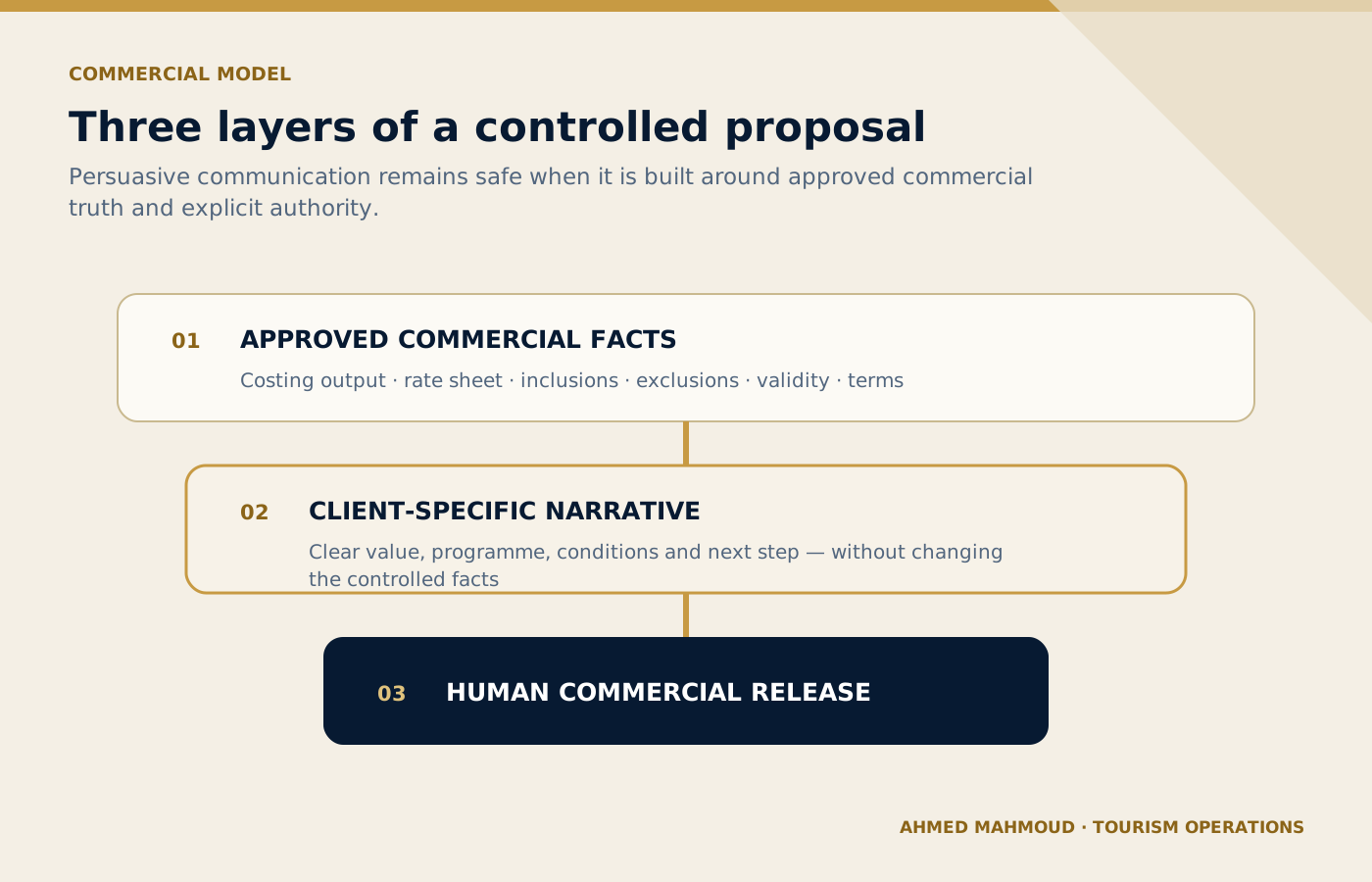
The narrative can change for the client, while approved rates, conditions and release authority remain controlled.
On small screens, scroll the diagram horizontally to read its labels.
#Responsible AI rules for this toolkit
- AI must not invent rates, markups, taxes, currency conversions, cancellation conditions, payment terms or contractual commitments.
- Use only approved product and rate-sheet inputs.
- Show exclusions, validity, assumptions and pending confirmations clearly.
- Protect confidential net rates and partner terms in accordance with company policy.
- Require commercial approval before sending a proposal or commitment.
Companies should adapt these rules to approved tools, information-security controls, local law, supplier contracts and internal authority. When the implications are legal, privacy-related or cybersecurity-related, qualified specialists should be consulted.
#The TRAVEL prompting framework
Every template in this playbook follows one memorable structure. The aim is not to make prompts longer for their own sake. It is to place the information, controls and approval points that a tourism professional needs in the right order.
state the professional perspective and the business decision to support.
include the destination, service type, timing, guest journey stage and confirmed constraints.
define the guest or client profile and provide only verified, permitted information.
require source labels, assumptions, uncertainty flags and a check against official or approved records.
specify the exact structure, priority order, tone, length and escalation path.
prohibit invention, protect data and identify who approves the final output.
In one sentence: a professional tourism prompt identifies the task, supplies the real operating context, defines the audience and approved inputs, demands a verifiable structure, explains exceptions and keeps privacy plus final authority with a human.
#Ten professional prompt templates
Each prompt contains editable placeholders and a built-in stop rule for missing information. Copy it, replace the placeholders with approved facts and keep the verification and human-approval sections intact. The templates are intentionally detailed because the omitted detail is often where a tourism failure begins.
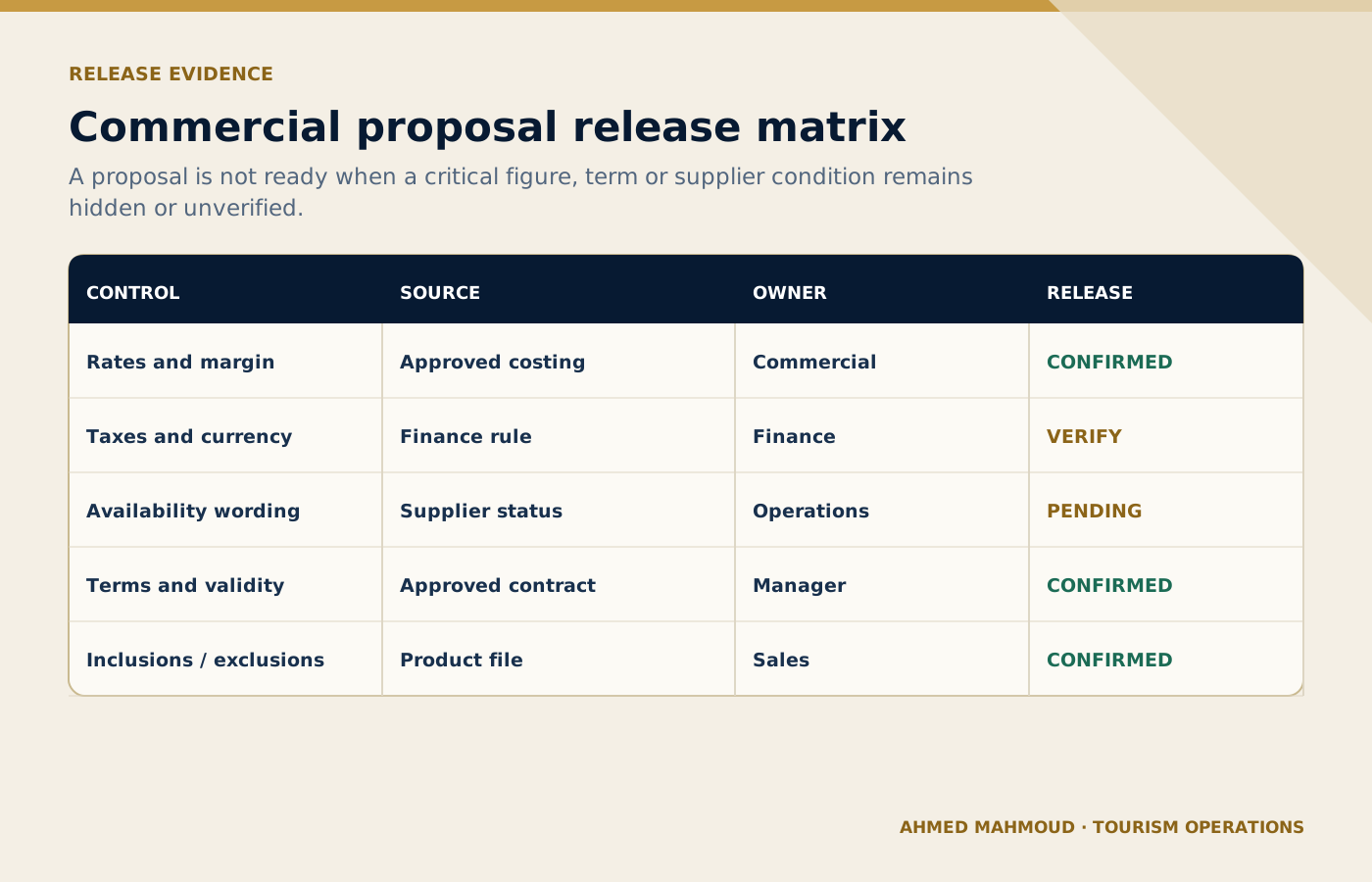
A proposal stays pending until every critical commercial element has a current source, owner and release status.
On small screens, scroll the diagram horizontally to read its labels.
#Tour Quotation Structure
Build a professional quotation structure around approved commercial inputs.
#When to use it
Use it for a controlled draft before information reaches a guest, supplier, colleague or manager.
#Required inputs
- client
- request
- itinerary
- approved net costs
- pricing output supplied
- inclusions
- exclusions
- validity
- terms
- pending confirmations
Illustrative scenarioWorked example: Tour Quotation Structure
Operational teaching scenario, not a documented incident. Uncited figures and outcomes are illustrative assumptions.
- Situation
Example: A DMC prepares a three-day group quotation for an overseas tour operator.
- Evidence
Check the supplied client, request, itinerary, approved net costs, pricing output supplied. Treat scenario inputs as assumptions until confirmed against approved records.
- Decision
Decide whether the inputs are complete and the task is authorised. If not, request the missing information before using the prompt.
- Action
Prepare the tour quotation structure draft from the checked inputs; keep unresolved facts and required approvals visible.
- Verification
Compare the draft with the source records and expected outputs. The named accountable owner must verify and approve it before live use.
#Complete prompt
ROLE
Act as a tourism quotation specialist in a professional tourism organisation.

TASK
Build a professional quotation structure around approved commercial inputs.

CONTEXT
Destination/service: [Insert confirmed details]
Date, operating stage and guest/client profile: [Insert approved information]
Sources of truth: [List approved systems, confirmations, SOPs or official sources]

INPUTS
Provide: client; request; itinerary; approved net costs; pricing output supplied; inclusions; exclusions; validity; terms; pending confirmations.
If an essential input is missing, contradictory or unconfirmed, stop and list what is required, its owner and source. Do not guess.

OUTPUT
Return: cover summary; programme; price table placeholders; inclusions; exclusions; conditions; next step; approval checklist. Separate confirmed facts, assumptions, recommendations and pending items. Label dynamic facts with their source and verification date when supplied.

LIMITS
Do not calculate or invent rates, margin, tax, currency or terms.

PRIVACY AND APPROVAL
Exclude unnecessary personal data, identity or payment details, confidential rates, contracts and security information. Finish with verification actions, unresolved questions and the final approver’s role. The output remains a draft until that person checks it against approved sources.
#Expected output
- cover summary
- programme
- price table placeholders
- inclusions
- exclusions
- conditions
- next step
- approval checklist
Human verification
Professional tourism trainer’s noteReplace every placeholder and keep unresolved items visible until an authorised professional reviews them.
#B2B Travel Proposal
Turn approved products and commercial inputs into a client-specific b2b proposal.
#When to use it
Use it for a controlled draft before information reaches a guest, supplier, colleague or manager.
#Required inputs
- client profile
- market
- objectives
- traveller profile
- approved products
- differentiators
- rates supplied
- operations proof
- terms
Illustrative scenarioWorked example: B2B Travel Proposal
Operational teaching scenario, not a documented incident. Uncited figures and outcomes are illustrative assumptions.
- Situation
Example: A hotel-desk operator is considering a new attraction-ticket partnership.
- Evidence
Check the supplied client profile, market, objectives, traveller profile, approved products. Treat scenario inputs as assumptions until confirmed against approved records.
- Decision
Decide whether the inputs are complete and the task is authorised. If not, request the missing information before using the prompt.
- Action
Prepare the b2b travel proposal draft from the checked inputs; keep unresolved facts and required approvals visible.
- Verification
Compare the draft with the source records and expected outputs. The named accountable owner must verify and approve it before live use.
#Complete prompt
ROLE
Act as a destination sales manager in a professional tourism organisation.

TASK
Turn approved products and commercial inputs into a client-specific b2b proposal.

CONTEXT
Destination/service: [Insert confirmed details]
Date, operating stage and guest/client profile: [Insert approved information]
Sources of truth: [List approved systems, confirmations, SOPs or official sources]

INPUTS
Provide: client profile; market; objectives; traveller profile; approved products; differentiators; rates supplied; operations proof; terms.
If an essential input is missing, contradictory or unconfirmed, stop and list what is required, its owner and source. Do not guess.

OUTPUT
Return: executive proposal; client-fit rationale; programme options; service model; commercial section; next actions. Separate confirmed facts, assumptions, recommendations and pending items. Label dynamic facts with their source and verification date when supplied.

LIMITS
Do not claim market leadership, exclusivity or results without evidence.

PRIVACY AND APPROVAL
Exclude unnecessary personal data, identity or payment details, confidential rates, contracts and security information. Finish with verification actions, unresolved questions and the final approver’s role. The output remains a draft until that person checks it against approved sources.
#Expected output
- executive proposal
- client-fit rationale
- programme options
- service model
- commercial section
- next actions
Human verification
Professional tourism trainer’s noteReplace every placeholder and keep unresolved items visible until an authorised professional reviews them.
#Initial Partnership Email
Write a concise, credible first-contact email with a specific reason to speak.
#When to use it
Use it for a controlled draft before information reaches a guest, supplier, colleague or manager.
#Required inputs
- recipient role
- company
- verified relevance
- destination capability
- proposed value
- proof
- requested next step
- tone
Illustrative scenarioWorked example: Initial Partnership Email
Operational teaching scenario, not a documented incident. Uncited figures and outcomes are illustrative assumptions.
- Situation
Example: A DMC approaches a European tour operator serving French-speaking groups.
- Evidence
Check the supplied recipient role, company, verified relevance, destination capability, proposed value. Treat scenario inputs as assumptions until confirmed against approved records.
- Decision
Decide whether the inputs are complete and the task is authorised. If not, request the missing information before using the prompt.
- Action
Prepare the initial partnership email draft from the checked inputs; keep unresolved facts and required approvals visible.
- Verification
Compare the draft with the source records and expected outputs. The named accountable owner must verify and approve it before live use.
#Complete prompt
ROLE
Act as a B2B tourism account manager in a professional tourism organisation.

TASK
Write a concise, credible first-contact email with a specific reason to speak.

CONTEXT
Destination/service: [Insert confirmed details]
Date, operating stage and guest/client profile: [Insert approved information]
Sources of truth: [List approved systems, confirmations, SOPs or official sources]

INPUTS
Provide: recipient role; company; verified relevance; destination capability; proposed value; proof; requested next step; tone.
If an essential input is missing, contradictory or unconfirmed, stop and list what is required, its owner and source. Do not guess.

OUTPUT
Return: subject options; email; short LinkedIn version; personalisation gaps; follow-up date. Separate confirmed facts, assumptions, recommendations and pending items. Label dynamic facts with their source and verification date when supplied.

LIMITS
Do not invent shared contacts, achievements or knowledge of the recipient.

PRIVACY AND APPROVAL
Exclude unnecessary personal data, identity or payment details, confidential rates, contracts and security information. Finish with verification actions, unresolved questions and the final approver’s role. The output remains a draft until that person checks it against approved sources.
#Expected output
- subject options
- short LinkedIn version
- personalisation gaps
- follow-up date
Human verification
Professional tourism trainer’s noteReplace every placeholder and keep unresolved items visible until an authorised professional reviews them.
#Proposal Follow-Up
Prepare a value-adding follow-up based on the actual proposal stage.
#When to use it
Use it for a controlled draft before information reaches a guest, supplier, colleague or manager.
#Required inputs
- proposal date
- client questions
- viewed status if known
- decision timeline
- approved updates
- outstanding items
- next step
Illustrative scenarioWorked example: Proposal Follow-Up
Operational teaching scenario, not a documented incident. Uncited figures and outcomes are illustrative assumptions.
- Situation
Example: A client has not replied ten days after receiving a seasonal programme.
- Evidence
Check the supplied proposal date, client questions, viewed status if known, decision timeline, approved updates. Treat scenario inputs as assumptions until confirmed against approved records.
- Decision
Decide whether the inputs are complete and the task is authorised. If not, request the missing information before using the prompt.
- Action
Prepare the proposal follow-up draft from the checked inputs; keep unresolved facts and required approvals visible.
- Verification
Compare the draft with the source records and expected outputs. The named accountable owner must verify and approve it before live use.
#Complete prompt
ROLE
Act as a consultative tourism sales manager in a professional tourism organisation.

TASK
Prepare a value-adding follow-up based on the actual proposal stage.

CONTEXT
Destination/service: [Insert confirmed details]
Date, operating stage and guest/client profile: [Insert approved information]
Sources of truth: [List approved systems, confirmations, SOPs or official sources]

INPUTS
Provide: proposal date; client questions; viewed status if known; decision timeline; approved updates; outstanding items; next step.
If an essential input is missing, contradictory or unconfirmed, stop and list what is required, its owner and source. Do not guess.

OUTPUT
Return: follow-up email; call agenda; decision questions; useful attachment suggestion; escalation timing. Separate confirmed facts, assumptions, recommendations and pending items. Label dynamic facts with their source and verification date when supplied.

LIMITS
Do not create false urgency or claim limited availability without evidence.

PRIVACY AND APPROVAL
Exclude unnecessary personal data, identity or payment details, confidential rates, contracts and security information. Finish with verification actions, unresolved questions and the final approver’s role. The output remains a draft until that person checks it against approved sources.
#Expected output
- follow-up email
- call agenda
- decision questions
- useful attachment suggestion
- escalation timing
Human verification
Professional tourism trainer’s noteReplace every placeholder and keep unresolved items visible until an authorised professional reviews them.
#Rate-Update Communication
Explain an approved rate change clearly while protecting the relationship.
#When to use it
Use it for a controlled draft before information reaches a guest, supplier, colleague or manager.
#Required inputs
- partner
- affected services
- old/new approved rates
- effective date
- reason authorised
- existing bookings
- validity
- contacts
Illustrative scenarioWorked example: Rate-Update Communication
Operational teaching scenario, not a documented incident. Uncited figures and outcomes are illustrative assumptions.
- Situation
Example: Transport rates change for new bookings from the next season.
- Evidence
Check the supplied partner, affected services, old/new approved rates, effective date, reason authorised. Treat scenario inputs as assumptions until confirmed against approved records.
- Decision
Decide whether the inputs are complete and the task is authorised. If not, request the missing information before using the prompt.
- Action
Prepare the rate-update communication draft from the checked inputs; keep unresolved facts and required approvals visible.
- Verification
Compare the draft with the source records and expected outputs. The named accountable owner must verify and approve it before live use.
#Complete prompt
ROLE
Act as a tourism contracting communication specialist in a professional tourism organisation.

TASK
Explain an approved rate change clearly while protecting the relationship.

CONTEXT
Destination/service: [Insert confirmed details]
Date, operating stage and guest/client profile: [Insert approved information]
Sources of truth: [List approved systems, confirmations, SOPs or official sources]

INPUTS
Provide: partner; affected services; old/new approved rates; effective date; reason authorised; existing bookings; validity; contacts.
If an essential input is missing, contradictory or unconfirmed, stop and list what is required, its owner and source. Do not guess.

OUTPUT
Return: partner notice; summary table; action required; FAQ; internal send checklist. Separate confirmed facts, assumptions, recommendations and pending items. Label dynamic facts with their source and verification date when supplied.

LIMITS
Do not soften or alter the approved figures, dates or contractual position.

PRIVACY AND APPROVAL
Exclude unnecessary personal data, identity or payment details, confidential rates, contracts and security information. Finish with verification actions, unresolved questions and the final approver’s role. The output remains a draft until that person checks it against approved sources.
#Expected output
- partner notice
- summary table
- action required
- FAQ
- internal send checklist
Human verification
Professional tourism trainer’s noteReplace every placeholder and keep unresolved items visible until an authorised professional reviews them.
#Client Discovery Questions
Prepare discovery questions that reveal operational and commercial needs.
#When to use it
Use it for a controlled draft before information reaches a guest, supplier, colleague or manager.
#Required inputs
- client type
- market
- known business
- destination
- product interest
- meeting length
- desired outcome
Illustrative scenarioWorked example: Client Discovery Questions
Operational teaching scenario, not a documented incident. Uncited figures and outcomes are illustrative assumptions.
- Situation
Example: A DMC meets a tour operator considering a new UAE programme.
- Evidence
Check the supplied client type, market, known business, destination, product interest. Treat scenario inputs as assumptions until confirmed against approved records.
- Decision
Decide whether the inputs are complete and the task is authorised. If not, request the missing information before using the prompt.
- Action
Prepare the client discovery questions draft from the checked inputs; keep unresolved facts and required approvals visible.
- Verification
Compare the draft with the source records and expected outputs. The named accountable owner must verify and approve it before live use.
#Complete prompt
ROLE
Act as a tourism solution-sales consultant in a professional tourism organisation.

TASK
Prepare discovery questions that reveal operational and commercial needs.

CONTEXT
Destination/service: [Insert confirmed details]
Date, operating stage and guest/client profile: [Insert approved information]
Sources of truth: [List approved systems, confirmations, SOPs or official sources]

INPUTS
Provide: client type; market; known business; destination; product interest; meeting length; desired outcome.
If an essential input is missing, contradictory or unconfirmed, stop and list what is required, its owner and source. Do not guess.

OUTPUT
Return: prioritised questions; reason for each; likely follow-ups; red flags; meeting note template. Separate confirmed facts, assumptions, recommendations and pending items. Label dynamic facts with their source and verification date when supplied.

LIMITS
Do not ask for confidential information that is unnecessary at the discovery stage.

PRIVACY AND APPROVAL
Exclude unnecessary personal data, identity or payment details, confidential rates, contracts and security information. Finish with verification actions, unresolved questions and the final approver’s role. The output remains a draft until that person checks it against approved sources.
#Expected output
- prioritised questions
- reason for each
- likely follow-ups
- red flags
- meeting note template
Human verification
Professional tourism trainer’s noteReplace every placeholder and keep unresolved items visible until an authorised professional reviews them.
#Sales-Call Preparation
Create a fact-based call plan for a specific tourism opportunity.
#When to use it
Use it for a controlled draft before information reaches a guest, supplier, colleague or manager.
#Required inputs
- client
- history
- opportunity
- proposal
- stakeholders
- approved commercial boundaries
- objections
- proof
- desired decision
Illustrative scenarioWorked example: Sales-Call Preparation
Operational teaching scenario, not a documented incident. Uncited figures and outcomes are illustrative assumptions.
- Situation
Example: An account manager prepares for a call about low conversion on a proposal.
- Evidence
Check the supplied client, history, opportunity, proposal, stakeholders. Treat scenario inputs as assumptions until confirmed against approved records.
- Decision
Decide whether the inputs are complete and the task is authorised. If not, request the missing information before using the prompt.
- Action
Prepare the sales-call preparation draft from the checked inputs; keep unresolved facts and required approvals visible.
- Verification
Compare the draft with the source records and expected outputs. The named accountable owner must verify and approve it before live use.
#Complete prompt
ROLE
Act as a senior travel account director in a professional tourism organisation.

TASK
Create a fact-based call plan for a specific tourism opportunity.

CONTEXT
Destination/service: [Insert confirmed details]
Date, operating stage and guest/client profile: [Insert approved information]
Sources of truth: [List approved systems, confirmations, SOPs or official sources]

INPUTS
Provide: client; history; opportunity; proposal; stakeholders; approved commercial boundaries; objections; proof; desired decision.
If an essential input is missing, contradictory or unconfirmed, stop and list what is required, its owner and source. Do not guess.

OUTPUT
Return: call objective; opening; questions; value points; objection notes; boundaries; close; follow-up record. Separate confirmed facts, assumptions, recommendations and pending items. Label dynamic facts with their source and verification date when supplied.

LIMITS
Do not invent client priorities or authorise discounts.

PRIVACY AND APPROVAL
Exclude unnecessary personal data, identity or payment details, confidential rates, contracts and security information. Finish with verification actions, unresolved questions and the final approver’s role. The output remains a draft until that person checks it against approved sources.
#Expected output
- call objective
- opening
- questions
- value points
- objection notes
- boundaries
- close
- follow-up record
Human verification
Professional tourism trainer’s noteReplace every placeholder and keep unresolved items visible until an authorised professional reviews them.
#Objection-Handling Practice
Run a realistic objection role-play without encouraging unauthorised concessions.
#When to use it
Use it for a controlled draft before information reaches a guest, supplier, colleague or manager.
#Required inputs
- offer
- buyer profile
- objection
- approved value evidence
- negotiation authority
- non-negotiables
- alternatives
Illustrative scenarioWorked example: Objection-Handling Practice
Operational teaching scenario, not a documented incident. Uncited figures and outcomes are illustrative assumptions.
- Situation
Example: A buyer says the quotation is higher than a competitor’s.
- Evidence
Check the supplied offer, buyer profile, objection, approved value evidence, negotiation authority. Treat scenario inputs as assumptions until confirmed against approved records.
- Decision
Decide whether the inputs are complete and the task is authorised. If not, request the missing information before using the prompt.
- Action
Prepare the objection-handling practice draft from the checked inputs; keep unresolved facts and required approvals visible.
- Verification
Compare the draft with the source records and expected outputs. The named accountable owner must verify and approve it before live use.
#Complete prompt
ROLE
Act as a tourism sales coach and buyer simulator in a professional tourism organisation.

TASK
Run a realistic objection role-play without encouraging unauthorised concessions.

CONTEXT
Destination/service: [Insert confirmed details]
Date, operating stage and guest/client profile: [Insert approved information]
Sources of truth: [List approved systems, confirmations, SOPs or official sources]

INPUTS
Provide: offer; buyer profile; objection; approved value evidence; negotiation authority; non-negotiables; alternatives.
If an essential input is missing, contradictory or unconfirmed, stop and list what is required, its owner and source. Do not guess.

OUTPUT
Return: scenario; buyer turns; strong response model; weak-response risks; debrief; scoring. Separate confirmed facts, assumptions, recommendations and pending items. Label dynamic facts with their source and verification date when supplied.

LIMITS
Do not propose discounts, free services or contract changes outside the supplied authority.

PRIVACY AND APPROVAL
Exclude unnecessary personal data, identity or payment details, confidential rates, contracts and security information. Finish with verification actions, unresolved questions and the final approver’s role. The output remains a draft until that person checks it against approved sources.
#Expected output
- scenario
- buyer turns
- strong response model
- weak-response risks
- debrief
- scoring
Human verification
Professional tourism trainer’s noteReplace every placeholder and keep unresolved items visible until an authorised professional reviews them.
#Inactive-Account Reactivation
Create a respectful reactivation plan based on genuine relevance and new value.
#When to use it
Use it for a controlled draft before information reaches a guest, supplier, colleague or manager.
#Required inputs
- account history
- last contact
- prior business
- reason inactive if known
- current approved products
- market update
- contact preference
Illustrative scenarioWorked example: Inactive-Account Reactivation
Operational teaching scenario, not a documented incident. Uncited figures and outcomes are illustrative assumptions.
- Situation
Example: A former bedbank partner has not booked for eighteen months.
- Evidence
Check the supplied account history, last contact, prior business, reason inactive if known, current approved products. Treat scenario inputs as assumptions until confirmed against approved records.
- Decision
Decide whether the inputs are complete and the task is authorised. If not, request the missing information before using the prompt.
- Action
Prepare the inactive-account reactivation draft from the checked inputs; keep unresolved facts and required approvals visible.
- Verification
Compare the draft with the source records and expected outputs. The named accountable owner must verify and approve it before live use.
#Complete prompt
ROLE
Act as a tourism account-development manager in a professional tourism organisation.

TASK
Create a respectful reactivation plan based on genuine relevance and new value.

CONTEXT
Destination/service: [Insert confirmed details]
Date, operating stage and guest/client profile: [Insert approved information]
Sources of truth: [List approved systems, confirmations, SOPs or official sources]

INPUTS
Provide: account history; last contact; prior business; reason inactive if known; current approved products; market update; contact preference.
If an essential input is missing, contradictory or unconfirmed, stop and list what is required, its owner and source. Do not guess.

OUTPUT
Return: email sequence; call opener; value asset; questions; stop-contact rule; CRM notes. Separate confirmed facts, assumptions, recommendations and pending items. Label dynamic facts with their source and verification date when supplied.

LIMITS
Do not pretend the relationship is warmer or more recent than records show.

PRIVACY AND APPROVAL
Exclude unnecessary personal data, identity or payment details, confidential rates, contracts and security information. Finish with verification actions, unresolved questions and the final approver’s role. The output remains a draft until that person checks it against approved sources.
#Expected output
- email sequence
- call opener
- value asset
- questions
- stop-contact rule
- CRM notes
Human verification
Professional tourism trainer’s noteReplace every placeholder and keep unresolved items visible until an authorised professional reviews them.
#Commercial Proposal Review
Audit a proposal before it is sent for factual, financial and contractual consistency.
#When to use it
Use it for a controlled draft before information reaches a guest, supplier, colleague or manager.
#Required inputs
- proposal
- approved costing output
- rate sheet
- terms
- inclusions
- exclusions
- client request
- approvals
- attachments
Illustrative scenarioWorked example: Commercial Proposal Review
Operational teaching scenario, not a documented incident. Uncited figures and outcomes are illustrative assumptions.
- Situation
Example: A complex group proposal includes transport, attractions, meals and optional services.
- Evidence
Check the supplied proposal, approved costing output, rate sheet, terms, inclusions. Treat scenario inputs as assumptions until confirmed against approved records.
- Decision
Decide whether the inputs are complete and the task is authorised. If not, request the missing information before using the prompt.
- Action
Prepare the commercial proposal review draft from the checked inputs; keep unresolved facts and required approvals visible.
- Verification
Compare the draft with the source records and expected outputs. The named accountable owner must verify and approve it before live use.
#Complete prompt
ROLE
Act as a tourism commercial quality controller in a professional tourism organisation.

TASK
Audit a proposal before it is sent for factual, financial and contractual consistency.

CONTEXT
Destination/service: [Insert confirmed details]
Date, operating stage and guest/client profile: [Insert approved information]
Sources of truth: [List approved systems, confirmations, SOPs or official sources]

INPUTS
Provide: proposal; approved costing output; rate sheet; terms; inclusions; exclusions; client request; approvals; attachments.
If an essential input is missing, contradictory or unconfirmed, stop and list what is required, its owner and source. Do not guess.

OUTPUT
Return: critical errors; commercial mismatches; unclear wording; missing approvals; corrected checklist; release status. Separate confirmed facts, assumptions, recommendations and pending items. Label dynamic facts with their source and verification date when supplied.

LIMITS
Do not recalculate figures unless the approved method and authority are explicitly provided.

PRIVACY AND APPROVAL
Exclude unnecessary personal data, identity or payment details, confidential rates, contracts and security information. Finish with verification actions, unresolved questions and the final approver’s role. The output remains a draft until that person checks it against approved sources.
#Expected output
- critical errors
- commercial mismatches
- unclear wording
- missing approvals
- corrected checklist
- release status
Human verification
Professional tourism trainer’s noteReplace every placeholder and keep unresolved items visible until an authorised professional reviews them.
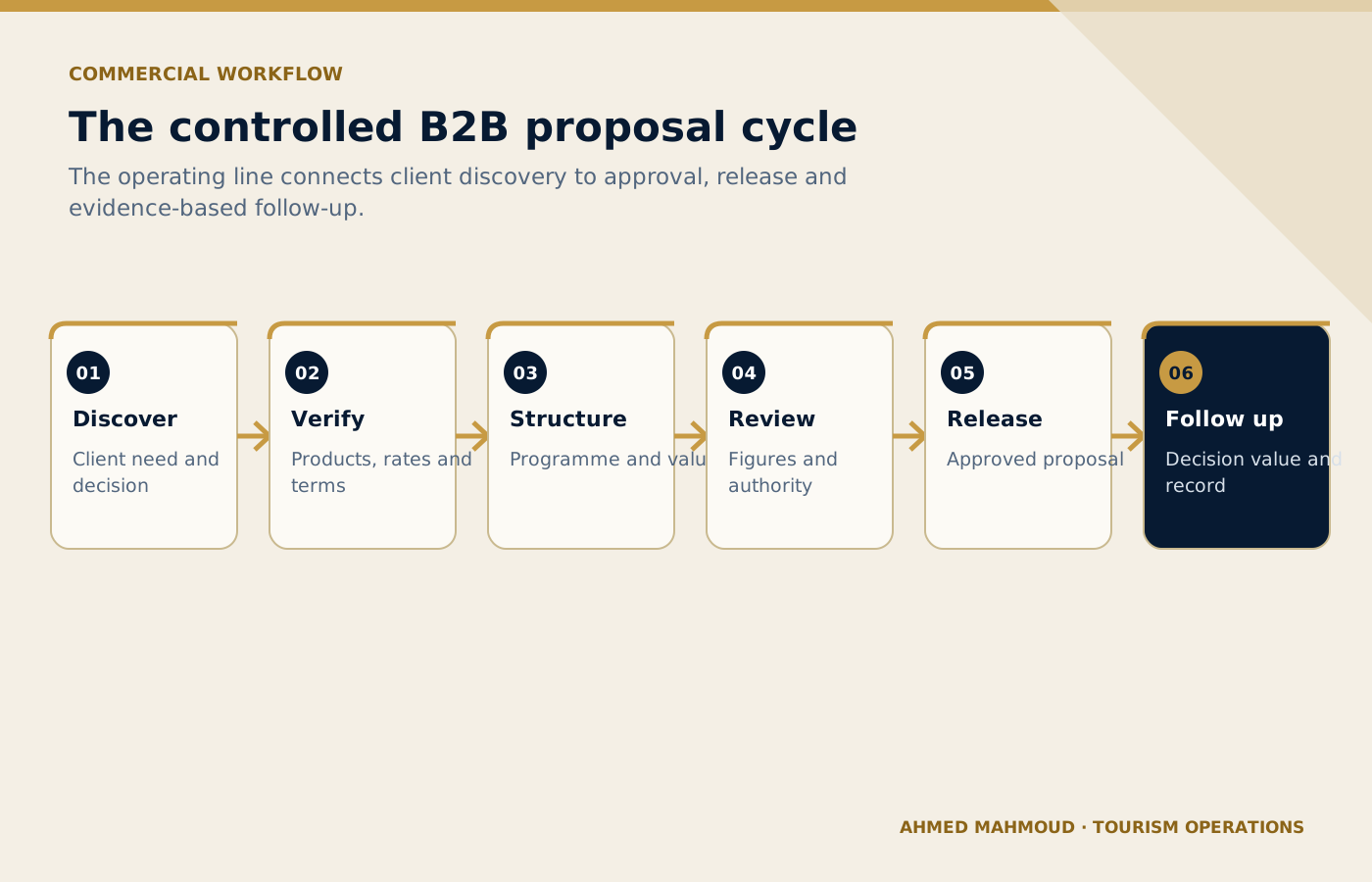
The proposal cycle protects commercial truth from discovery through approval, client release and recorded follow-up.
On small screens, scroll the diagram horizontally to read its labels.
#Common mistakes to avoid
- Mistake 1: Asking AI to calculate a selling price without controlled costing inputs.
- Mistake 2: Hiding pending supplier confirmations inside polished proposal language.
- Mistake 3: Using generic follow-ups that add no decision value.
- Mistake 4: Promising flexibility that the contract does not provide.
- Mistake 5: Sharing confidential net rates in an unapproved system.
A useful internal review question is: “Could a new employee read this output and mistake a proposal for a confirmation?” If the answer is yes, revise the prompt and output labels before use.
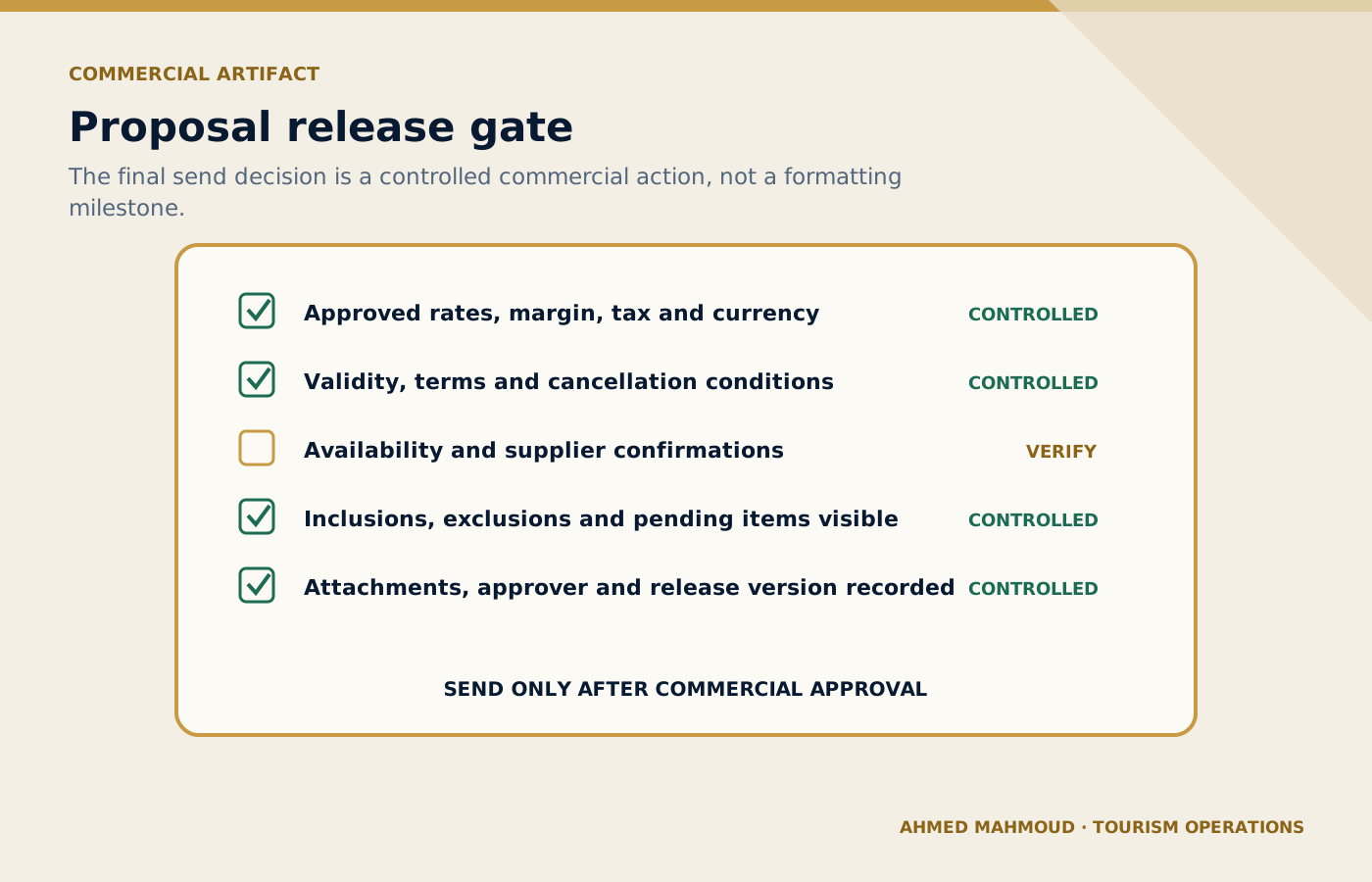
The send decision is recorded only after figures, conditions, pending items, attachments and authority are checked.
On small screens, scroll the diagram horizontally to read its labels.
#Implementation guidance for tourism teams
Build a controlled quotation input form and keep calculations in an approved workbook or application. Use AI to structure the narrative, highlight missing commercial inputs and prepare alternative wording. Introduce a send checklist covering figures, validity, terms, attachments and authority.
Choose a low-risk, frequent task with a clear owner and source of truth.
Run realistic anonymised cases, including missing data and operational exceptions.
Document the prompt version, permitted users, tool, reviewer and release criteria.
Track quality, time saved, defects, escalations and employee feedback.
Update the prompt when the process, destination, supplier or risk changes.
#Final verification checklist
#Use AI to strengthen tourism judgement, not to bypass it
The best result is not the longest response or the most impressive wording. It is an output that helps a trained tourism professional see the situation clearly, find missing information early, communicate consistently and make a controlled decision. Keep the TRAVEL framework, verification table, privacy boundaries and human sign-off visible every time the prompt is adapted.
#Questions tourism teams ask
Can AI calculate tour prices?
Only when a company deliberately uses an approved controlled process. Prompt output should never replace the validated costing source or authorised margin decision.
What is the role of AI in a quotation?
It can organise approved inclusions, explain value, improve clarity and flag missing information. Rates and terms remain controlled commercial data.
Can AI write a partnership email?
Yes. The user should supply the genuine relevance, market fit and proposed next step so the email is specific rather than generic.
How should objections be practised?
Use fictional or anonymised scenarios and require responses that clarify needs without offering unauthorised discounts or commitments.
What must be approved before sending?
Rates, margin, taxes, currency, validity, inclusions, exclusions, cancellation, payment, availability language and any special commitment.
Professional verification reminder: Always compare AI output with approved internal systems, official sources and qualified human judgement before it affects a guest, supplier, employee or commercial commitment.
Connect this guide to your next step
Continue with related methods and the wider series.
- Related guideThe DMC Operations AI Toolkit: 10 Ready-to-Use Prompts for Daily Tour Operations
DMC operations teams can use AI to organise files, identify gaps and structure briefs, but confirmations, assignments and disruption decisions must stay in approved systems.
- Related guideFront-Line Tourism AI Toolkit
Front-line teams can use AI to prepare, practise and communicate more consistently, while verified facts, empathy, safety and live decisions remain with the employee.
- Related guideTourism Product Development AI Toolkit
AI is most useful in tourism product development when it organises evidence, explores options and exposes feasibility questions instead of inventing demand or suppliers.
Put this article into practice
- Use approved commercial inputs to structure quotation drafts and client communication for authorised review.
- Verify the supplied facts and record any missing evidence before acting.
- Name the accountable owner and confirm the decision or approval limits.
- Test the result in the operating context and retain the verification record.
Your next step
Supply the required inputs, copy the complete prompt and verify the output before using it in the operation.
Apply Tour Quotation Structure