

- Who this helps
- Tour guides, airport representatives, concierge teams and front-line supervisors.
- What you can do
- Use verified context to prepare briefings, practise responses and draft communication for an employee to check before use.
#Target audience
Tour guides, airport representatives, hotel representatives, concierge teams, attraction hosts, tour leaders, guide trainers and front-line supervisors.
This is a working guide for people who already understand that tourism is delivered through connected handovers. The prompts are designed to improve preparation, consistency and visibility; they do not transfer authority from the trained employee to the AI system.
#Why this topic matters in tourism
Front-line employees have to combine destination knowledge, timing control, cultural sensitivity, safety, service recovery and natural communication. AI can help them prepare and practise, but it must not replace live judgement or invent facts that are shared with guests.
This toolkit focuses on employee execution at the moment of service. The prompts help a guide or representative prepare, adapt and report while keeping the human professional responsible for facts, tone, guest safety and operational decisions.
AI may organise information and propose a structure. It must not manufacture the confirmed operational reality. When the source of truth changes, the employee must update the inputs and verify the output again.
#Responsible AI rules for this toolkit
- Use verified attraction facts and current company instructions.
- Do not enter guest names, passport details, room numbers or private contact information unless the tool and use are formally approved.
- Keep safety, cultural etiquette and supplier instructions exactly aligned with authorised guidance.
- Ask the AI to mark any sentence that requires checking before it is spoken to guests.
- Use AI as a preparation and coaching assistant, not as the final authority during a live incident.
Companies should adapt these rules to approved tools, information-security controls, local law, supplier contracts and internal authority. When the implications are legal, privacy-related or cybersecurity-related, qualified specialists should be consulted.
#The TRAVEL prompting framework
Every template in this playbook follows one memorable structure. The aim is not to make prompts longer for their own sake. It is to place the information, controls and approval points that a tourism professional needs in the right order.
state the professional perspective and the business decision to support.
include the destination, service type, timing, guest journey stage and confirmed constraints.
define the guest or client profile and provide only verified, permitted information.
require source labels, assumptions, uncertainty flags and a check against official or approved records.
specify the exact structure, priority order, tone, length and escalation path.
prohibit invention, protect data and identify who approves the final output.
In one sentence: a professional tourism prompt identifies the task, supplies the real operating context, defines the audience and approved inputs, demands a verifiable structure, explains exceptions and keeps privacy plus final authority with a human.
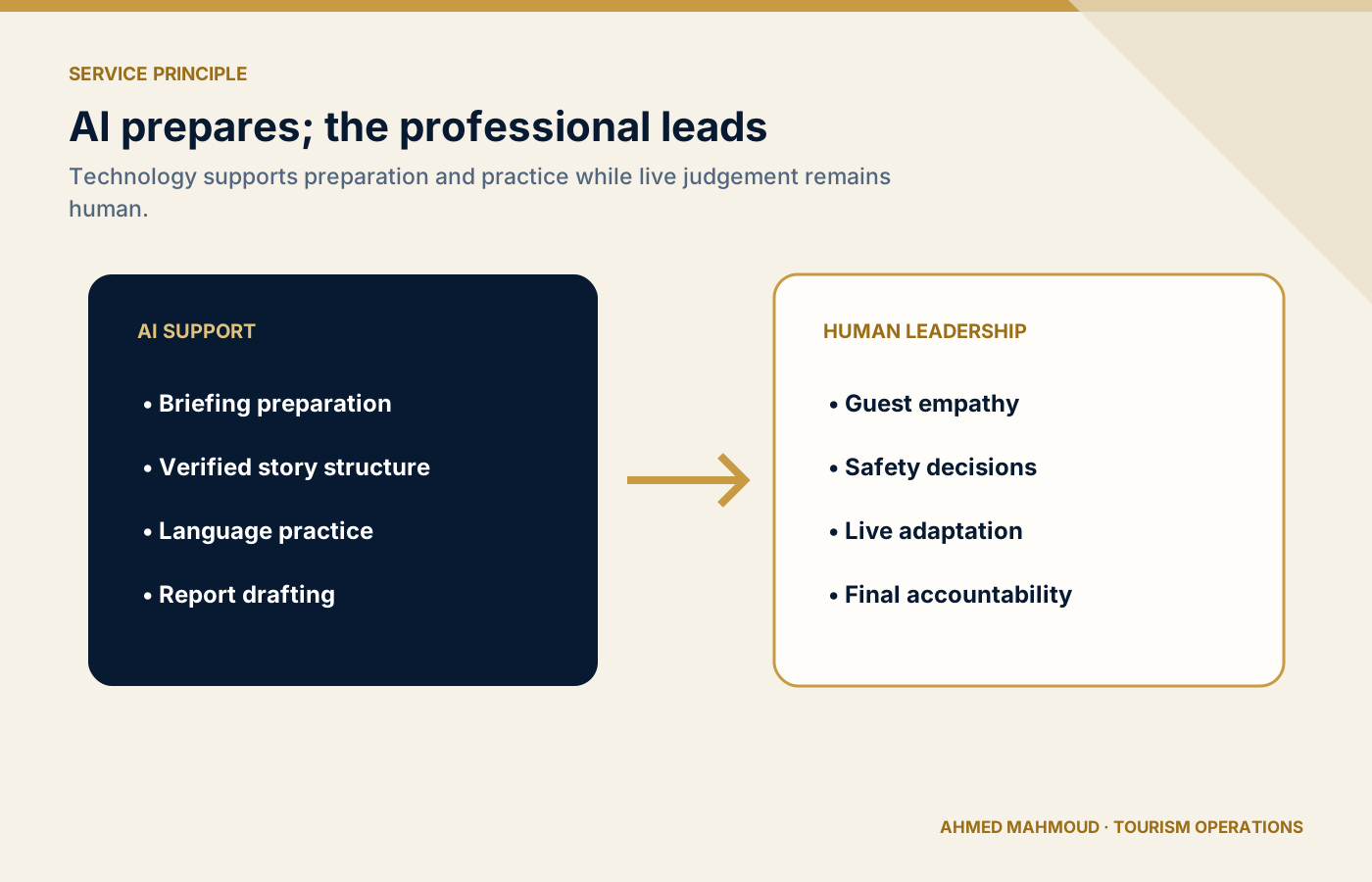
AI supports briefing, practice and drafting; qualified professionals retain empathy, safety and accountability.
On small screens, scroll the diagram horizontally to read its labels.
#Ten professional prompt templates
Each prompt contains editable placeholders and a built-in stop rule for missing information. Copy it, replace the placeholders with approved facts and keep the verification and human-approval sections intact. The templates are intentionally detailed because the omitted detail is often where a tourism failure begins.
#Pre-Tour Preparation
Turn a confirmed tour file into a practical guide preparation brief.
#When to use it
Use it for a controlled draft before information reaches a guest, supplier, colleague or manager.
#Required inputs
- tour date
- product name
- verified itinerary
- guest profile
- language
- pickup data
- confirmed tickets
- guide notes
- weather source
- escalation contacts
Illustrative scenarioWorked example: Pre-Tour Preparation
Operational teaching scenario, not a documented incident. Uncited figures and outcomes are illustrative assumptions.
- Situation
Example: A French-speaking family group has a city tour with two timed-entry attractions.
- Evidence
Check the supplied tour date, product name, verified itinerary, guest profile, language. Treat scenario inputs as assumptions until confirmed against approved records.
- Decision
Decide whether the inputs are complete and the task is authorised. If not, request the missing information before using the prompt.
- Action
Prepare the pre-tour preparation draft from the checked inputs; keep unresolved facts and required approvals visible.
- Verification
Compare the draft with the source records and expected outputs. The named accountable owner must verify and approve it before live use.
#Complete prompt
ROLE
Act as a licensed senior tour guide and operations trainer in a professional tourism organisation.

TASK
Turn a confirmed tour file into a practical guide preparation brief.

CONTEXT
Destination/service: [Insert confirmed details]
Date, operating stage and guest/client profile: [Insert approved information]
Sources of truth: [List approved systems, confirmations, SOPs or official sources]

INPUTS
Provide: tour date; product name; verified itinerary; guest profile; language; pickup data; confirmed tickets; guide notes; weather source; escalation contacts.
If an essential input is missing, contradictory or unconfirmed, stop and list what is required, its owner and source. Do not guess.

OUTPUT
Return: timeline; guest-needs notes; verified facts to prepare; operational checks; risk points; questions for operations. Separate confirmed facts, assumptions, recommendations and pending items. Label dynamic facts with their source and verification date when supplied.

LIMITS
Do not invent attraction hours, access, tickets or guest requirements. Remove direct identifiers.

PRIVACY AND APPROVAL
Exclude unnecessary personal data, identity or payment details, confidential rates, contracts and security information. Finish with verification actions, unresolved questions and the final approver’s role. The output remains a draft until that person checks it against approved sources.
#Expected output
- timeline
- guest-needs notes
- verified facts to prepare
- operational checks
- risk points
- questions for operations
Human verification
Professional tourism trainer’s noteReplace every placeholder and keep unresolved items visible until an authorised professional reviews them.
#Destination Storytelling
Build flexible short, medium and extended stories from verified destination facts.
#When to use it
Use it for a controlled draft before information reaches a guest, supplier, colleague or manager.
#Required inputs
- attraction
- approved facts
- destination theme
- guest profile
- cultural guidance
- prohibited claims
- speaking duration
Illustrative scenarioWorked example: Destination Storytelling
Operational teaching scenario, not a documented incident. Uncited figures and outcomes are illustrative assumptions.
- Situation
Example: A guide prepares three versions of a Louvre Abu Dhabi introduction.
- Evidence
Check the supplied attraction, approved facts, destination theme, guest profile, cultural guidance. Treat scenario inputs as assumptions until confirmed against approved records.
- Decision
Decide whether the inputs are complete and the task is authorised. If not, request the missing information before using the prompt.
- Action
Prepare the destination storytelling draft from the checked inputs; keep unresolved facts and required approvals visible.
- Verification
Compare the draft with the source records and expected outputs. The named accountable owner must verify and approve it before live use.
#Complete prompt
ROLE
Act as a destination interpretation trainer in a professional tourism organisation.

TASK
Build flexible short, medium and extended stories from verified destination facts.

CONTEXT
Destination/service: [Insert confirmed details]
Date, operating stage and guest/client profile: [Insert approved information]
Sources of truth: [List approved systems, confirmations, SOPs or official sources]

INPUTS
Provide: attraction; approved facts; destination theme; guest profile; cultural guidance; prohibited claims; speaking duration.
If an essential input is missing, contradictory or unconfirmed, stop and list what is required, its owner and source. Do not guess.

OUTPUT
Return: story spine; 90-second version; 3-minute version; interactive question; fact-check table. Separate confirmed facts, assumptions, recommendations and pending items. Label dynamic facts with their source and verification date when supplied.

LIMITS
Use only supplied facts. Mark interpretation separately from historical fact and avoid stereotypes.

PRIVACY AND APPROVAL
Exclude unnecessary personal data, identity or payment details, confidential rates, contracts and security information. Finish with verification actions, unresolved questions and the final approver’s role. The output remains a draft until that person checks it against approved sources.
#Expected output
- story spine
- 90-second version
- 3-minute version
- interactive question
- fact-check table
Human verification
Professional tourism trainer’s noteReplace every placeholder and keep unresolved items visible until an authorised professional reviews them.
#Commentary Adaptation
Adapt approved commentary for a specific group while preserving factual accuracy and cultural respect.
#When to use it
Use it for a controlled draft before information reaches a guest, supplier, colleague or manager.
#Required inputs
- base commentary
- verified facts
- group type
- language level
- interests
- time available
- pace
- sensitive topics
Illustrative scenarioWorked example: Commentary Adaptation
Operational teaching scenario, not a documented incident. Uncited figures and outcomes are illustrative assumptions.
- Situation
Example: The same mosque visit must be adapted for school students and architecture professionals.
- Evidence
Check the supplied base commentary, verified facts, group type, language level, interests. Treat scenario inputs as assumptions until confirmed against approved records.
- Decision
Decide whether the inputs are complete and the task is authorised. If not, request the missing information before using the prompt.
- Action
Prepare the commentary adaptation draft from the checked inputs; keep unresolved facts and required approvals visible.
- Verification
Compare the draft with the source records and expected outputs. The named accountable owner must verify and approve it before live use.
#Complete prompt
ROLE
Act as a tour guide coach in a professional tourism organisation.

TASK
Adapt approved commentary for a specific group while preserving factual accuracy and cultural respect.

CONTEXT
Destination/service: [Insert confirmed details]
Date, operating stage and guest/client profile: [Insert approved information]
Sources of truth: [List approved systems, confirmations, SOPs or official sources]

INPUTS
Provide: base commentary; verified facts; group type; language level; interests; time available; pace; sensitive topics.
If an essential input is missing, contradictory or unconfirmed, stop and list what is required, its owner and source. Do not guess.

OUTPUT
Return: adapted commentary; changes made; engagement questions; details omitted; verification flags. Separate confirmed facts, assumptions, recommendations and pending items. Label dynamic facts with their source and verification date when supplied.

LIMITS
Do not assume interests from nationality or age. Keep mandatory safety and etiquette wording intact.

PRIVACY AND APPROVAL
Exclude unnecessary personal data, identity or payment details, confidential rates, contracts and security information. Finish with verification actions, unresolved questions and the final approver’s role. The output remains a draft until that person checks it against approved sources.
#Expected output
- adapted commentary
- changes made
- engagement questions
- details omitted
- verification flags
Human verification
Professional tourism trainer’s noteReplace every placeholder and keep unresolved items visible until an authorised professional reviews them.
#Multilingual Guest Communication
Draft and quality-check a guest-facing message in the required languages.
#When to use it
Use it for a controlled draft before information reaches a guest, supplier, colleague or manager.
#Required inputs
- approved source message
- target language
- channel
- formality
- guest action
- timing
- local terminology
- emergency contact format
Illustrative scenarioWorked example: Multilingual Guest Communication
Operational teaching scenario, not a documented incident. Uncited figures and outcomes are illustrative assumptions.
- Situation
Example: An airport representative sends a pickup meeting-point update in English and French.
- Evidence
Check the supplied approved source message, target language, channel, formality, guest action. Treat scenario inputs as assumptions until confirmed against approved records.
- Decision
Decide whether the inputs are complete and the task is authorised. If not, request the missing information before using the prompt.
- Action
Prepare the multilingual guest communication draft from the checked inputs; keep unresolved facts and required approvals visible.
- Verification
Compare the draft with the source records and expected outputs. The named accountable owner must verify and approve it before live use.
#Complete prompt
ROLE
Act as a bilingual tourism communication specialist in a professional tourism organisation.

TASK
Draft and quality-check a guest-facing message in the required languages.

CONTEXT
Destination/service: [Insert confirmed details]
Date, operating stage and guest/client profile: [Insert approved information]
Sources of truth: [List approved systems, confirmations, SOPs or official sources]

INPUTS
Provide: approved source message; target language; channel; formality; guest action; timing; local terminology; emergency contact format.
If an essential input is missing, contradictory or unconfirmed, stop and list what is required, its owner and source. Do not guess.

OUTPUT
Return: source-language revision; translation; back-translation summary; terminology notes; bilingual review flags. Separate confirmed facts, assumptions, recommendations and pending items. Label dynamic facts with their source and verification date when supplied.

LIMITS
Do not translate names, codes, legal terms or safety wording inaccurately. Require competent human review.

PRIVACY AND APPROVAL
Exclude unnecessary personal data, identity or payment details, confidential rates, contracts and security information. Finish with verification actions, unresolved questions and the final approver’s role. The output remains a draft until that person checks it against approved sources.
#Expected output
- source-language revision
- translation
- back-translation summary
- terminology notes
- bilingual review flags
Human verification
Professional tourism trainer’s noteReplace every placeholder and keep unresolved items visible until an authorised professional reviews them.
#Guest Engagement
Prepare respectful questions, participation moments and observation cues for a live tour.
#When to use it
Use it for a controlled draft before information reaches a guest, supplier, colleague or manager.
#Required inputs
- tour route
- group profile
- interests
- time
- cultural boundaries
- accessibility needs
- guide style
Illustrative scenarioWorked example: Guest Engagement
Operational teaching scenario, not a documented incident. Uncited figures and outcomes are illustrative assumptions.
- Situation
Example: A guide wants to engage a mixed-age group during a 90-minute heritage walking tour.
- Evidence
Check the supplied tour route, group profile, interests, time, cultural boundaries. Treat scenario inputs as assumptions until confirmed against approved records.
- Decision
Decide whether the inputs are complete and the task is authorised. If not, request the missing information before using the prompt.
- Action
Prepare the guest engagement draft from the checked inputs; keep unresolved facts and required approvals visible.
- Verification
Compare the draft with the source records and expected outputs. The named accountable owner must verify and approve it before live use.
#Complete prompt
ROLE
Act as a experience-design trainer for tour guides in a professional tourism organisation.

TASK
Prepare respectful questions, participation moments and observation cues for a live tour.

CONTEXT
Destination/service: [Insert confirmed details]
Date, operating stage and guest/client profile: [Insert approved information]
Sources of truth: [List approved systems, confirmations, SOPs or official sources]

INPUTS
Provide: tour route; group profile; interests; time; cultural boundaries; accessibility needs; guide style.
If an essential input is missing, contradictory or unconfirmed, stop and list what is required, its owner and source. Do not guess.

OUTPUT
Return: opening question; stop-by-stop engagement ideas; optional activities; quiet-group alternatives; signs to change approach. Separate confirmed facts, assumptions, recommendations and pending items. Label dynamic facts with their source and verification date when supplied.

LIMITS
Never pressure guests to disclose personal information or participate.

PRIVACY AND APPROVAL
Exclude unnecessary personal data, identity or payment details, confidential rates, contracts and security information. Finish with verification actions, unresolved questions and the final approver’s role. The output remains a draft until that person checks it against approved sources.
#Expected output
- opening question
- stop-by-stop engagement ideas
- optional activities
- quiet-group alternatives
- signs to change approach
Human verification
Professional tourism trainer’s noteReplace every placeholder and keep unresolved items visible until an authorised professional reviews them.
#Delay Communication
Prepare staged guest communication for a confirmed or developing delay.
#When to use it
Use it for a controlled draft before information reaches a guest, supplier, colleague or manager.
#Required inputs
- confirmed facts
- cause category
- current delay range
- guest location
- next update time
- available alternatives
- escalation contact
- authority
Illustrative scenarioWorked example: Delay Communication
Operational teaching scenario, not a documented incident. Uncited figures and outcomes are illustrative assumptions.
- Situation
Example: A vehicle is late at a hotel and operations can only confirm that an update will follow in ten minutes.
- Evidence
Check the supplied confirmed facts, cause category, current delay range, guest location, next update time. Treat scenario inputs as assumptions until confirmed against approved records.
- Decision
Decide whether the inputs are complete and the task is authorised. If not, request the missing information before using the prompt.
- Action
Prepare the delay communication draft from the checked inputs; keep unresolved facts and required approvals visible.
- Verification
Compare the draft with the source records and expected outputs. The named accountable owner must verify and approve it before live use.
#Complete prompt
ROLE
Act as a front-line service recovery coach in a professional tourism organisation.

TASK
Prepare staged guest communication for a confirmed or developing delay.

CONTEXT
Destination/service: [Insert confirmed details]
Date, operating stage and guest/client profile: [Insert approved information]
Sources of truth: [List approved systems, confirmations, SOPs or official sources]

INPUTS
Provide: confirmed facts; cause category; current delay range; guest location; next update time; available alternatives; escalation contact; authority.
If an essential input is missing, contradictory or unconfirmed, stop and list what is required, its owner and source. Do not guess.

OUTPUT
Return: immediate message; next-update message; guide speaking notes; questions to operations; recovery boundary. Separate confirmed facts, assumptions, recommendations and pending items. Label dynamic facts with their source and verification date when supplied.

LIMITS
Do not state a cause or new time unless confirmed. Do not promise compensation.

PRIVACY AND APPROVAL
Exclude unnecessary personal data, identity or payment details, confidential rates, contracts and security information. Finish with verification actions, unresolved questions and the final approver’s role. The output remains a draft until that person checks it against approved sources.
#Expected output
- immediate message
- next-update message
- guide speaking notes
- questions to operations
- recovery boundary
Human verification
Professional tourism trainer’s noteReplace every placeholder and keep unresolved items visible until an authorised professional reviews them.
#Complaint Handling
Help a front-line employee listen, clarify, stabilise and escalate a guest complaint.
#When to use it
Use it for a controlled draft before information reaches a guest, supplier, colleague or manager.
#Required inputs
- guest statement anonymised
- confirmed facts
- service standard
- employee authority
- available actions
- escalation route
Illustrative scenarioWorked example: Complaint Handling
Operational teaching scenario, not a documented incident. Uncited figures and outcomes are illustrative assumptions.
- Situation
Example: A guest says the tour was rushed and an attraction stop was shorter than expected.
- Evidence
Check the supplied guest statement anonymised, confirmed facts, service standard, employee authority, available actions. Treat scenario inputs as assumptions until confirmed against approved records.
- Decision
Decide whether the inputs are complete and the task is authorised. If not, request the missing information before using the prompt.
- Action
Prepare the complaint handling draft from the checked inputs; keep unresolved facts and required approvals visible.
- Verification
Compare the draft with the source records and expected outputs. The named accountable owner must verify and approve it before live use.
#Complete prompt
ROLE
Act as a tourism complaint-handling trainer in a professional tourism organisation.

TASK
Help a front-line employee listen, clarify, stabilise and escalate a guest complaint.

CONTEXT
Destination/service: [Insert confirmed details]
Date, operating stage and guest/client profile: [Insert approved information]
Sources of truth: [List approved systems, confirmations, SOPs or official sources]

INPUTS
Provide: guest statement anonymised; confirmed facts; service standard; employee authority; available actions; escalation route.
If an essential input is missing, contradictory or unconfirmed, stop and list what is required, its owner and source. Do not guess.

OUTPUT
Return: acknowledgement wording; clarification questions; immediate safe action; escalation brief; documentation notes. Separate confirmed facts, assumptions, recommendations and pending items. Label dynamic facts with their source and verification date when supplied.

LIMITS
Do not admit unverified liability or offer unauthorised compensation.

PRIVACY AND APPROVAL
Exclude unnecessary personal data, identity or payment details, confidential rates, contracts and security information. Finish with verification actions, unresolved questions and the final approver’s role. The output remains a draft until that person checks it against approved sources.
#Expected output
- acknowledgement wording
- clarification questions
- immediate safe action
- escalation brief
- documentation notes
Human verification
Professional tourism trainer’s noteReplace every placeholder and keep unresolved items visible until an authorised professional reviews them.
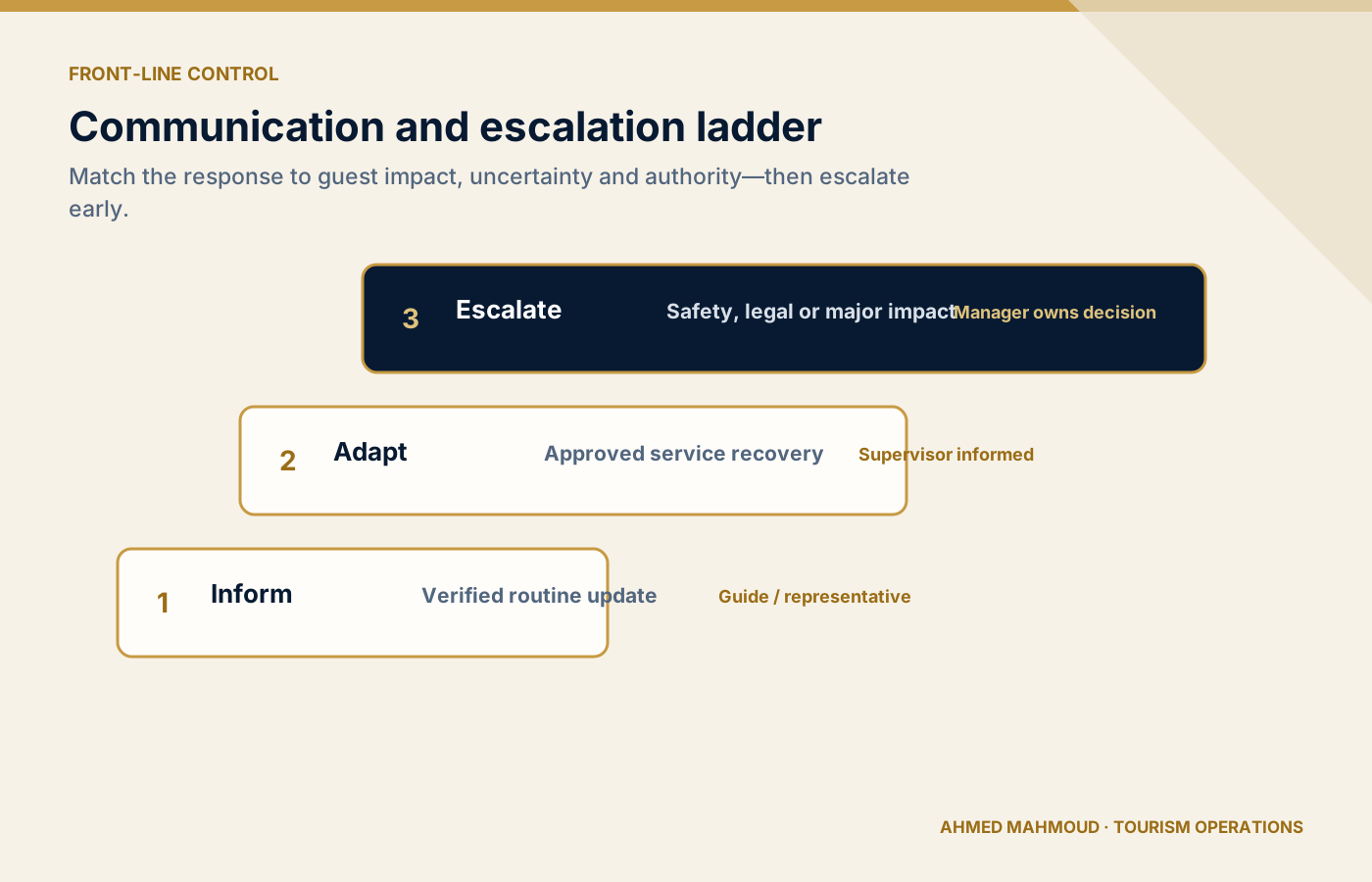
The response level rises with uncertainty, guest impact and the authority needed to resolve the situation.
On small screens, scroll the diagram horizontally to read its labels.
#Ethical Recommendations
Prepare transparent, guest-centred recommendations without hidden pressure or conflicts.
#When to use it
Use it for a controlled draft before information reaches a guest, supplier, colleague or manager.
#Required inputs
- guest interests
- location
- verified options
- time
- budget band
- accessibility
- company relationship
- commission policy
Illustrative scenarioWorked example: Ethical Recommendations
Operational teaching scenario, not a documented incident. Uncited figures and outcomes are illustrative assumptions.
- Situation
Example: A concierge is recommending three optional evening experiences.
- Evidence
Check the supplied guest interests, location, verified options, time, budget band. Treat scenario inputs as assumptions until confirmed against approved records.
- Decision
Decide whether the inputs are complete and the task is authorised. If not, request the missing information before using the prompt.
- Action
Prepare the ethical recommendations draft from the checked inputs; keep unresolved facts and required approvals visible.
- Verification
Compare the draft with the source records and expected outputs. The named accountable owner must verify and approve it before live use.
#Complete prompt
ROLE
Act as a responsible destination specialist in a professional tourism organisation.

TASK
Prepare transparent, guest-centred recommendations without hidden pressure or conflicts.

CONTEXT
Destination/service: [Insert confirmed details]
Date, operating stage and guest/client profile: [Insert approved information]
Sources of truth: [List approved systems, confirmations, SOPs or official sources]

INPUTS
Provide: guest interests; location; verified options; time; budget band; accessibility; company relationship; commission policy.
If an essential input is missing, contradictory or unconfirmed, stop and list what is required, its owner and source. Do not guess.

OUTPUT
Return: balanced shortlist; reasons; limitations; relationship disclosure; questions to refine. Separate confirmed facts, assumptions, recommendations and pending items. Label dynamic facts with their source and verification date when supplied.

LIMITS
Do not invent availability, quality ratings or “local favourite” claims. Disclose relevant commercial relationships.

PRIVACY AND APPROVAL
Exclude unnecessary personal data, identity or payment details, confidential rates, contracts and security information. Finish with verification actions, unresolved questions and the final approver’s role. The output remains a draft until that person checks it against approved sources.
#Expected output
- balanced shortlist
- reasons
- limitations
- relationship disclosure
- questions to refine
Human verification
Professional tourism trainer’s noteReplace every placeholder and keep unresolved items visible until an authorised professional reviews them.
#Training Role-Play
Create a role-play that tests knowledge, empathy, timing and escalation.
#When to use it
Use it for a controlled draft before information reaches a guest, supplier, colleague or manager.
#Required inputs
- training objective
- employee role
- guest profile
- scenario
- facts available
- hidden complication
- authority
- assessment rubric
Illustrative scenarioWorked example: Training Role-Play
Operational teaching scenario, not a documented incident. Uncited figures and outcomes are illustrative assumptions.
- Situation
Example: New guides practise responding when an attraction access rule changes during the tour.
- Evidence
Check the supplied training objective, employee role, guest profile, scenario, facts available. Treat scenario inputs as assumptions until confirmed against approved records.
- Decision
Decide whether the inputs are complete and the task is authorised. If not, request the missing information before using the prompt.
- Action
Prepare the training role-play draft from the checked inputs; keep unresolved facts and required approvals visible.
- Verification
Compare the draft with the source records and expected outputs. The named accountable owner must verify and approve it before live use.
#Complete prompt
ROLE
Act as a tourism trainer and realistic guest simulator in a professional tourism organisation.

TASK
Create a role-play that tests knowledge, empathy, timing and escalation.

CONTEXT
Destination/service: [Insert confirmed details]
Date, operating stage and guest/client profile: [Insert approved information]
Sources of truth: [List approved systems, confirmations, SOPs or official sources]

INPUTS
Provide: training objective; employee role; guest profile; scenario; facts available; hidden complication; authority; assessment rubric.
If an essential input is missing, contradictory or unconfirmed, stop and list what is required, its owner and source. Do not guess.

OUTPUT
Return: trainer brief; learner brief; staged guest responses; escalation trigger; model debrief; scoring guide. Separate confirmed facts, assumptions, recommendations and pending items. Label dynamic facts with their source and verification date when supplied.

LIMITS
Use a fictional scenario and avoid demeaning cultural, disability or demographic stereotypes.

PRIVACY AND APPROVAL
Exclude unnecessary personal data, identity or payment details, confidential rates, contracts and security information. Finish with verification actions, unresolved questions and the final approver’s role. The output remains a draft until that person checks it against approved sources.
#Expected output
- trainer brief
- learner brief
- staged guest responses
- escalation trigger
- model debrief
- scoring guide
Human verification
Professional tourism trainer’s noteReplace every placeholder and keep unresolved items visible until an authorised professional reviews them.
#Post-Tour Reporting
Convert structured tour notes into a concise evidence-based end-of-tour report.
#When to use it
Use it for a controlled draft before information reaches a guest, supplier, colleague or manager.
#Required inputs
- tour reference without personal identifiers
- plan
- actual timings
- incidents
- guest feedback
- supplier issues
- unresolved actions
- evidence
Illustrative scenarioWorked example: Post-Tour Reporting
Operational teaching scenario, not a documented incident. Uncited figures and outcomes are illustrative assumptions.
- Situation
Example: A guide reports a late departure, a recovered ticket issue and positive feedback about storytelling.
- Evidence
Check the supplied tour reference without personal identifiers, plan, actual timings, incidents, guest feedback. Treat scenario inputs as assumptions until confirmed against approved records.
- Decision
Decide whether the inputs are complete and the task is authorised. If not, request the missing information before using the prompt.
- Action
Prepare the post-tour reporting draft from the checked inputs; keep unresolved facts and required approvals visible.
- Verification
Compare the draft with the source records and expected outputs. The named accountable owner must verify and approve it before live use.
#Complete prompt
ROLE
Act as a guide operations reporting coach in a professional tourism organisation.

TASK
Convert structured tour notes into a concise evidence-based end-of-tour report.

CONTEXT
Destination/service: [Insert confirmed details]
Date, operating stage and guest/client profile: [Insert approved information]
Sources of truth: [List approved systems, confirmations, SOPs or official sources]

INPUTS
Provide: tour reference without personal identifiers; plan; actual timings; incidents; guest feedback; supplier issues; unresolved actions; evidence.
If an essential input is missing, contradictory or unconfirmed, stop and list what is required, its owner and source. Do not guess.

OUTPUT
Return: executive summary; timing variance; guest-experience notes; incident log; follow-up owners; improvement suggestions. Separate confirmed facts, assumptions, recommendations and pending items. Label dynamic facts with their source and verification date when supplied.

LIMITS
Separate observed facts, guest statements and guide interpretation.

PRIVACY AND APPROVAL
Exclude unnecessary personal data, identity or payment details, confidential rates, contracts and security information. Finish with verification actions, unresolved questions and the final approver’s role. The output remains a draft until that person checks it against approved sources.
#Expected output
- executive summary
- timing variance
- guest-experience notes
- incident log
- follow-up owners
- improvement suggestions
Human verification
Professional tourism trainer’s noteReplace every placeholder and keep unresolved items visible until an authorised professional reviews them.
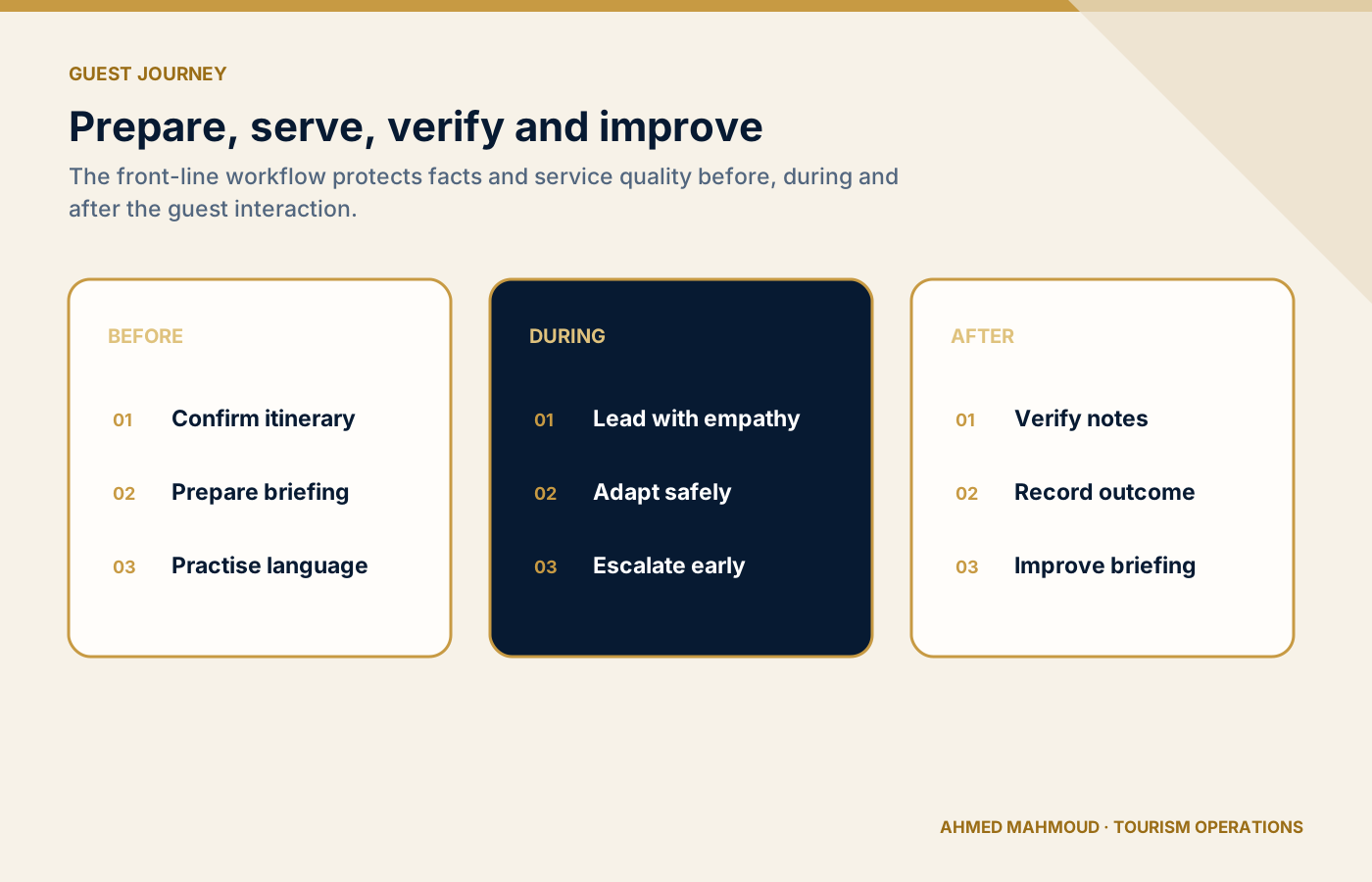
The cycle protects verified facts before service, human judgement during service and learning after service.
On small screens, scroll the diagram horizontally to read its labels.
#Common mistakes to avoid
- Mistake 1: Reading AI wording to guests without adapting it naturally.
- Mistake 2: Using outdated attraction hours or access rules.
- Mistake 3: Translating sensitive cultural information without a bilingual review.
- Mistake 4: Writing complaint replies before establishing the facts.
- Mistake 5: Allowing the tool to promise compensation or supplier action.
A useful internal review question is: “Could a new employee read this output and mistake a proposal for a confirmation?” If the answer is yes, revise the prompt and output labels before use.
#Implementation guidance for tourism teams
Introduce the toolkit during guide training. Trainers should model one prompt, compare weak and strong inputs, then run role-play with the generated output. Approved destination facts, escalation contacts and service standards should remain outside the prompt as controlled company references.
Choose a low-risk, frequent task with a clear owner and source of truth.
Run realistic anonymised cases, including missing data and operational exceptions.
Document the prompt version, permitted users, tool, reviewer and release criteria.
Track quality, time saved, defects, escalations and employee feedback.
Update the prompt when the process, destination, supplier or risk changes.
#Final verification checklist
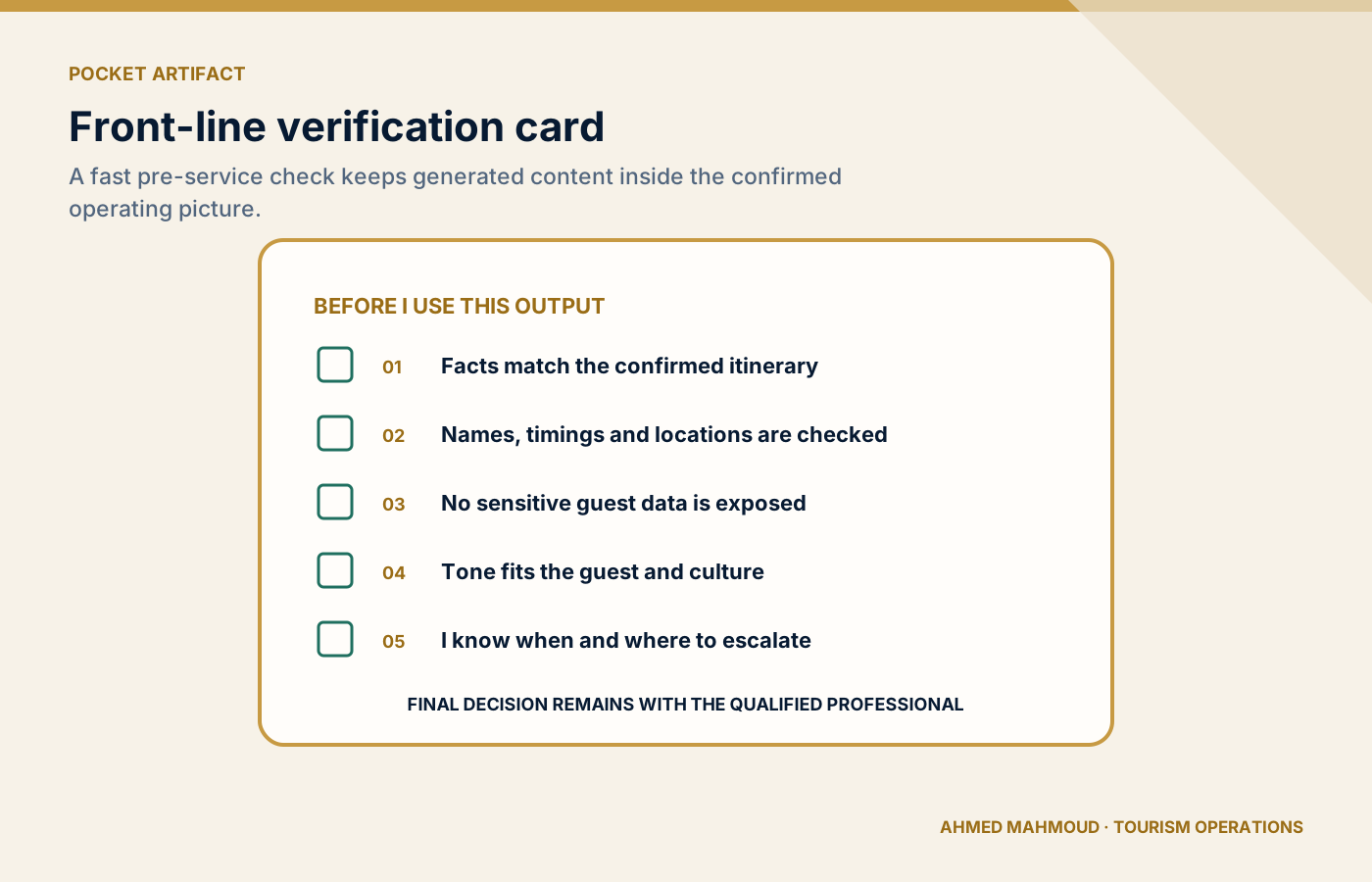
A five-point check keeps generated material inside the confirmed operating picture before it reaches a guest.
On small screens, scroll the diagram horizontally to read its labels.
#Use AI to strengthen tourism judgement, not to bypass it
The best result is not the longest response or the most impressive wording. It is an output that helps a trained tourism professional see the situation clearly, find missing information early, communicate consistently and make a controlled decision. Keep the TRAVEL framework, verification table, privacy boundaries and human sign-off visible every time the prompt is adapted.
#Questions tourism teams ask
Can tour guides use AI during a live tour?
It may support approved low-risk tasks, but a guide should not depend on it for safety decisions, live operational changes or unverified attraction information.
How is this different from the guest-experience toolkit?
This article focuses on what the employee prepares and does. The guest-experience toolkit focuses on the company’s complete customer journey, feedback and service-recovery system.
Can AI translate guest messages?
Yes, as a draft. Important instructions, cultural content, legal wording, health and safety messages should be checked by a competent speaker or approved translation process.
Will AI replace destination storytelling?
No. It can help organise verified facts and practise variations, but the guide’s local understanding, timing, empathy and interaction create the experience.
What is the safest first use?
Pre-tour preparation with anonymised group information and a checklist that is verified against the confirmed tour file.
Professional verification reminder: Always compare AI output with approved internal systems, official sources and qualified human judgement before it affects a guest, supplier, employee or commercial commitment.
Connect this guide to your next step
Continue with related methods and the wider series.
- Related guideThe DMC Operations AI Toolkit: 10 Ready-to-Use Prompts for Daily Tour Operations
DMC operations teams can use AI to organise files, identify gaps and structure briefs, but confirmations, assignments and disruption decisions must stay in approved systems.
- Related guideThe Guest Experience AI Toolkit: 10 Prompts for Communication, Complaints, and Service Recovery
AI can support consistent guest communication and feedback analysis, while facts, privacy, empathy, recovery authority and accountability remain human responsibilities.
- Related guideTourism Product Development AI Toolkit
AI is most useful in tourism product development when it organises evidence, explores options and exposes feasibility questions instead of inventing demand or suppliers.
Put this article into practice
- Use verified context to prepare briefings, practise responses and draft communication for an employee to check before use.
- Verify the supplied facts and record any missing evidence before acting.
- Name the accountable owner and confirm the decision or approval limits.
- Test the result in the operating context and retain the verification record.
Your next step
Supply the required inputs, copy the complete prompt and verify the output before using it in the operation.
Apply Pre-Tour Preparation