

- Who this helps
- Tourism product managers, market researchers and contracting teams.
- What you can do
- Build a traceable competitor map, group comparable product families and explain where public pricing cannot support a fair comparison.
A marketplace search result is not a demand report. It is a public shelf: useful for seeing what is offered, how products are framed and where offers overlap—but incapable of revealing bookings, conversion, commission or unmet need.
#The opening decision: map the shelf before naming the gap
Amsterdam already sells canal cruises, walking tours, bike tours, food experiences, museum combinations, city passes, day excursions, workshops, nightlife and self-guided products through several channels. The product-management problem is not finding examples. It is deciding which offers compete for the same visitor job, which are substitutes, which listings describe the same underlying product, and which public fields can be compared without manufacturing certainty.
A search page makes the market look countable. Yet one operator may appear on multiple OTAs, one product may have several language or inclusion options, and a bundle may combine services that also sell separately. Counting every listing as a distinct competitor inflates supply. Treating a high review count as booking volume invents private performance. Treating a promoted rank as organic preference ignores the platform’s own commercial logic.
This article therefore makes a narrower decision: is the competitive taxonomy and collection method strong enough to authorize the full 60–100 listing sample defined in Article 01? It does not decide where the opportunity is. That belongs to Article 03 after supply is combined with demand, customer, feasibility and destination evidence.
#The decision we need to make
The output must answer four management questions:
- Which product families compete directly for a guided or self-guided Amsterdam discovery job?
- Which substitutes compete for the same time, attention or budget without delivering the same format?
- Which publicly observable features distinguish products?
- Can the sample be expanded compliantly and consistently enough for gap analysis?
The decision is not “which tour should we copy?” Competitive research should expose the grammar of the market—format, promise, duration, group model, language, inclusion, meeting logic and cancellation—not turn popular listings into a design brief.
This continues the evidence-first method from Article 01’s Amsterdam research plan. The broader product-development controls are explained in the Tourism Product Development AI Toolkit.
#Current hypotheses carried forward
H01–H06 remain in the single project register. Competitive observations can add evidence, but they cannot validate customer value, willingness to pay, route acceptability, qualified guide capacity, margin or stakeholder permission.
| ID | Competitive evidence observed | What it cannot prove | Status |
|---|---|---|---|
| H01 | Historical, food, neighbourhood and “hidden” positioning is publicly offered. | That visitors prefer deeper context to highlights. | UNTESTED |
| H02 | Small-group and private formats appear across boat, walk, bike and food offers. | That the experience improvement supports the cost. | UNTESTED |
| H03 | Countryside, eastern-island and self-guided neighbourhood formats exist. | That a route creates acceptable destination value. | UNTESTED |
| H04 | English, Spanish, French, German, Dutch and audio-guide options were visible. | That a segment is underserved or qualified capacity exists. | UNTESTED |
| H05 | Public price points and group bases can be collected. | Costs, commission, conversion or margin. | UNTESTED |
| H06 | No competitive listing can represent local permission. | Acceptable operating conditions. | UNTESTED |
Scroll horizontally to read every column. Keyboard: focus the table, then use the arrow keys.
What to learn: Read each row across to connect ID with Competitive evidence observed, What it cannot prove, Status. Compare the rows to identify the relevant id for your situation; use the accompanying section to interpret the result.
#What counts as a competitor?
A direct competitor solves a similar job through a similar service model. If the working job is “help me understand Amsterdam in a limited first-visit window,” a guided highlights walk, orientation bike tour or narrated small-group cruise may be direct even though the transport mode differs. A specialist food experience becomes direct when the proposed value is local cultural interpretation rather than transport alone.
A substitute competes for the same time or budget through a different mechanism. A city card, museum-and-cruise bundle, comedy show, museum visit, hop-on service, self-guided PDF or regional day excursion may replace the time available for a guided experience. A complement, such as a museum ticket used after a walk, can also become a substitute when the visitor has only three hours.
Directness is therefore not a permanent label. It depends on the visitor job, trip stage, duration, budget and operating area. The downloadable Direct vs Substitute Competitor Map preserves that reasoning instead of classifying products only by category name.
#Research design: pilot first, census second
The target population is publicly bookable Amsterdam-area visitor experiences that could compete for discovery time and budget. The Article 01 target remains 60–100 listings. This article completed a purposive 24-record pilot across GetYourGuide, Viator, Klook, Tiqets, Expedia Experiences, I amsterdam and a direct operator page. The pilot was designed to test fields, category boundaries, duplication and access—not to estimate market share.
| Element | Pilot rule | Full collection rule |
|---|---|---|
| Inclusion | Public Amsterdam experience with enough detail to classify. | Bookable during a defined observation window and relevant to the visitor job. |
| Exclusion | Broken pages, empty shells and products outside the Amsterdam area. | Duplicates retained as observations but linked to one product family. |
| Platforms | Seven accessible public source classes. | Stratify so no platform or category dominates. |
| Collection | Manual structured review on 22 August 2026. | Repeat on fixed dates; review terms before any automation. |
| Price | Preserve displayed value, currency, basis and promotion. | Use a common travel date and participant profile before comparison. |
| Quality | Human review of all 24 records. | Second-review sample plus duplicate and validity checks. |
Scroll horizontally to read every column. Keyboard: focus the table, then use the arrow keys.
What to learn: Read each row across to connect Element with Pilot rule, Full collection rule. Compare the rows to identify the relevant element for your situation; use the accompanying section to interpret the result.
Tripadvisor could not be reviewed through the research tool because access was blocked. The correct response is not to circumvent the control. It is to mark the source unavailable, consider permitted manual browser review or licensed access, and test whether conclusions remain stable without it.
#Publicly observable versus private or unknown
| Public observation | Private or unknown | Control |
|---|---|---|
| Displayed title, price, duration and option | Realized selling price and discount funding | Record display context and price basis. |
| Published rating and review count | Bookings, repeat purchase and satisfaction of all guests | Keep platform scale and date. |
| Itinerary, inclusions and meeting point | Actual delivery consistency | Treat as the public promise. |
| Language and group claim | Guide availability and actual group size | Validate operationally later. |
| Cancellation wording | True cancellation and refund rate | Preserve exact option conditions. |
| Search position or badge | Impressions, conversion and ranking weight | Do not translate rank into demand. |
Scroll horizontally to read every column. Keyboard: focus the table, then use the arrow keys.
What to learn: Read each row across to connect Public observation with Private or unknown, Control. Compare the rows to identify the relevant public observation for your situation; use the accompanying section to interpret the result.
GetYourGuide publicly explains that activity ranking can consider popularity, ratings, performance, availability, diversity and revenue, including supplier commissions. Viator pages may also disclose that featured experiences can earn the platform higher commission. Ranking is therefore an outcome of several commercial and operational signals—not a clean demand variable.
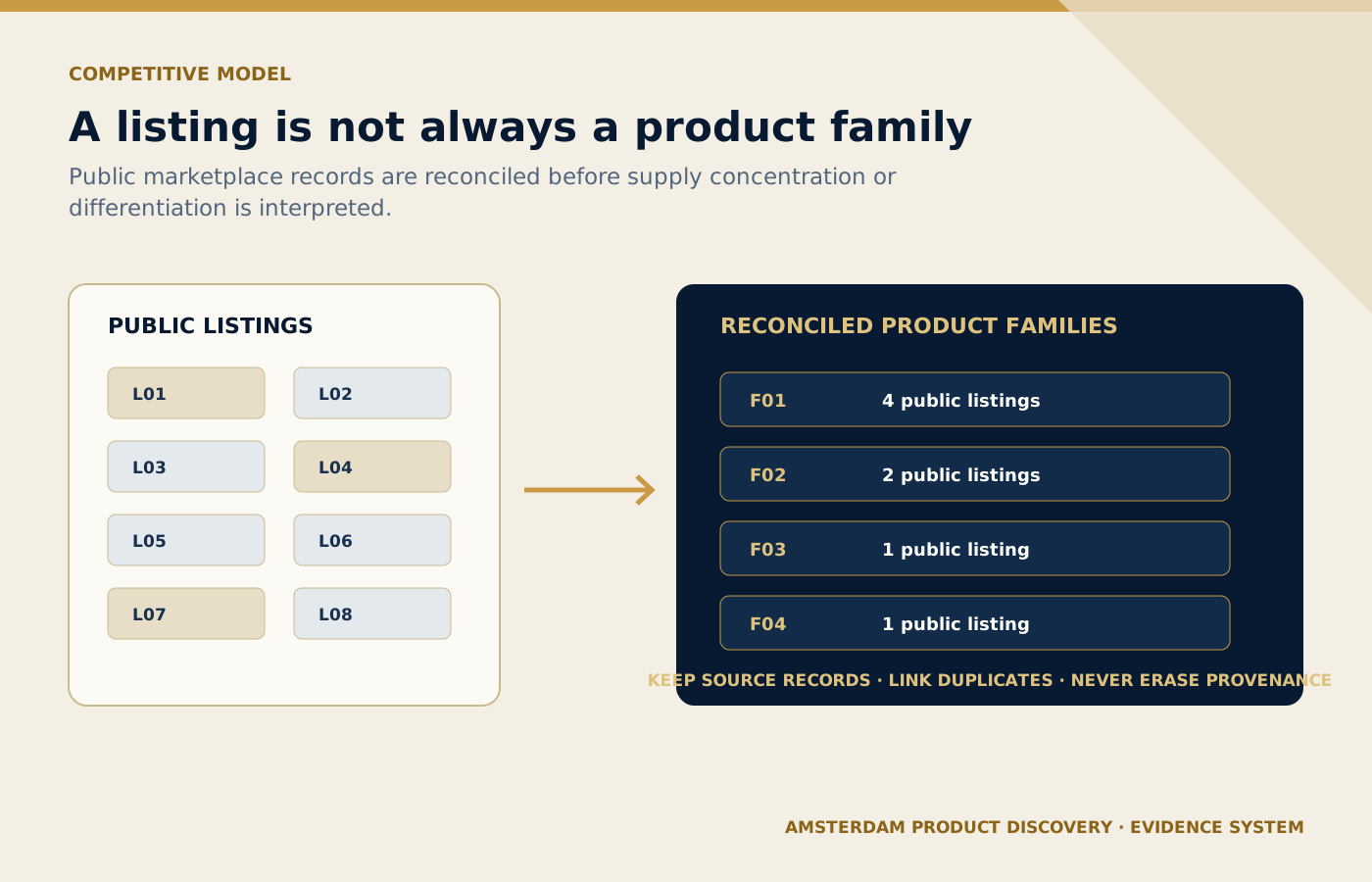
Duplicate public listings remain traceable to their sources while the analysis counts the underlying product family once.
On small screens, scroll the diagram horizontally to read its labels.
#Data model and provenance
Every row uses the Article 01 pipeline: RAW → STAGING → CLEAN → ANALYTICAL → DECISION. The raw title, displayed price and page wording remain untouched. Clean fields standardize duration in minutes, category, competitor type, group model, language notation and missingness. Analytical fields create product-family IDs and feature flags. The decision layer uses those fields only after a reviewer approves duplicate links and transformations.
The Competitive Product Dataset records source, URL, collection date, original price, cleaned price, price basis, duration, group model, language, rating scale, review count, itinerary, inclusions, meeting point, cancellation, positioning, differentiators, duplicate note and confidence. A missing field is not zero. “Not displayed” is different from “not offered.”
Cross-platform duplication is an analytical issue, not a reason to delete evidence. The same underlying service can have different titles, option bundles, currencies, review systems and policies. Each listing stays as an observation; a product-family key connects probable equivalents. Uncertain matches remain unresolved until operator, meeting point, duration and inclusions align.
#What the 24-record pilot reveals
Observed Data — Medium confidence: the pilot shows a broad but repetitive public shelf. Canal-only products occupy several positions, from high-capacity audio cruises to live-hosted small-group and private boats. Guided walking and cycling offers often promise highlights plus “hidden gems” or local perspective. Food products combine tastings with neighbourhood interpretation, walking, cycling or boating. Bundles connect museums, cruises and transport. Self-guided products remove fixed pace and guide capacity.
Derived observation — Low confidence: differentiation appears to be assembled from a limited set of levers: mode, group intimacy, live versus recorded interpretation, language, inclusion, time of day, neighbourhood, food and drink, attraction access, flexibility and local-host positioning. That is a useful feature grammar, but the purposive pilot cannot estimate the proportion of the full market using each lever.
Duration creates recognizable shelves: roughly one-hour cruises and tastings; two-to-three-hour walks and bike tours; three-to-four-hour food or hybrid experiences; and full-day combinations or regional excursions. These bands compete for different itinerary slots. Comparing a 60-minute cruise with an 8.5-hour walk-bike-cruise product as if price alone determined value would be meaningless.
Price also requires disciplined bases. The pilot contains per-person prices, a per-group private price, promotional crossed-out prices, multiple currencies, bundles and pages where price depends on date or option. No market average is reported. Before Article 03, the full sample needs one observation date, common participant profile, common service date, retained original currency and a documented foreign-exchange date if normalization is necessary.
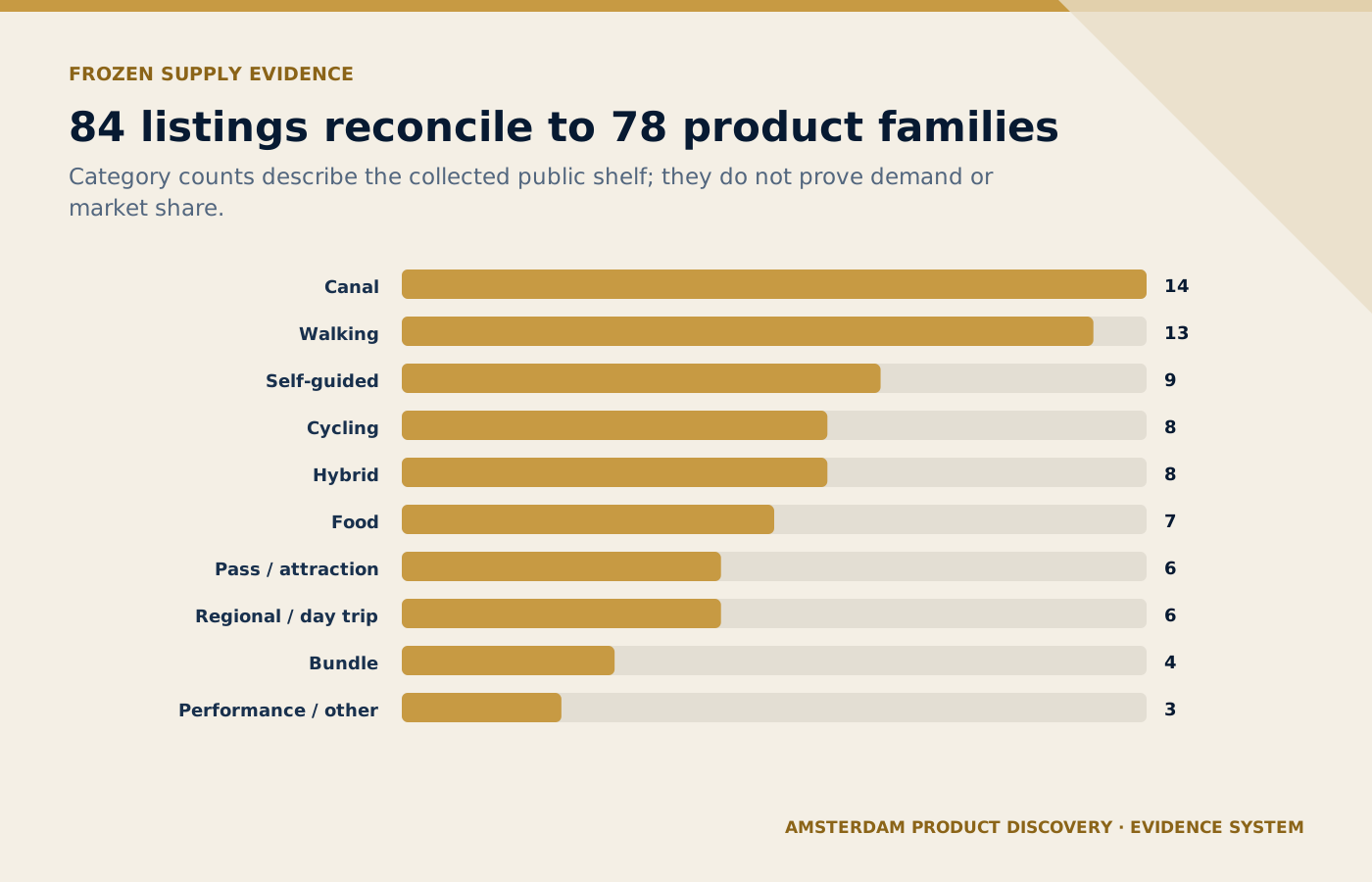
The frozen collection describes visible category coverage, not market demand, bookings or market share.
On small screens, scroll the diagram horizontally to read its labels.
#Category and subcategory architecture
The pilot taxonomy separates mode from experience promise. “Boat” describes delivery; “historic orientation,” “food and drink,” “evening atmosphere” or “private local interpretation” describes the job and positioning. Combining them produces useful subcategories without treating marketing phrases as unique markets.
- Canal: classic audio, live-hosted, small-group, private, food/drink, evening and attraction bundle.
- Walking: highlights, history, neighbourhood, Anne Frank/history, food and private orientation.
- Cycling: city highlights, specialist-language, neighbourhood and countryside dispersal.
- Hybrid: walk + cruise, bike + cruise, walk + bike + cruise, food + cruise.
- Independent: self-guided food, city card, attraction bundle and flexible discovery.
- Substitute leisure: museum, performance, workshop and regional day excursion.
This structure prevents two errors. First, it does not label every canal product identical. Second, it does not call every different category non-competitive. A premium small-group boat and a private historical walk may compete strongly for a couple seeking a personal two-hour orientation.
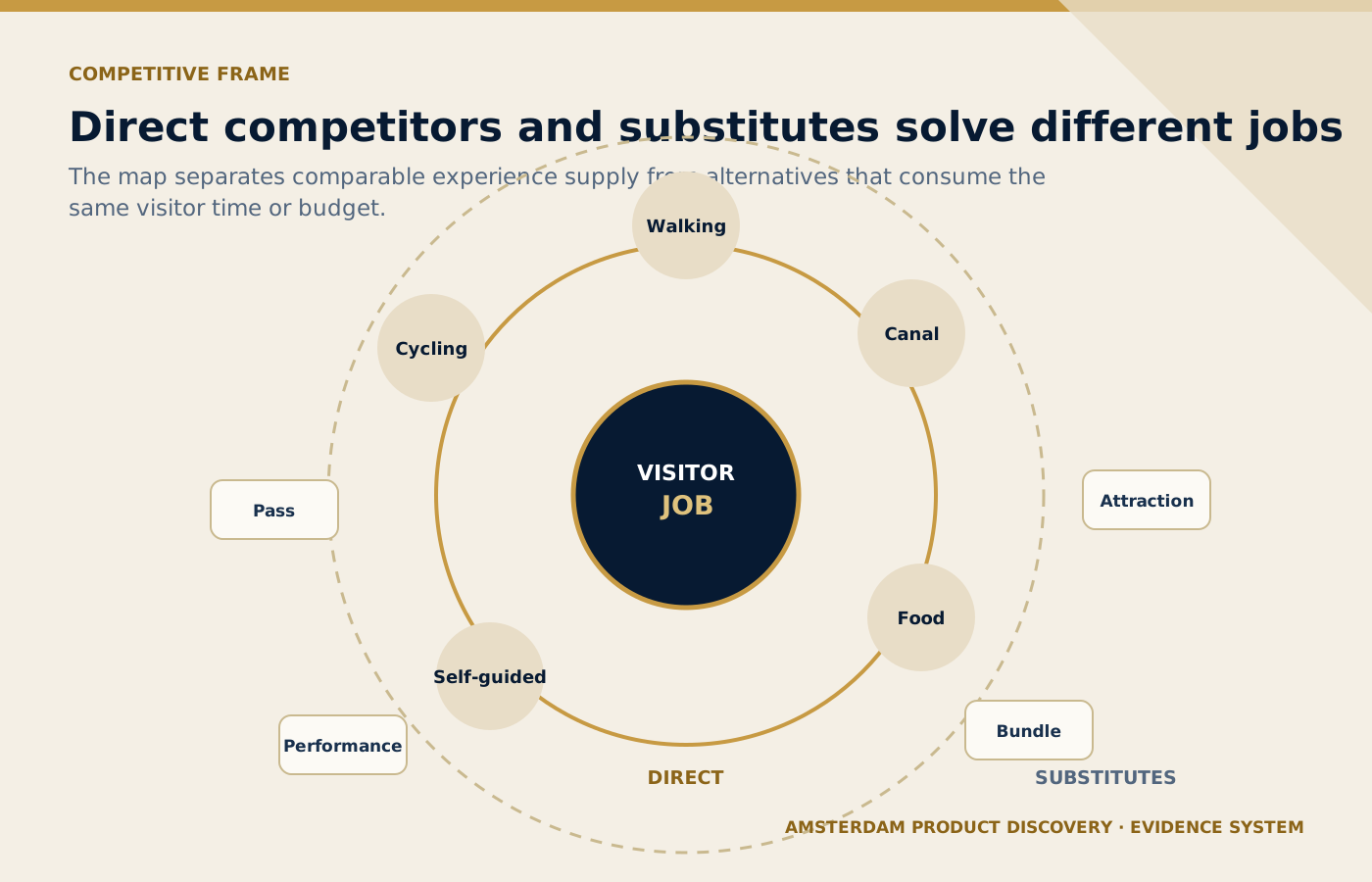
Direct products and substitutes compete differently for the visitor's time, budget and desired progress.
On small screens, scroll the diagram horizontally to read its labels.
#Feature matrix: compare promises, not adjectives
Words such as authentic, unique, local and unforgettable are too elastic for reliable comparison. The Competitor Feature Matrix uses inspectable features: live guide, audio or digital interpretation, maximum group where stated, private option, food/drink, admission, transport mode, language, fixed meeting point, weather exposure, accessibility disclosure and cancellation.
A feature appearing often is not automatically important. It may be easy to copy, required by the mode, or heavily represented because one platform category dominated the pilot. A feature appearing rarely is not automatically a gap. It may lack demand, be difficult to operate, conflict with destination priorities or simply use different wording.
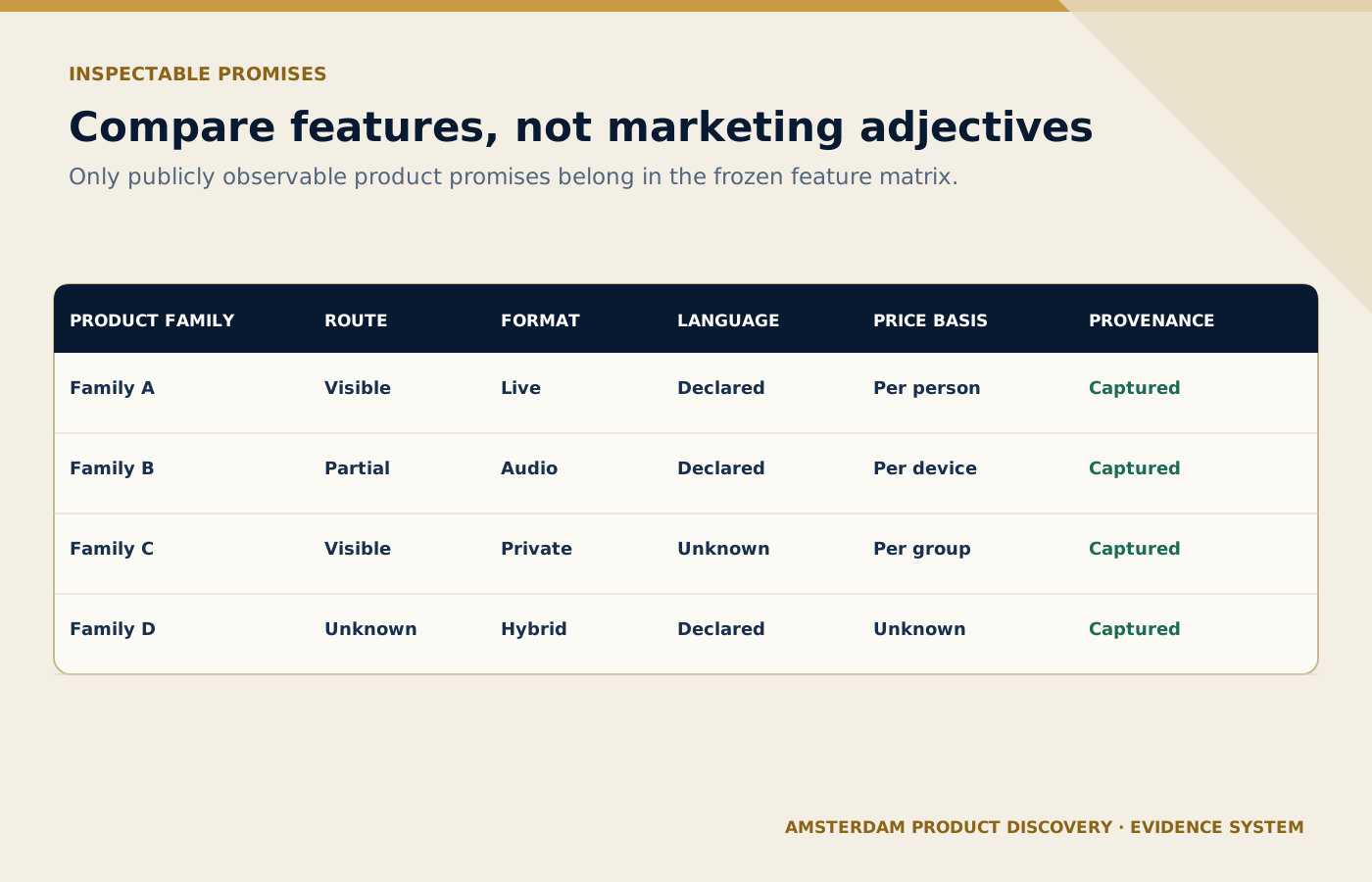
The matrix compares observable promises and preserves unknown fields instead of translating marketing adjectives into evidence.
On small screens, scroll the diagram horizontally to read its labels.
#Analytics used in this article
| Method | Input → output | Decision supported | Limitation |
|---|---|---|---|
| Frequency distribution | Normalized categories/features → counts and shares | Where observed supply concentrates | Sample design determines the distribution. |
| Median and quartiles | Comparable per-person prices/durations → centre and spread | Typical bands and outliers | Requires common currency, date and basis. |
| Cross-tabulation | Category × group/language/inclusion → feature pattern | How models differ | Sparse cells can mislead. |
| Duplicate linkage | Operator, title, duration, meeting point and inclusions → product family | Listings versus underlying offers | Probabilistic matches need human review. |
| Positioning map | Interpretation depth × delivery intimacy → competitor space | Which propositions look similar | Axes are coded judgments, not demand. |
Scroll horizontally to read every column. Keyboard: focus the table, then use the arrow keys.
What to learn: Read each row across to connect Method with Input → output, Decision supported, Limitation. Compare the rows to identify the relevant method for your situation; use the accompanying section to interpret the result.
The pilot supports taxonomy and collection decisions. It does not yet support statistical price conclusions. Median, quartiles and box plots become appropriate only after incompatible price bases are separated.
#How we should visualize this decision
- Category distribution: horizontal bars for validated product families, not raw listings. It asks where observed supply concentrates; platform sampling can distort the answer.
- Feature matrix: product families by observable feature. It shows repeated combinations; absence may mean undisclosed rather than unavailable.
- Direct–substitute map: experience similarity against competition for visitor time. It clarifies competitive logic; positions change with the visitor job.
- Price–duration plot: comparable per-person price against duration, with group model encoded. It can expose shelves; mixed currencies, dates and bundles must be excluded.
#Copy-ready AI prompts for controlled competitive analysis
#Normalize the competitive dataset
Use after manual collection.
Purpose: standardize fields without overwriting observations. Required input: raw rows and dictionary. Expected output: clean table plus transformation log. Human verification: analyst checks every changed field.
#Competitive data normalization
When to use it
Normalize the supplied public Amsterdam product observations while preserving raw values.
Required inputs
[Paste raw rows, field definitions, observation date and collection rules.]
Complete prompt
ROLE
Act as a tourism competitive-data quality analyst.

DECISION/TASK
Normalize the supplied public Amsterdam product observations while preserving raw values.

CONTEXT
The decision is whether the dataset is comparable enough for market-structure analysis.

INPUT
[Paste raw rows, field definitions, observation date and collection rules.]

METHOD
Validate types; standardize duration, category, group model and missingness; identify incompatible price bases; create a transformation log.

CONSTRAINTS
Use only supplied data. Do not invent prices, languages, bookings, commissions, conversion or availability. Never overwrite original values.

OUTPUT FORMAT
Return clean rows, rejected rows, field-level transformation log, missing-data report and questions for human review.

VERIFICATION
List every classification or match requiring analyst approval.
Expected output
Return clean rows, rejected rows, field-level transformation log, missing-data report and questions for human review.
Human verification
List every classification or match requiring analyst approval.
#Propose duplicate product families
Use before counting competitors.
Purpose: distinguish marketplace listings from underlying products. Required input: normalized rows. Expected output: candidate match groups with reasons. Human verification: researcher confirms each link.
#Duplicate-linkage review
When to use it
Identify observations that may describe the same underlying Amsterdam product.
Required inputs
[Paste listing ID, source, operator, title, duration, itinerary, inclusions, meeting point and options.]
Complete prompt
ROLE
Act as a cautious tourism product entity-resolution reviewer.

DECISION/TASK
Identify observations that may describe the same underlying Amsterdam product.

INPUT
[Paste listing ID, source, operator, title, duration, itinerary, inclusions, meeting point and options.]

METHOD
Compare stable operating features. Assign candidate family, confidence and contradictory evidence.

CONSTRAINTS
Do not merge on title similarity alone. Keep uncertain matches separate. Do not infer operator ownership when absent.

OUTPUT FORMAT
Return candidate family table, match rationale, conflict fields, confidence and manual verification step.

VERIFICATION
Require a human decision for every merge and preserve original listing IDs.
Expected output
Return candidate family table, match rationale, conflict fields, confidence and manual verification step.
Human verification
Require a human decision for every merge and preserve original listing IDs.
#Build an auditable positioning map
Use only after taxonomy review.
Purpose: compare observable propositions without declaring a market gap. Required input: approved product families and coding rules. Expected output: positions, evidence and uncertainty. Human verification: product lead reviews axes and implications.
#Positioning-map analysis
When to use it
Map approved Amsterdam product families using interpretation depth and delivery intimacy.
Required inputs
[Paste product-family rows, feature definitions and coding scale.]
Complete prompt
ROLE
Act as a tourism product-strategy analyst.

DECISION/TASK
Map approved Amsterdam product families using interpretation depth and delivery intimacy.

CONTEXT
The map describes public positioning; it does not prove demand or opportunity.

INPUT
[Paste product-family rows, feature definitions and coding scale.]

METHOD
Score only observable evidence, quote the supporting field, flag missing disclosure and test alternative axis definitions.

CONSTRAINTS
Do not infer bookings, willingness to pay, quality, profitability or destination permission. Separate observation, derived score and hypothesis.

OUTPUT FORMAT
Return plotted coordinates, evidence table, low-confidence cases, sensitivity note and next research questions.

VERIFICATION
Identify every judgment requiring product-lead review before publication.
Expected output
Return plotted coordinates, evidence table, low-confidence cases, sensitivity note and next research questions.
Human verification
Identify every judgment requiring product-lead review before publication.
#Competitive artifact pack
- Competitive Product Dataset — 24 pilot observations with provenance; full sample awaiting data.
- Competitor Feature Matrix — observable feature definitions and pilot coding.
- Direct vs Substitute Competitor Map — visitor-job-based competition logic.
- Cumulative Hypothesis Register and Assumption Register — Article 01 controls preserved and reviewed.
#What we know now
- Public Amsterdam supply spans several modes but reuses a compact set of positioning and service-design levers.
- Listings are not the same as underlying products; cross-platform and option duplication must be controlled.
- Canal, walking, cycling, food, hybrid, independent and substitute offers compete differently depending on the visitor job.
- Public pages support structured supply analysis but cannot reveal demand, conversion, margin or destination permission.
#What we still don't know
We do not know reliable category market shares, realized prices, bookings, conversion, willingness to pay, repeat purchase, operational quality, margins or whether any low-density position represents an attractive gap. The full 60–100 listing sample, common price protocol and duplicate review remain open.
#Assumptions updated
A01 remains OPEN with additional pilot evidence: useful public evidence can be collected manually from accessible pages, but platform access is uneven and automation has not been authorized. A02–A05 remain OPEN because competitive supply does not validate recruitment, stakeholder participation, route acceptability or destination contribution.
#Hypotheses updated
H01–H06 remain UNTESTED. The pilot adds supply-side observations to H01–H04 and a price-collection method to H05, but none meets its validation test. H06 receives no supporting evidence from commercial listings.
#Product decision
AUTHORIZE THE FULL COMPETITIVE COLLECTION — DO NOT DECLARE A MARKET GAP. The pilot taxonomy, provenance controls and manual method are workable. Expand to the pre-agreed 60–100 listings, fix the price-observation protocol, resolve probable duplicates and document inaccessible sources before opportunity analysis.
#Decision gate status
COLLECTION METHOD APPROVED WITH CONDITIONS. Article 03’s PROCEED / INVESTIGATE / STOP gate is not yet open. Competitive intensity alone cannot authorize a product.
#Sources and further reading
Primary standards, institutional guidance and professional references used to support this article.
- GetYourGuide — public Jordaan activity results and ranking disclosure (checked 22 August 2026).
- GetYourGuide — walking, biking and cruising product page.
- Viator — food walking tour with canal cruise.
- Klook — Amsterdam walking tour with canal cruise.
- Tiqets — Van Gogh Museum and canal-cruise bundle.
- Expedia Experiences — public Amsterdam tours results.
- I amsterdam — official City Card and ticket ecosystem.
- I amsterdam — self-guided Jordaan food experience.
- Blue Boat Company — direct canal-cruise product and price page.
Editorial note: Listings, prices, ratings, review counts and policies are time-sensitive. The pilot records public observations only. It claims no access to private OTA or operator data and authorizes no automated scraping.
Connect this guide to your next step
Continue with related methods and the wider series.
- Series guideBuilding a Data-Driven Signature Tour.
Explore the complete series and its reading order.
- Related guideAmsterdam Tourism Product Research Plan
Part 01 of a 12-part Amsterdam tourism product-management case study: framing the destination decision, hypotheses, research design, data provenance, sampling and ethics before deciding what to build.
- Related guideFinding the Amsterdam Tourism Market Gap
Part 03 of a 12-part Amsterdam tourism product-management case study: triangulating frozen competitive supply with destination demand, policy and feasibility signals through a transparent opportunity model.
Put this article into practice
- Keep a source URL and observation date for each competitor record.
- Compare products using the same scope, inclusions and price conditions.
- Review duplicate families and uncertain matches before counting supply.
- State what public listings cannot prove about demand or performance.
Your next step
Carry the verified findings, assumptions and open questions into the next research stage.
Continue to Finding the Amsterdam Tourism Market Gap