

- Who this helps
- Tourism coordinators, guest-service teams and communication-template owners.
- What you can do
- Design message templates with verified inputs, clear limits and escalation guidance for routine and disrupted service.
#The operating problem
A standard template protects essential meaning, authority, tone, and evidence while preserving space for verified case details and human empathy. It is a controlled starting point, not permission to send blindly. Tourism work makes this discipline unusually important. A single service may join Sales, Reservations, Operations, a hotel, an airport team, a transport partner, a guide, a client, and the guest. Information changes while the service is live, and the person who notices a problem may not hold the authority to change cost, timing, supplier, or customer promise. The document therefore has to work as an operating interface, not simply as well-written office content. The starting point is the broader system described in the operating-system overview. That system separates governance, execution, evidence, measurement, and improvement. The present article focuses on one controlled component, while the document-type comparison explains why an SOP, work instruction, checklist, form, template, and record should not be asked to perform the same job. This is a practical management model, not a universal template imposed by ISO or a substitute for applicable law, contract terms, safety requirements, privacy advice, or emergency arrangements. An organization should tailor the depth, approval, terminology, and retained evidence to its services, risk, size, jurisdiction, technology, and competence. Approval should therefore be evidence-led. Reviewers should see the mapped work, representative records, relevant risk and guest requirements, user-test observations, and unresolved issues—not only the polished draft. That evidence makes the approval decision explainable and gives the owner a baseline for measuring whether the released control improves real performance.
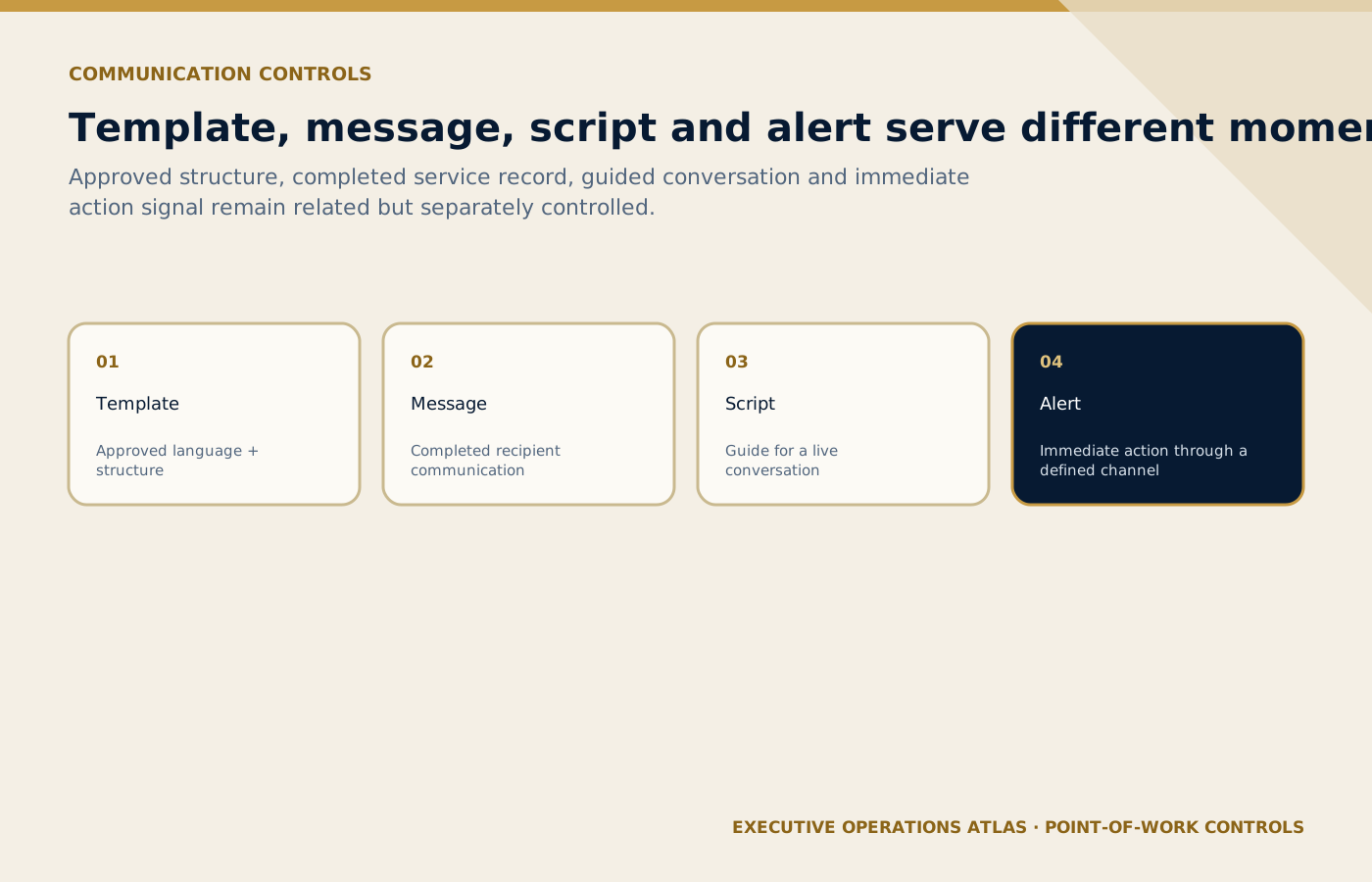
Approved structure, completed service record, guided conversation and urgent action signal serve different communication moments.
On small screens, scroll the diagram horizontally to read its labels.
#The distinctions that prevent document failure
A template contains approved structure and language. A completed message is a service record when the organization decides it must be retained. A script may guide a live conversation; an alert may demand immediate action through a defined channel. Operational communication should state what is known, what action is being taken, what the recipient should do, and when the next update will arrive. Unknown information should remain explicitly unknown rather than filled with reassurance. Tone and authority are different controls. A warm message can still exceed authority by admitting liability, offering compensation, or confirming a cause that has not been verified. Accessibility and language planning belong in the template system. Short sentences, clear action, readable structure, channel limits, translation validation, and alternatives for guests who cannot use the default channel should be designed before disruption.
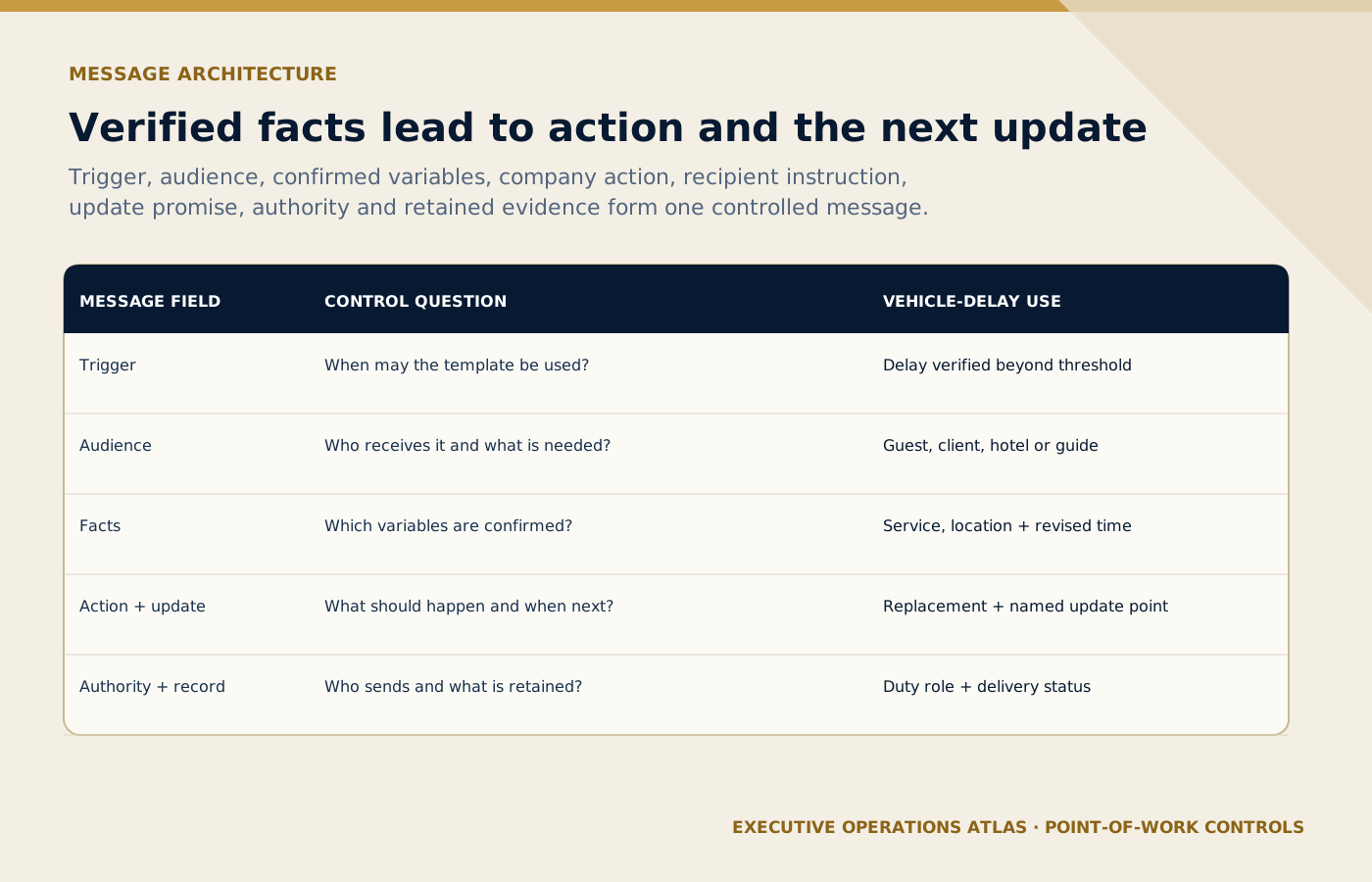
The controlled message begins with verified service facts and gives the recipient a clear action, support route and next update.
On small screens, scroll the diagram horizontally to read its labels.
#Practical tool: Message architecture, approval matrix, and eight-template library design
The following canvas is designed for a working session, not decorative inclusion in a manual. Complete it using a real service and current records. Every answer should be specific enough for another role to validate.
| Element | Control question | Tourism example |
|---|---|---|
| Trigger | When may this template be used? | Vehicle delay verified beyond communication threshold |
| Audience | Who receives it and what do they need? | Guest, client, hotel desk, guide, supplier |
| Verified facts | Which variables must be confirmed? | Service, location, revised time, contact channel |
| Action | What is the company doing and what should the reader do? | Replacement dispatched; remain at named point |
| Next update | When will more information arrive? | Specific time or event trigger |
| Authority and record | Who approves/sends and what is retained? | Duty role; template version and delivery status |
Scroll horizontally to read every column. Keyboard: focus the table, then use the arrow keys.
What to learn: Read each row across to connect Element with Control question, Tourism example. Compare the rows to identify the relevant element for your situation; use the accompanying section to interpret the result.
The table is intentionally compact. Supporting detail should live in the appropriate controlled document or system rather than expanding one tool until it becomes impossible to use. During review, mark assumptions, unresolved authority, weak inputs, and missing evidence separately; do not convert them into confident statements merely to finish the template.
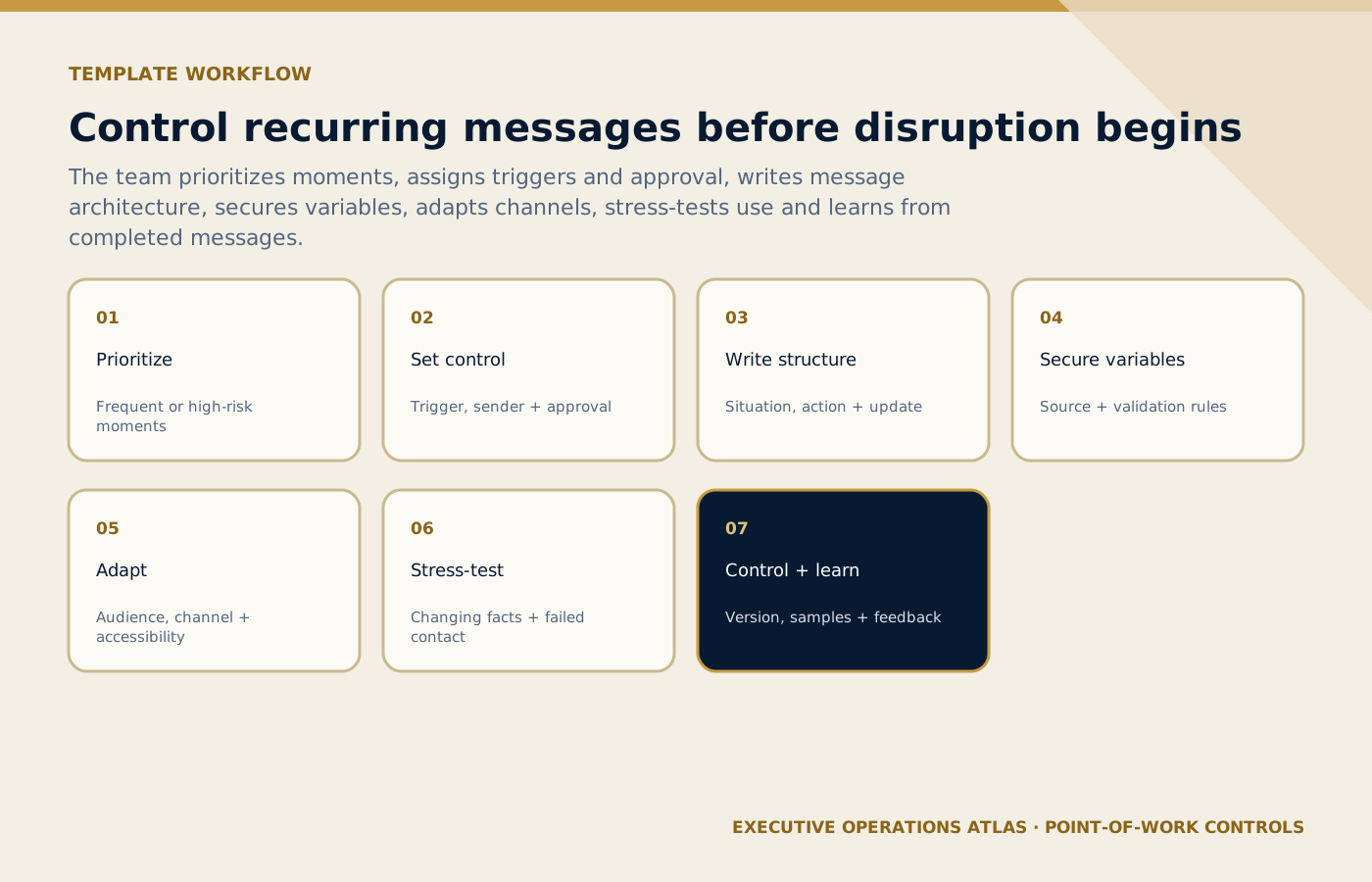
Recurring messages are controlled before disruption and improved through review of completed communications and user feedback.
On small screens, scroll the diagram horizontally to read its labels.
#A professional design workflow
#Prioritize recurring moments
Build templates for high-volume or high-risk situations: pickup reminder, no-show, flight delay, driver delay, cancellation, complaint acknowledgment, emergency assistance direction, and service recovery.
#Define trigger and approval
For each template, document who may select it, which variables require verification, whether approval is needed, and which subjects—cause, liability, refund, compensation, medical or safety advice—need specialist authority.
#Write the message architecture
Lead with the service and current situation, then the action, recipient instruction, support contact, and next update. Place empathy where it is genuine and useful, without delaying essential action.
#Design variables safely
Use clearly marked fields with source and validation rules. Prevent blank placeholders, wrong names, old times, internal codes, or hidden instructions from reaching the recipient.
#Adapt by channel and audience
SMS, WhatsApp, email, printed notes, phone scripts, and client updates have different length, accessibility, privacy, and evidence needs. Maintain aligned variants rather than cutting one email at the last minute.
#Test normal and stressed use
Simulate a rapidly changing ETA, language request, unreachable guest, and unverified cause. Check whether staff know when to pause, escalate, switch channel, or issue a correction.
#Control and learn
Assign owner, identifier, version, approved translations, review date, and feedback route. Sample completed messages for clarity, accuracy, timeliness, and unauthorized promises. After completing the workflow, test the connected design during guest and client messages for a delayed vehicle and revised pickup. Ask users to work from the draft and approved tools without whispered instructions. Any dependency on a particular manager's memory should be recorded, owned, and resolved through the correct control—document, system, authority, contract, resource, or competence—before release.
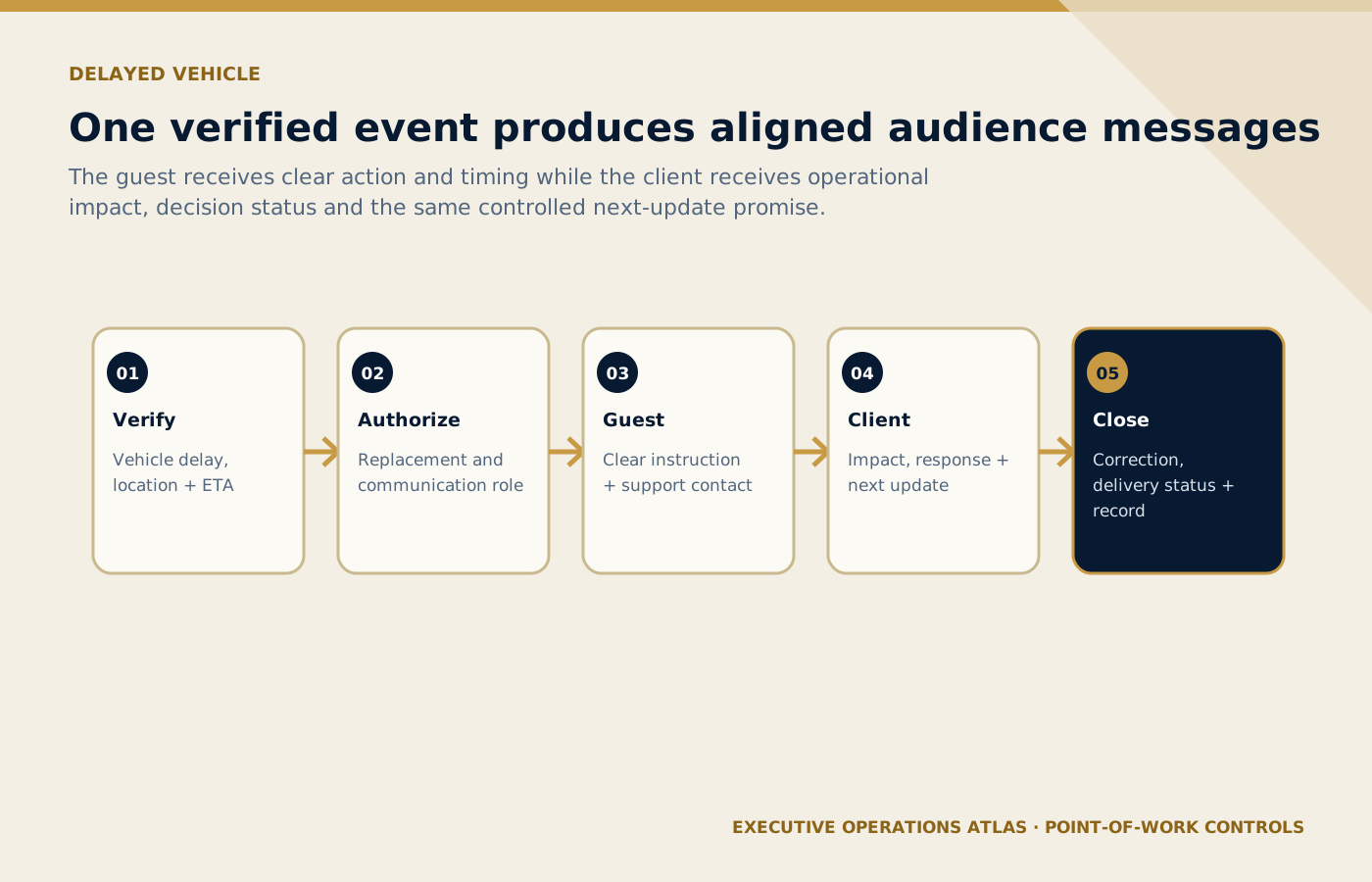
Guest and client variants share the same verified situation, authorized response and next-update commitment without becoming identical messages.
On small screens, scroll the diagram horizontally to read its labels.
#Running example: Guest and client messages for a delayed vehicle and revised pickup
Illustrative scenario
Operational teaching scenario, not a documented incident. Uncited figures and outcomes are illustrative assumptions.
- Situation
A vehicle delay requires guest and client messages that explain the approved revised pickup.
- Evidence
Check the approved service brief, current passenger count, confirmed vehicle and driver, access conditions, deadlines and activation authority.
- Decision
Decide whether to release, wait, reroute or activate the approved backup using verified readiness and the stated decision deadline.
- Action
#Guest message
The approved message identifies the booking, acknowledges inconvenience, gives the revised time and exact waiting point, states the support contact, and promises the next update at a defined time.
#Client message
A separate B2B variant records operational impact, recovery action, guest communication, and next decision point without exposing unnecessary guest data.
#Change
When the replacement ETA changes, staff issue an update referencing the same service. They do not edit a sent message or pretend the first estimate was certain.
#Common failure modes—and the design response
- Sending a template with blank or wrong variables. Use a recent case to show the operational consequence and identify the earliest control that could have prevented or detected it.
- Promising an eta before the supplier confirms it. Trace the issue across roles and handoffs; the visible error may originate in an earlier input, authority decision, or system rule.
- Using one tone and length for every audience. Decide whether the remedy belongs in this document, a supporting tool, the system, the contract, resource planning, or competence development.
- Admitting cause or liability without authority. Test the proposed correction in a normal case and an exception so that solving one failure does not create another downstream.
- Failing to state when the next update will come. Assign an owner and evidence for the correction, then set a date to confirm that the failure has not simply moved into an unofficial workaround.
- Keeping old translations or templates in personal phones. Where risk remains, record and escalate it explicitly rather than adding vague cautionary prose that no user can apply under pressure.
#Implementation and control
- Create a template register with owner and trigger. Confirm the mandate, affected processes, and release decision so ownership does not disappear after the workshop.
- Separate guest, client, partner, and internal variants. Schedule the work around live operations and include every shift, location, or partner needed to validate the design.
- Approve language and translation workflows. Keep an issue log with decision owner and due date; unresolved assumptions should never be disguised as approved instructions.
- Integrate templates with escalation and evidence rules. Define the evidence of readiness—approved content, system access, supporting tools, briefed partners, competent users, and supervisor cover.
- Review sent-message samples and recipient questions. Set an early-use review and a routine review trigger, then route defects, competence gaps, and resource problems to different actions.
Implementation should be staged. Begin with a representative service, observe use, and correct design defects before large-scale release. Control the approved version through document control and version management, and use training, competency, and SOP adoption to distinguish a distribution list from genuine competence and adoption.
#Measures that show whether the control works
A useful measure should help the owner decide, not simply make a dashboard look complete. Establish a definition, data source, owner, review frequency, context, and action threshold for each selected measure.
Measures that show whether the control works — Measure, Learning goal Measure Learning goal Messages issued within the communication threshold Whether the design is understood, usable, timely, and producing the intended operational evidence or outcome Template-variable errors Whether the design is understood, usable, timely, and producing the intended operational evidence or outcome Delivery and acknowledgement rate Whether the design is understood, usable, timely, and producing the intended operational evidence or outcome Repeat contacts caused by unclear messages Whether the design is understood, usable, timely, and producing the intended operational evidence or outcome Unauthorized promises or admissions Whether the design is understood, usable, timely, and producing the intended operational evidence or outcome Scroll horizontally to read every column. Keyboard: focus the table, then use the arrow keys.
What to learn: Read each row across to connect Measure with Learning goal. Compare the rows to identify the relevant measure for your situation; use the accompanying section to interpret the result.
Do not read one indicator in isolation. A perfect completion rate alongside rising clarification calls may indicate retrospective box-ticking. A temporary increase in reported exceptions can be healthy after training if staff have begun recording issues that were previously hidden. Pair compliance, outcome, user-friction, guest, and improvement signals.
- Verification
#Verified delay
Operations confirms that the assigned vehicle cannot meet pickup time and authorizes a replacement. The cause remains under supplier review.
#Closure
The final status records successful pickup, delivery result, messages sent, delivery failures, and any service-recovery referral.
The scenario should be validated against the service's current risk assessment and guest journey, not treated as a perfect script. Compare it with the methods in operational risk assessment before SOP writing and customer journey mapping for SOP design. Those articles help the team check whether an internally neat design also addresses operational uncertainty and the guest's visible experience.
Reconcile the physical count with the movement record, confirm the receiving team’s handover and keep unresolved passengers or tasks open.
#Field review before approval
#Boundary
Does the document begin and end at points the team can identify, or does it absorb adjacent processes until no owner can validate it? State the trigger, completion condition, excluded work, and connected processes. Then follow one real job reference from start to finish and note every point where the draft crosses its own boundary.
#Roles and authority
Can every action and decision be traced to a current role, deputy, authority level, and escalation path across shifts and partners? Compare the draft with rosters, job descriptions, delegation limits, and partner contacts. Ask the night or weekend shift who actually decides when the named manager is unavailable.
#Time and sequence
Are triggers, deadlines, intervals, pause points, and handoffs measurable in the systems and working conditions actually used? Use timestamps from a normal case and a disrupted case. Replace vague timing with an observable event or controlled threshold, and confirm that the relevant system or record can capture it.
#Information quality
Are required inputs current, traceable, appropriately protected, and presented in a form that the receiving role can use without reinterpretation? Trace each critical value to its source, owner, format, and latest valid version. Resolve duplicate fields and define what the receiver does when two approved-looking sources disagree.
#Exceptions
Has the team tested delay, absence, conflicting information, technology failure, supplier failure, accessibility needs, and a changing guest situation? Run at least one scenario that exceeds front-line authority. Observe whether staff can recognize the trigger, stabilize the service, escalate with the right facts, communicate, and return the case to controlled closure.
#Evidence
Does the record capture timely facts, source, action, authority, and outcome without unnecessary personal data, speculation, or retrospective reconstruction? Reconstruct a recent event using only retained records. Missing links reveal where the design needs a prompt, automatic timestamp, approval trace, attachment rule, or clearer close-out responsibility.
#Guest experience
Does the control protect the guest's clarity, dignity, accessibility, time, and communication needs as well as the company's internal workflow? Walk through what the guest sees, hears, waits for, and must do. Check language, channel, physical access, assistance, uncertainty, and recovery rather than assuming internal compliance equals a good experience.
#Usability
Can representative users perform the work on the actual device or paper format, under interruption and time pressure, without unofficial notes? Watch rather than coach. Record where users pause, scroll, search, abbreviate, take screenshots, or switch to personal tools; those behaviors are design evidence, not merely user resistance.
#Partner interface
Do external providers understand the same requirement, status, contact, evidence, and change rules, including the right to raise a concern early? Ask the partner to explain the handoff in their own words and demonstrate the communication route. Resolve differences before release, especially around substitutions, delay, cost, guest contact, and retained evidence.
#Learning and review
Will operational data, user feedback, complaints, audits, and change triggers lead to a controlled revision rather than a parallel workaround? Name who reviews which signals, how often, and what action threshold applies. Connect urgent correction, routine revision, refresher training, supplier action, and formal improvement to distinct governance routes.
#How this article connects to the series
The most useful next readings are exception and escalation management, evidence, documentation, and defensibility, document control and version management. These links are conceptual rather than promotional: each one supplies a prerequisite, supporting control, or next implementation step. A reader should be able to follow the series from system design to live use and improvement without encountering a forced link in every paragraph. The portfolio already shows the operating context in The Guest Experience AI Toolkit, When the MICE Plan Changes, From Partnership Introduction to Confirmed Group. Those pieces provide concrete examples of journeys, dashboards, assignments, quality tools, commercial controls, partner handoffs, or service recovery. This article extends them by explaining the management method behind reliable execution.
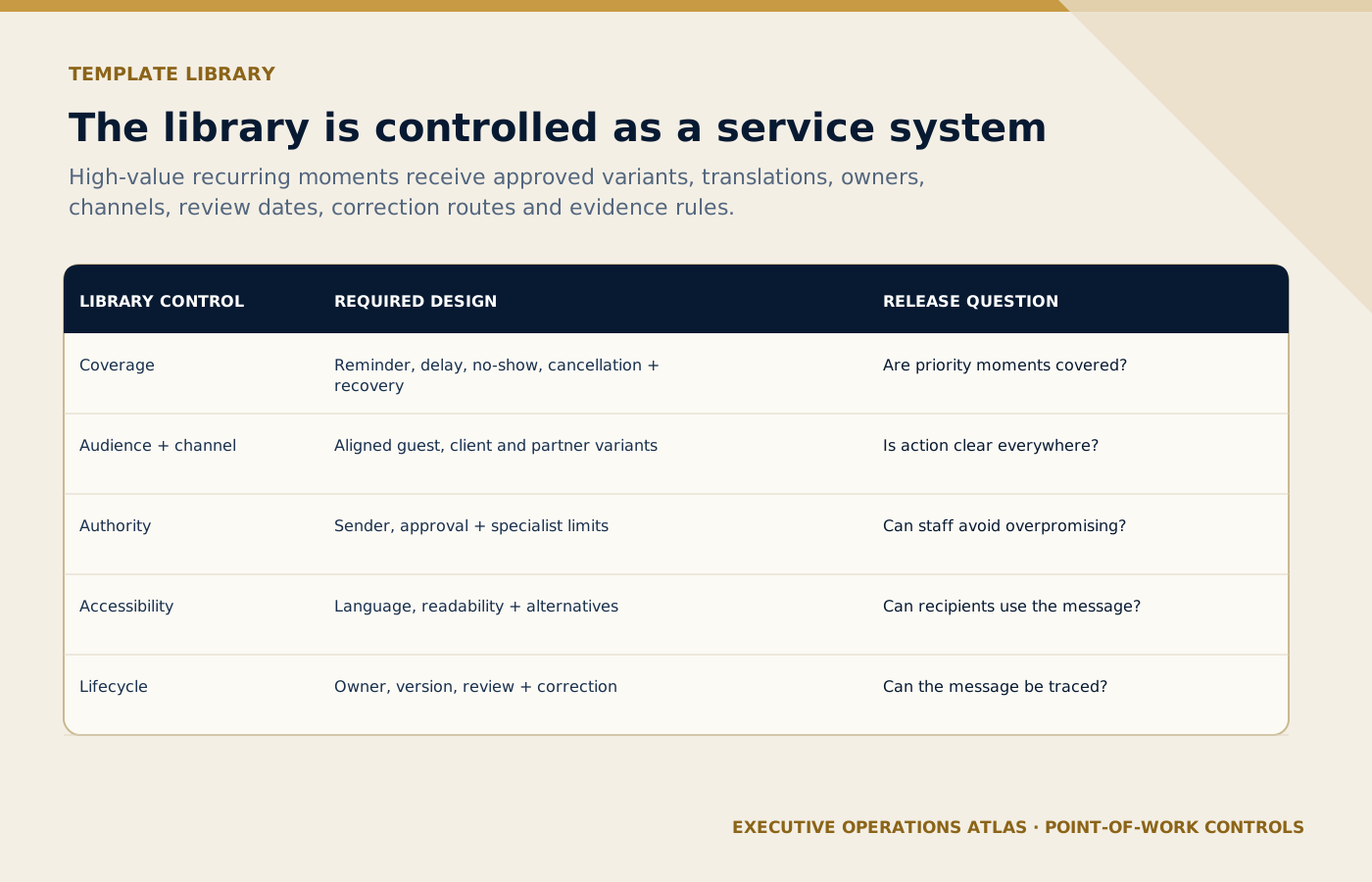
The library is ready when priority scenarios, audience variants, translations, authority limits, corrections and evidence remain controlled.
On small screens, scroll the diagram horizontally to read its labels.
#Manager's release checklist
- The purpose, boundary, users, owner, and approval authority are explicit.
- The content matches the approved process map, risk assessment, customer journey, and current systems.
- Roles, deputies, thresholds, evidence, privacy, accessibility, supplier interfaces, and exceptions have been tested.
- Supporting SOPs, work instructions, checklists, forms, templates, records, and training do not contradict one another.
- Representative users have completed a normal and exception scenario in the actual work environment.
- The release, access, version, change, retention, review, and withdrawal controls are ready before go-live.
#Sources and further reading
Primary standards, institutional guidance and professional references used to support this article.
- CDC Crisis and Emergency Risk Communication manual
- UK Government Communication Service — crisis communications planning guide
- ISO 10013:2021 — guidance for documented information
- UK Information Commissioner's Office — data minimisation
Editorial note: This article provides operational and quality-management guidance for a professional portfolio. It does not provide legal, regulatory, privacy, safety, emergency, employment, or contractual advice. Apply qualified local review wherever those obligations affect the service.
Connect this guide to your next step
Continue with related methods and the wider series.
- Related guideSOP Writing Part 5: Evidence, Documentation and Legal Defensibility
Design records that capture timely, factual, proportionate evidence of what happened—without turning operational documentation into improvised legal conclusions.
- Related guideHow to Design a Professional Operational Form
Build forms that collect the minimum usable facts, guide staff through decisions, support approvals, and become reliable records after completion.
- Related guideSOP Writing Part 3: Roles, Authority and RACI
Define who performs the work, who owns the outcome, who contributes before a decision, who receives information, and where operational authority stops.
Put this article into practice
- Design message templates with verified inputs, clear limits and escalation guidance for routine and disrupted service.
- The purpose, boundary, users, owner, and approval authority are explicit.
- The content matches the approved process map, risk assessment, customer journey, and current systems.
- Roles, deputies, thresholds, evidence, privacy, accessibility, supplier interfaces, and exceptions have been tested.
Your next step
Complete the worksheet with verified operating information and review it with the accountable owner.
Apply the Message architecture, approval matrix, and eight-template library design