

- Who this helps
- Tourism business owners, operations leaders and quality managers.
- What you can do
- Connect governance, process ownership, execution, evidence, measures and improvement in a company operating system.
#The operation the guest never sees
Imagine a group arriving on three flights. The passengers are staying in two hotels. One guest uses a wheelchair, one suitcase has not arrived, a flight is forty minutes early, and the vehicle assigned to the second wave reports a warning light before leaving the depot.
The guests do not see a management system. They see a name board, a welcome, a vehicle, a message, and the way the team responds when the plan changes. Behind those visible moments, however, many controls have to work together. Sales must transfer accurate requirements. Reservations must issue the correct service details. Operations must assign suitable people and vehicles. Airport representatives need a current manifest. Dispatch needs a live view of the flights and fleet. The guest-service team needs approved messages. Supervisors need authority limits. Finance needs evidence that the services were delivered or changed.
An SOP can describe the airport-transfer process, but the SOP cannot perform all those functions by itself. It cannot decide company policy. It cannot prove that a staff member was trained. It cannot replace a manifest, record a no-show, control a message template, maintain a vehicle, calculate a KPI, approve an emergency cost, or correct the root cause of a repeated failure.
This is the central idea of a professional tourism operating system:
Reliable service is produced by connected controls, not by one document type.
The International Organization for Standardization’s process-approach guidance describes a management system as a set of integrated processes and measures designed to deliver intended results. ISO 10013:2021 also emphasizes that documented information should be tailored to the organization rather than forced into one universal format. These principles are useful in tourism because the sector combines guest-facing service, time-sensitive logistics, subcontracted delivery, safety, commercial promises, and live exceptions.
#SOPs are one layer, not the whole system
Many tourism businesses begin documenting operations after a complaint, a staff departure, a new client requirement, or a period of rapid growth. The first request is often, “We need an SOP.” The instinct is understandable, but the diagnosis may be incomplete.
If employees are receiving different versions of the pickup list, the problem may be document control. If a guide does not know who can authorize a replacement vehicle, the problem may be authority design. If a supplier repeatedly confirms late, the problem may be supplier governance. If the team follows the procedure but guests still feel confused, the problem may be journey design or communication. If managers cannot tell whether performance is improving, the missing layer may be measurement.
A professional system separates these needs and then reconnects them.
| System layer | Management question | Tourism example |
|---|---|---|
| Policy and standards | What does management require? | Confirmed transfers must be operated to approved service and safety requirements. |
| Process design | How does work flow from request to closure? | Booking → confirmation → assignment → dispatch → pickup → completion → reconciliation. |
| SOPs and work instructions | How is work controlled and performed? | Airport-transfer SOP and flight-status verification instruction. |
| Operational tools | What helps the employee execute consistently? | Manifest, briefing, checklist, form, template, route note, decision aid. |
| Records and evidence | What proves what happened? | Timestamped pickup record, incident form, supplier confirmation, guest communication. |
| Performance and improvement | How do we know the system works and gets better? | On-time pickup, missing-information rate, complaints, audit findings, corrective actions. |
Scroll horizontally to read every column. Keyboard: focus the table, then use the arrow keys.
What to learn: Read each row across to connect System layer with Management question, Tourism example. Compare the rows to identify the relevant system layer for your situation; use the accompanying section to interpret the result.
The layers are different, but they must remain connected. A policy with no process is an intention without a delivery path. An SOP with no tools leaves employees to recreate the details. A checklist with no owner becomes a ritual. A KPI with no operational definition creates debate instead of learning. A corrective action with no document update allows the old problem to return.
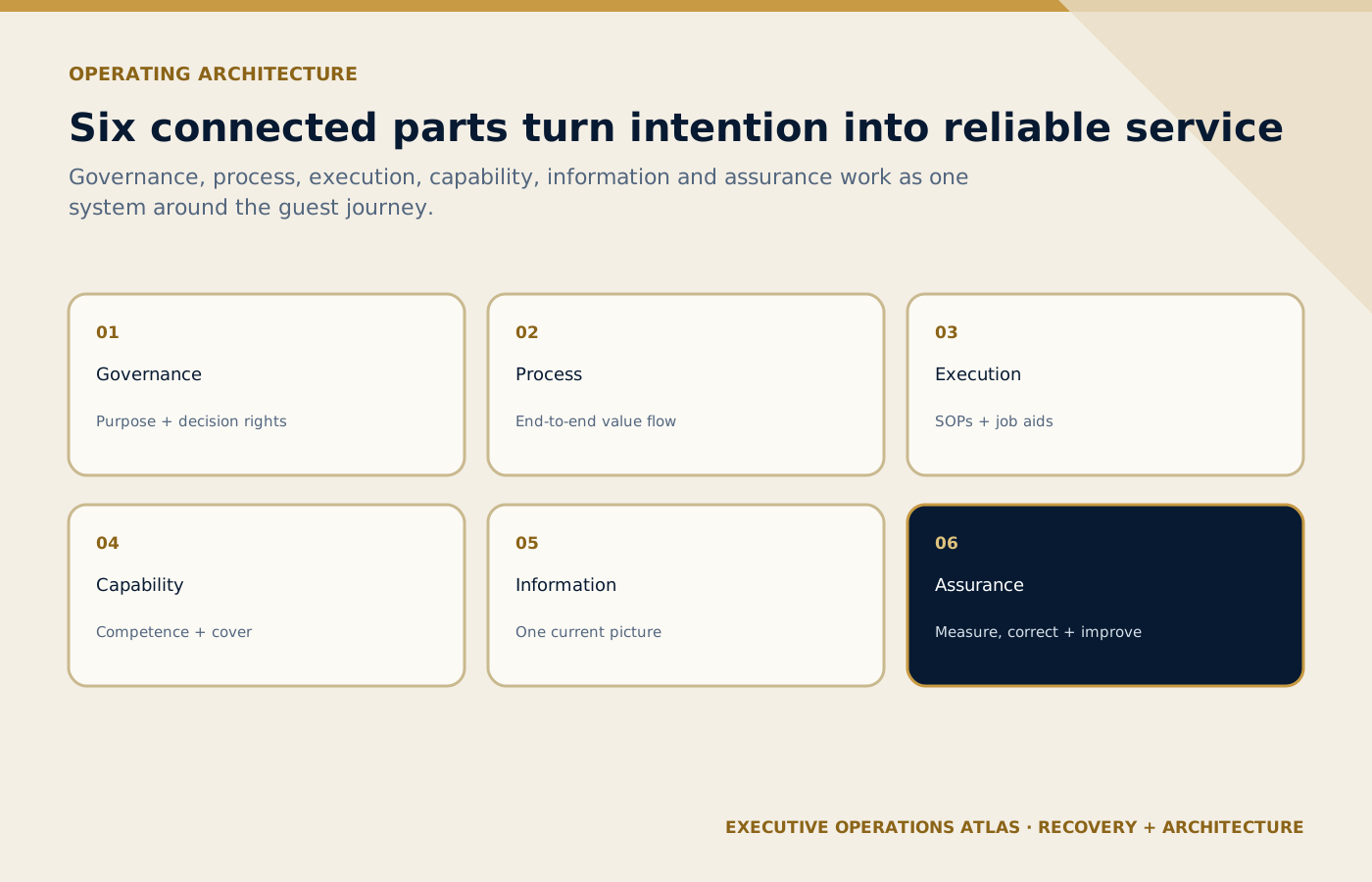
Reliable service emerges when the six management layers operate around the same guest journey and service promise.
On small screens, scroll the diagram horizontally to read its labels.
#The six connected parts of a tourism operating system
#Governance: purpose, rules, and decision rights
Governance begins with the service promise and the boundaries within which employees and suppliers operate. It includes policies, minimum standards, assigned process owners, approval levels, and escalation authority.
In a transfer operation, governance should answer questions such as:
- Who owns the end-to-end airport-transfer process?
- Which requirements are mandatory across every client account?
- Who may change a vehicle, add waiting time, purchase an emergency ticket, or authorize a service-recovery gesture?
- Which situations must be escalated immediately?
- Which guest, safety, accessibility, privacy, contractual, or legal requirements need specialist review?
Without decision rights, a detailed SOP can still create delay. Employees may recognize the problem but wait for approval from a manager who is unavailable. Professional governance does not give everyone unlimited authority. It gives the right people clear authority within defined limits.
#Process architecture: the complete flow of value
A process is the end-to-end chain that converts inputs into an intended result. For an airport transfer, the process does not begin when the driver reaches the airport. It begins when a confirmed service requirement enters operations and ends when the service is closed, evidenced, and reconciled.
The process architecture should identify:
- the trigger and end point;
- inputs and expected outputs;
- roles and handoffs;
- guest touchpoints;
- systems and supplier dependencies;
- decision points and failure modes;
- records and performance measures; and
- related processes such as sales, finance, fleet, complaints, and supplier management.
This is why process mapping comes before SOP writing. A writer cannot describe a controlled method until the organization understands where the work starts, who contributes, and what a successful output looks like. The related article Never Write an SOP Before Mapping the Process develops this method.
#Controlled execution: SOPs, work instructions, and job aids
Once the process is understood, the company can decide what employees need in order to execute it.
An SOP should govern the process at the right level: purpose, scope, responsibility, main steps, controls, exceptions, records, and measures. A work instruction should go deeper into a specific task, such as checking a flight or updating a manifest. A job aid may place a short decision rule where the employee needs it. A checklist can support readiness or confirmation. A form can capture structured evidence. A template can standardize a recurring message.
The choice matters. If a two-minute task is buried in a forty-page SOP, employees will work from memory. If a high-risk exception is reduced to a vague checklist item, the team may not understand the decision. Policy vs SOP vs Work Instruction vs Checklist vs Form vs Template provides the full selection model.
#People and capability: competence, not distribution
Publishing a document does not create competence. Employees need to understand the reason for the control, demonstrate the task, practice exceptions, and know when to stop and escalate.
Capability should be role-based. An airport representative, driver, dispatcher, hotel representative, tour guide, reservations agent, and duty manager do not need the same depth. They need the parts that match their work, supported by realistic scenarios and observed practice.
Managers should be able to answer:
- Who must be trained before the procedure becomes effective?
- What does competent performance look like?
- How will it be observed or assessed?
- Which mistakes require coaching, retraining, or process redesign?
- What triggers refresher training?
- How are temporary staff and suppliers included?
A signature on an attendance sheet proves presence, not ability. The operating system needs evidence that the person can perform the work in normal and exceptional conditions.
#Information and technology: one current operating picture
Tourism work is often distributed across reservation systems, spreadsheets, email, messaging applications, supplier portals, flight trackers, paper manifests, and employees’ personal notes. The risk is not simply “too much technology.” The risk is that different people act from different versions of reality.
The system must define the source of truth for each critical field: flight number, passenger count, hotel, accessibility requirement, vehicle, guide, pickup time, client instruction, and service status. It must also define who can change the field, how others are notified, and what is retained as evidence.
Technology should support the process rather than quietly redefine it. A dispatch dashboard may show the vehicles, but the operational model must still define what counts as ready, late, at risk, completed, or closed. A generated message may be fast, but an authorized employee remains responsible for verifying the facts and tone. The portfolio’s Fleet Control Tower and Responsible AI for Tourism show these two sides of controlled information.
#Assurance and improvement: measure, review, correct
The operating system needs feedback. That feedback comes from records, KPIs, guest comments, employee observations, supplier performance, audits, incidents, complaints, and management review.
The purpose is not to collect more data. It is to detect whether the process produces its intended result and where control is weakening.
Useful questions include:
- Are services starting and finishing within the agreed thresholds?
- How often does operations receive incomplete or changed booking information?
- Which exceptions recur by route, supplier, hotel, shift, or client?
- Are employees using the current documents?
- Do the records support the operational account of what happened?
- Did corrective action reduce recurrence, or only close a form?
Improvement closes the loop. When a risk changes, a failure recurs, or a better method is validated, the company updates the process, documents, training, tools, and measures together.
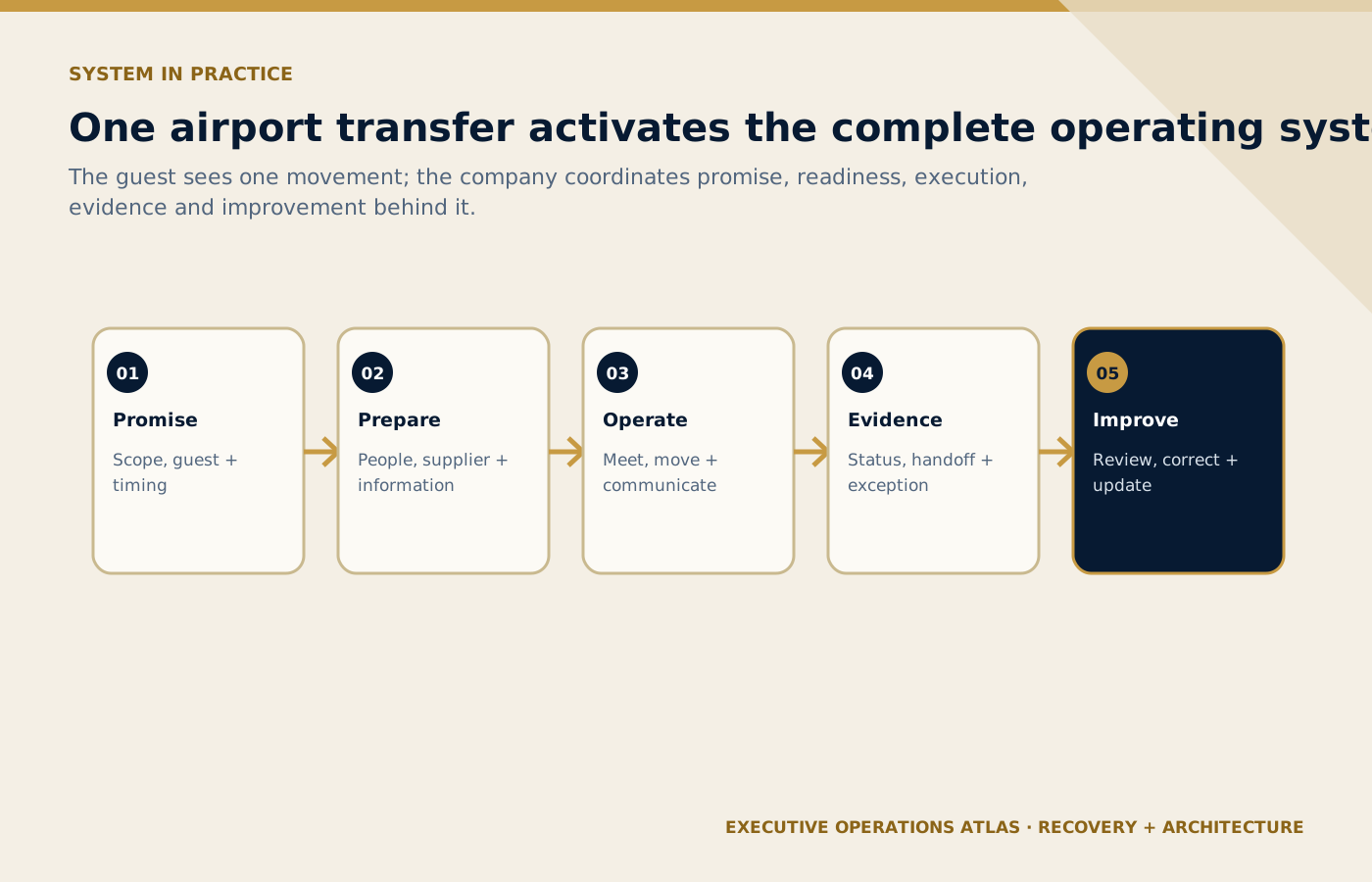
One airport transfer activates the wider system behind preparation, delivery, evidence and continual improvement.
On small screens, scroll the diagram horizontally to read its labels.
#A single airport transfer through the system
Consider the early flight in the opening scenario.
The sales-to-operations handover provides the confirmed passenger and accessibility requirements. The process map shows that flight monitoring begins before dispatch. The airport-transfer SOP defines the roles and main controls. A work instruction explains how to verify the flight and terminal. The manifest is the controlled operating list. A readiness checklist confirms representative, vehicle, signage, contact details, and special assistance. The early-arrival rule defines when the dispatcher must act. An approved message template supports guest or client communication. The supervisor’s authority matrix permits a vehicle change within a set limit. The completed manifest, call log, and service record show what happened. The dashboard records the exception, response, and guest impact. A later review checks whether the original schedule rule needs adjustment.
No single item delivered the service. The service emerged from their connection.
This example also shows why the company should avoid duplicating instructions. The terminal-verification method belongs in one controlled work instruction that relevant SOPs reference. The authority limit belongs in one approved matrix. The guest contact data belongs in the designated source system. Every duplicate creates another version that can become wrong.
#Design principles for a system employees can use
#Proportionate documentation
Document what is needed for control, consistency, evidence, and learning. A small private-tour operator does not need the same document volume as a multi-market DMC managing simultaneous groups. Both, however, need clarity about critical work.
More pages do not automatically create more control. Documentation should reflect complexity, competence, risk, regulatory and contractual obligations, the consequences of failure, and the need to preserve organizational knowledge.
#One owner, many contributors
Every end-to-end process needs an accountable owner. That owner does not perform every step. The owner coordinates design, measures performance, resolves cross-functional issues, and sponsors improvement. Sales, operations, transport, guest service, finance, IT, quality, and suppliers may all contribute.
#Design around the guest and the handoff
Departmental documents often describe what one team does while ignoring the transfer of information or responsibility. Failures collect at the boundaries: sales to operations, airport to vehicle, vehicle to hotel, guide to dispatcher, supplier to DMC, and duty shift to duty shift.
The guest experiences these handoffs as one journey. The operating system should therefore connect backstage control with what the guest sees, needs, and expects. The related Destination Experience Journey Map provides an existing portfolio foundation.
#Build the exception layer deliberately
Normal operations are only part of tourism. Flights move, roads close, guests arrive at the wrong location, suppliers fail, weather changes, systems become unavailable, and programmes are revised. A professional system defines triggers, response options, authority, communication, evidence, and recovery before the pressure begins. SOP Writing Part 4: Exception and Escalation Management develops that layer.
#Keep information current and findable
The employee must be able to identify the current version, understand when it became effective, and retrieve it at the point of work. Obsolete copies must be removed or clearly marked. Document Control & Version Management explains the lifecycle.
#Common failure patterns
#The SOP library with no architecture
Files accumulate with inconsistent names, owners, formats, and review dates. Employees cannot tell which document governs which process. The remedy is a document hierarchy, process register, and ownership model—not another isolated SOP.
#The perfect procedure that describes the wrong process
A manager writes an elegant procedure without observing actual work. Hidden handoffs, system limitations, and supplier dependencies remain outside the document. The procedure looks professional but cannot be followed.
#The checklist that replaces thinking
A checklist becomes longer after every incident until it contains fifty items. Employees tick without reading, and critical steps disappear among low-value confirmations. Critical control requires prioritization and clear exception rules.
#The KPI with no operational definition
One team calculates “on time” at hotel arrival; another uses the driver’s report time; a third excludes supplier-operated services. The number cannot support a decision. Each KPI needs a definition, source, owner, frequency, threshold, and action.
#The corrective action that stops at communication
After a failure, management tells the team to “be more careful.” No process, system, document, workload, authority, or training condition changes. The symptom returns because the operating system did not change.
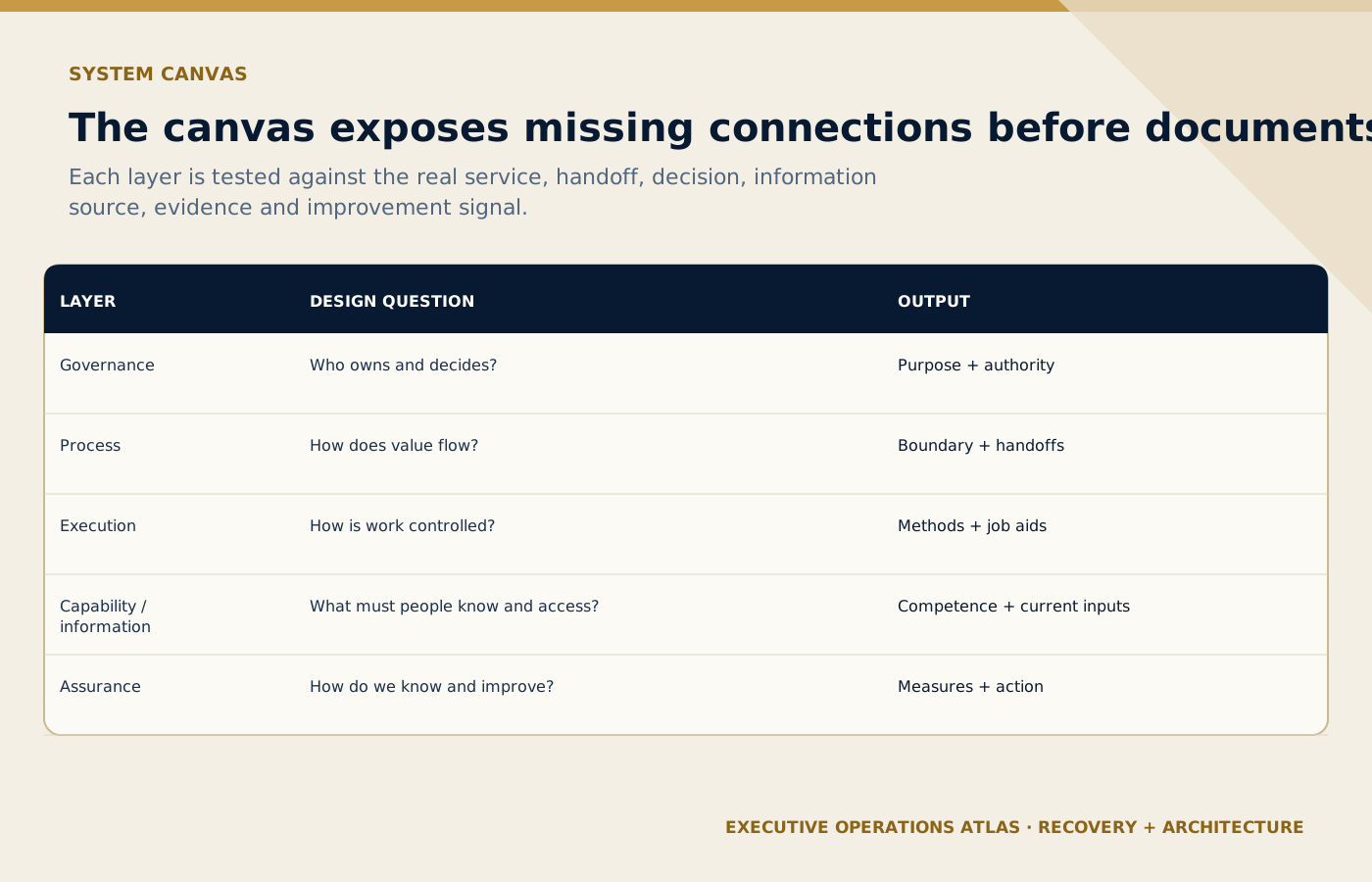
The canvas exposes missing owners, handoffs, controls, inputs and measures before the document library expands.
On small screens, scroll the diagram horizontally to read its labels.
#Practical tool: Tourism Operations System Canvas
Complete one canvas for each major process.
| Canvas field | Questions to answer |
|---|---|
| Service promise | What result must the guest and client receive? |
| Process boundary | What triggers the process, and when is it closed? |
| Accountable owner | Who owns end-to-end performance and improvement? |
| Contributors | Which teams, roles, systems, and suppliers participate? |
| Critical inputs | What information, assets, approvals, and capabilities are required? |
| Controlled documents | Which policy, SOP, instruction, checklist, form, template, and standard apply? |
| Decision points | Which choices affect safety, guest experience, cost, timing, or compliance? |
| Exceptions | What can deviate, and who may decide the response? |
| Evidence | What records demonstrate delivery, change, and closure? |
| Measures | Which indicators show readiness, performance, and risk? |
| Improvement loop | How are incidents, feedback, audits, and lessons converted into change? |
Scroll horizontally to read every column. Keyboard: focus the table, then use the arrow keys.
What to learn: Read each row across to connect Canvas field with Questions to answer. Compare the rows to identify the relevant canvas field for your situation; use the accompanying section to interpret the result.
Do not fill the canvas from a conference room alone. Involve the employees and suppliers who perform the work, examine actual records, and test the model against a live or simulated service.
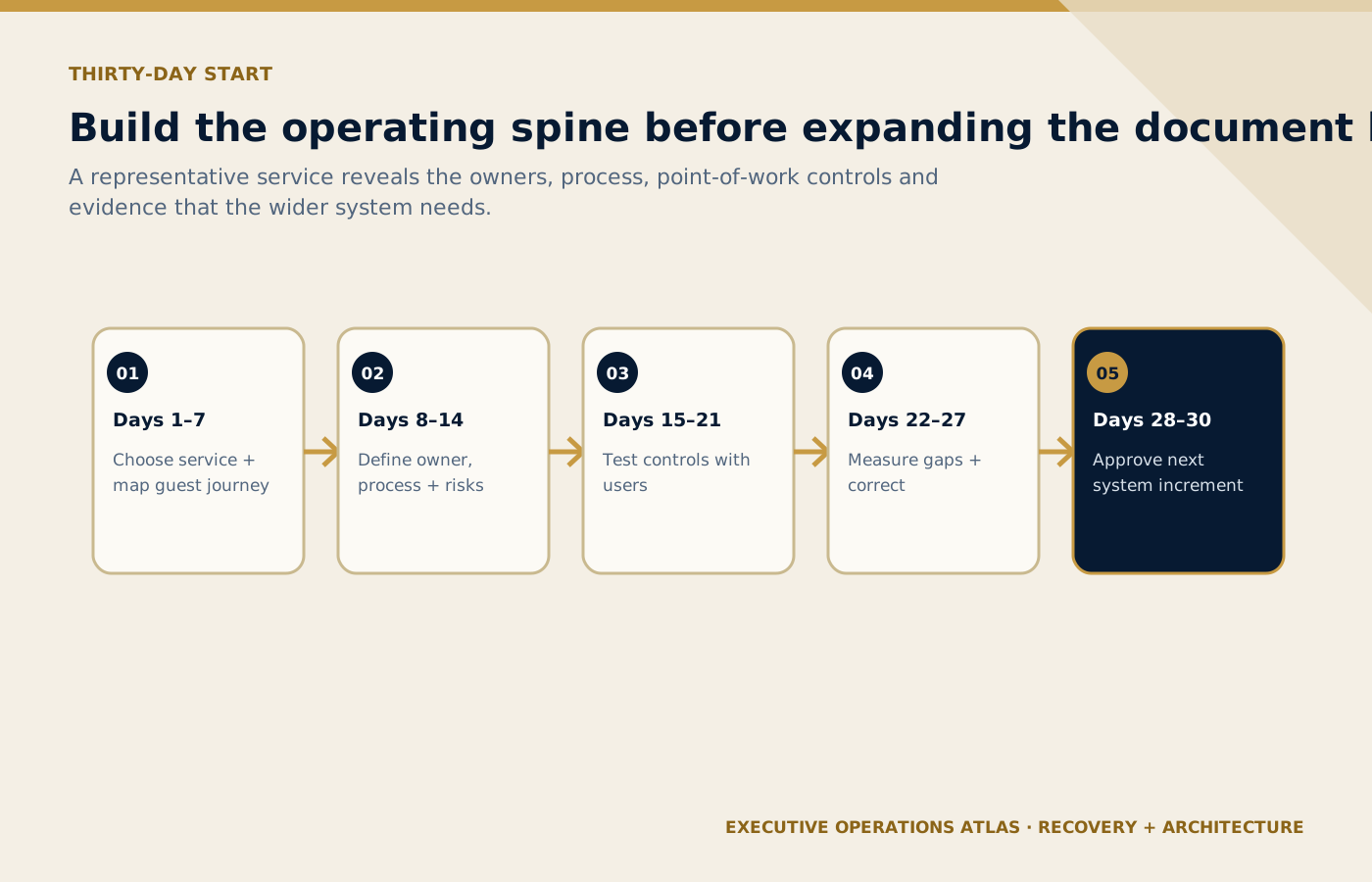
A representative service provides the evidence needed to build the operating spine before scaling documentation.
On small screens, scroll the diagram horizontally to read its labels.
#A practical 30-day starting sequence
- Choose one high-value process. Select a process with visible guest impact, recurring exceptions, or costly handoffs.
- Name the owner and outcome. Define the intended result before discussing documents.
- Map the current process. Observe work, review records, and identify the real systems and handoffs.
- Identify requirements and risks. Include guest, safety, accessibility, privacy, commercial, contractual, and supplier considerations relevant to the scope.
- Build the minimum document set. Reuse existing controlled material where possible; remove duplication.
- Define authority and exceptions. Test three realistic disruption scenarios.
- Pilot with the users. Watch employees use the process and tools; do not rely only on comments about the draft.
- Train and confirm competence. Assess performance, not attendance.
- Measure the first operating cycle. Review records, exceptions, and employee feedback.
- Approve, release, and schedule review. Control the version and capture improvement actions.
#Final perspective
The purpose of a tourism operating system is not to make the company look documented. It is to make service delivery clear, repeatable, resilient, measurable, and capable of improving.
SOPs remain essential. They preserve knowledge, define controls, and support consistent execution. Their value, however, depends on the surrounding system: governance, process design, people, information, evidence, measurement, and improvement.
When those layers connect, complexity becomes manageable backstage and the guest experiences something simple: a company that appears ready.
- Policy vs SOP vs Work Instruction vs Checklist vs Form vs Template
- Building a Document Hierarchy for a Tourism Company
- Document Control & Version Management
- Existing portfolio: The Abu Dhabi MICE Movement Control Room
#Sources and further reading
Primary standards, institutional guidance and professional references used to support this article.
- ISO, The process approach in ISO 9001:2015
- ISO 10013:2021, Quality management systems — Guidance for documented information
- ISO 9000 family — Quality management
- ISO 23592:2021, Service excellence — Principles and model
- ISO 21902:2021, Accessible tourism for all
- ISO 22483:2020, Hotels — Service requirements
Editorial note: The operational scenario is illustrative and combines common tourism conditions. The article provides management guidance, not legal, regulatory, safety, accessibility, or certification advice. Organizations should validate applicable obligations with qualified specialists and local authorities.
Connect this guide to your next step
Continue with related methods and the wider series.
- Related guideBuilding a Document Hierarchy for a Tourism Company
A document hierarchy should help employees understand what governs the work, what explains the work, what supports execution, and what proves the result. It should not become a bureaucracy diagram that only the quality department understands.
- Related guideFrom SOP Library to Tourism Operational Excellence Management System
Transform a collection of controlled documents into an integrated system that aligns value, governance, capability, execution, evidence, measurement, learning, and sustained service excellence.
- Related guidePolicy vs SOP vs Work Instruction vs Checklist vs Form vs Template
A professional document system does not ask every document to do everything. It gives each document one clear job and connects the documents around the work employees actually perform.
Put this article into practice
- Connect governance, process ownership, execution, evidence, measures and improvement in a company operating system.
- Verify the supplied facts and record any missing evidence before acting.
- Name the accountable owner and confirm the decision or approval limits.
- Test the result in the operating context and retain the verification record.
Your next step
Use this connected method when you are ready to design a hierarchy that connects policy, SOPs, instructions, checklists and records around real operating tasks.
Review Building a Document Hierarchy for a Tourism Company