

- Who this helps
- Tourism operations leaders, manual owners and department supervisors.
- What you can do
- Organise a navigable manual connecting governance, departmental procedures, safety, escalation and crisis response.
#The operating problem
A professional operations manual is not one enormous document. It is a governed navigation layer that explains the operating system, assigns ownership, and connects users to the current policies, processes, SOPs, work instructions, tools, records, plans, and external requirements they need. Tourism operations are unusually exposed at interfaces. Sales may define the promise, Reservations holds changing information, Operations coordinates capacity and decisions, suppliers provide critical resources, field teams face the guest, and Finance or the client needs evidence afterward. A control that works inside one department can still fail at the handoff, during a change, or outside office hours. The method in this article is therefore designed as part of an end-to-end operating system. The wider architecture is explained in the tourism-company operating system, while the document-type comparison separates policies, SOPs, work instructions, checklists, forms, templates, and records. That distinction matters because a management method should generate the right controls and evidence rather than forcing every requirement into one document. This is a practical interpretation for tourism management, not a claim that any cited framework prescribes the exact template shown here. The organization remains responsible for tailoring terminology, depth, approval, safety, privacy, employment, contractual, financial, accessibility, regulatory, emergency, and records controls to its jurisdiction, services, risks, technology, and competence.
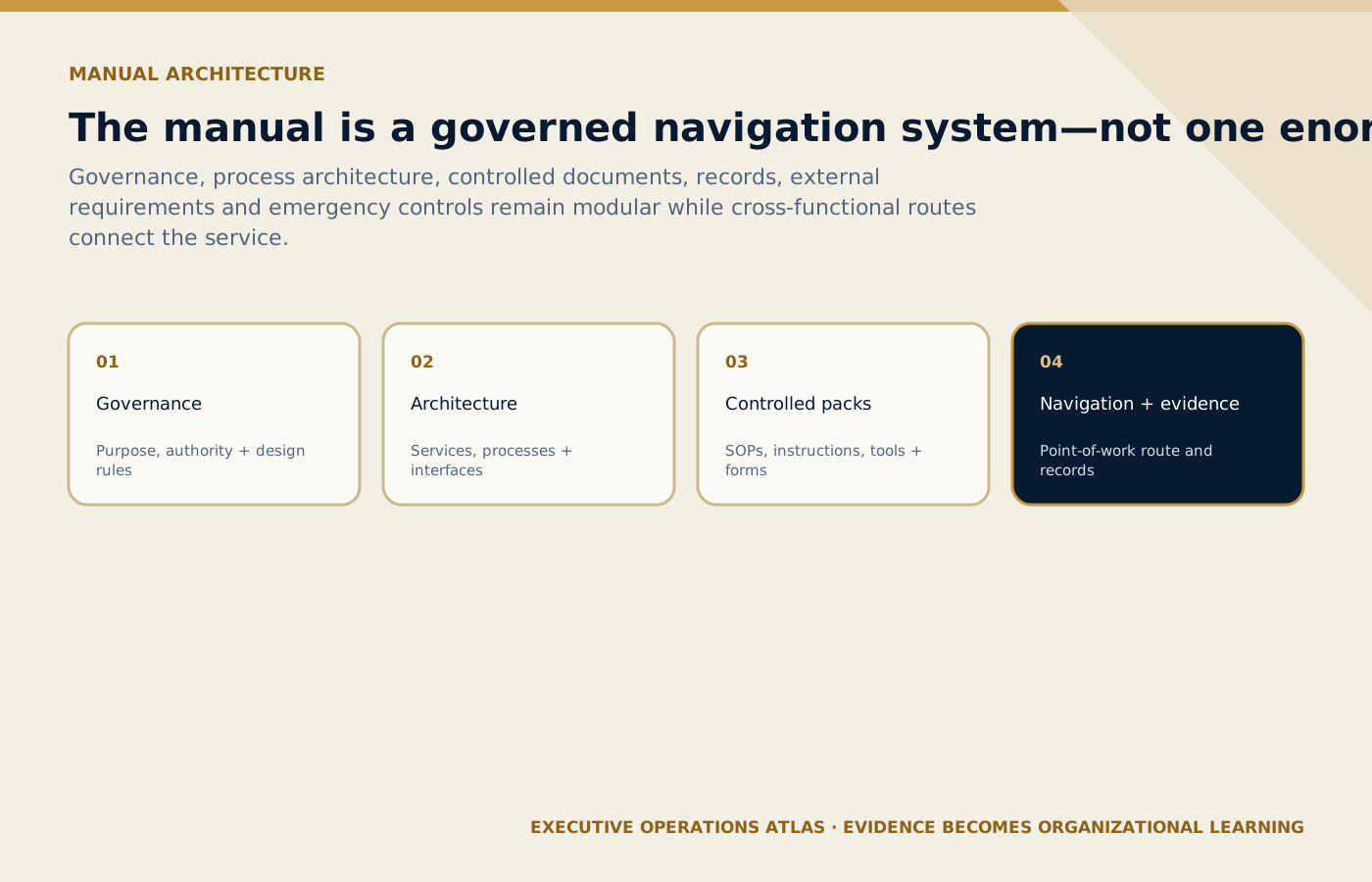
The manual organizes modular controlled content around end-to-end service routes instead of becoming one oversized procedure.
On small screens, scroll the diagram horizontally to read its labels.
#Concepts that must stay distinct
Architecture precedes migration. Inventory content, classify document types, identify owners and users, map processes and risks, remove duplicates, resolve conflicts, and design navigation before copying old files into a new folder or platform. The manual should distinguish enterprise governance from departmental execution and cross-functional value streams. Airport arrivals cross Reservations, Operations, Transport, Representatives, Suppliers, Finance, Quality, and after-hours support; department-only filing can hide the end-to-end process. A manual must work at the point of use. Search, role views, process views, identifiers, links, mobile access, offline or disruption needs, language, accessibility, and withdrawn-version control matter more than decorative covers. External requirements and specialist plans should be referenced through controlled links or registers when appropriate, not pasted into the manual and allowed to become obsolete. Legal, safety, emergency, privacy, financial, and contractual content needs qualified ownership.
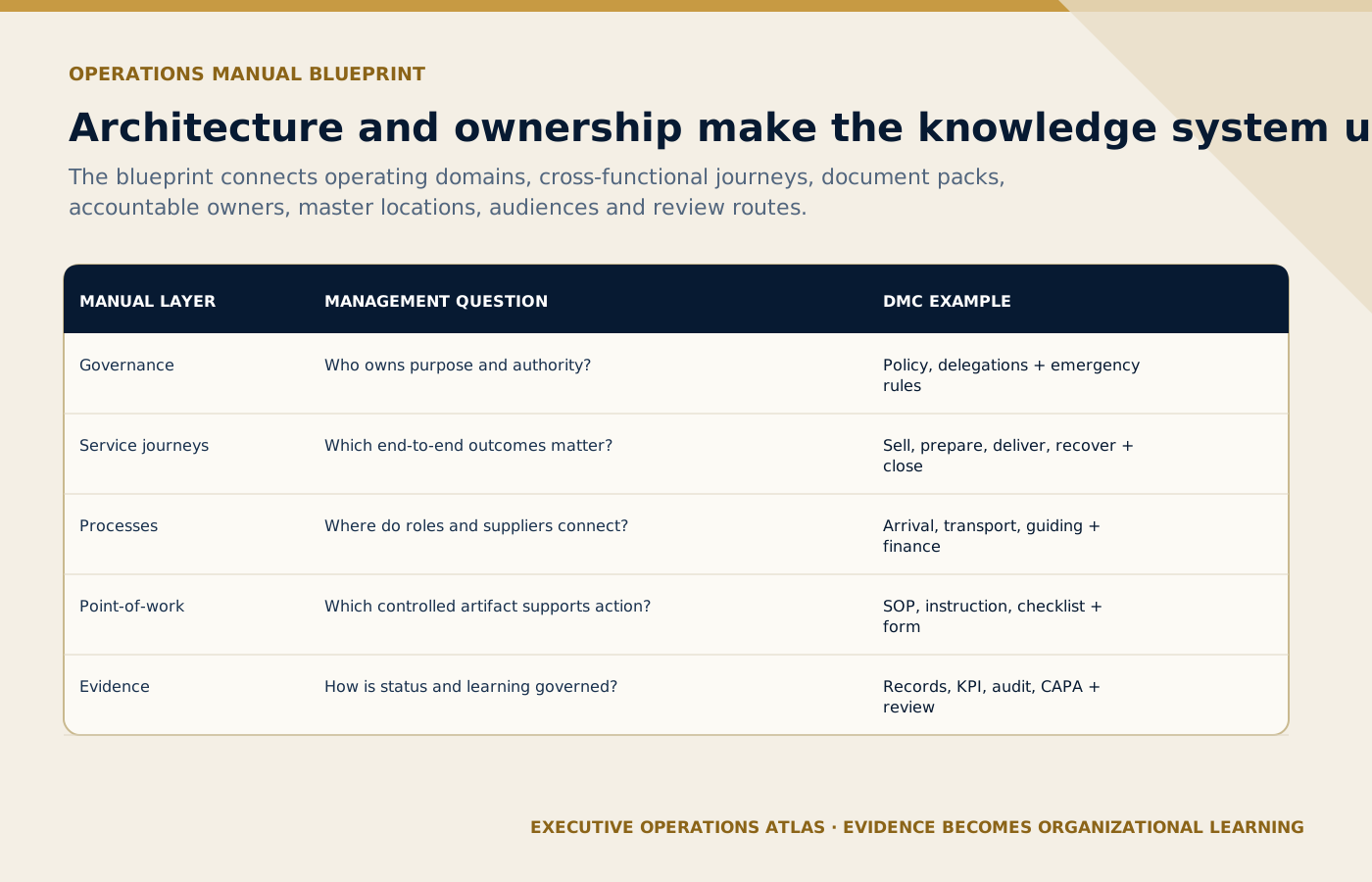
Architecture and ownership allow users to navigate the operation while keeping each controlled artifact proportionate and maintainable.
On small screens, scroll the diagram horizontally to read its labels.
#Practical tool: Tourism operations manual architecture, ownership matrix, and publication gate
Use the following canvas in a working session with a current process, representative service records, and the people who perform or receive the work. Mark assumptions and missing evidence openly; a blank or disputed answer is more useful than a confident invention.
| Element | Management question | Tourism application |
|---|---|---|
| Enterprise core | What governs the whole operation? | Purpose, policy, roles, risk, document control, records, quality, improvement |
| Department libraries | Where is specialist execution controlled? | Reservations, Transport, Airport Ops, Excursions, Representatives and Guides |
| Service interfaces | How do departments and partners connect? | Handoffs, status, authority, evidence, escalation, customer communication |
| Control functions | Which obligations cut across services? | Supplier, safety, emergency, finance, privacy, continuity, quality |
| Time-critical operation | What supports live and disrupted work? | After-hours, duty management, crisis, contact, fallback, recovery |
| Navigation and governance | How is current content found and maintained? | Index, roles, routes, owners, versions, access, review, change |
Scroll horizontally to read every column. Keyboard: focus the table, then use the arrow keys.
What to learn: Read each row across to connect Element with Management question, Tourism application. Compare the rows to identify the relevant element for your situation; use the accompanying section to interpret the result.
The canvas is intentionally compact. Its output should link to the controlled source—process map, risk register, requirement, data definition, SOP, system rule, supplier interface, training record, test, dashboard, audit, or improvement case. Copying detail into several places creates the appearance of completeness while weakening change control.
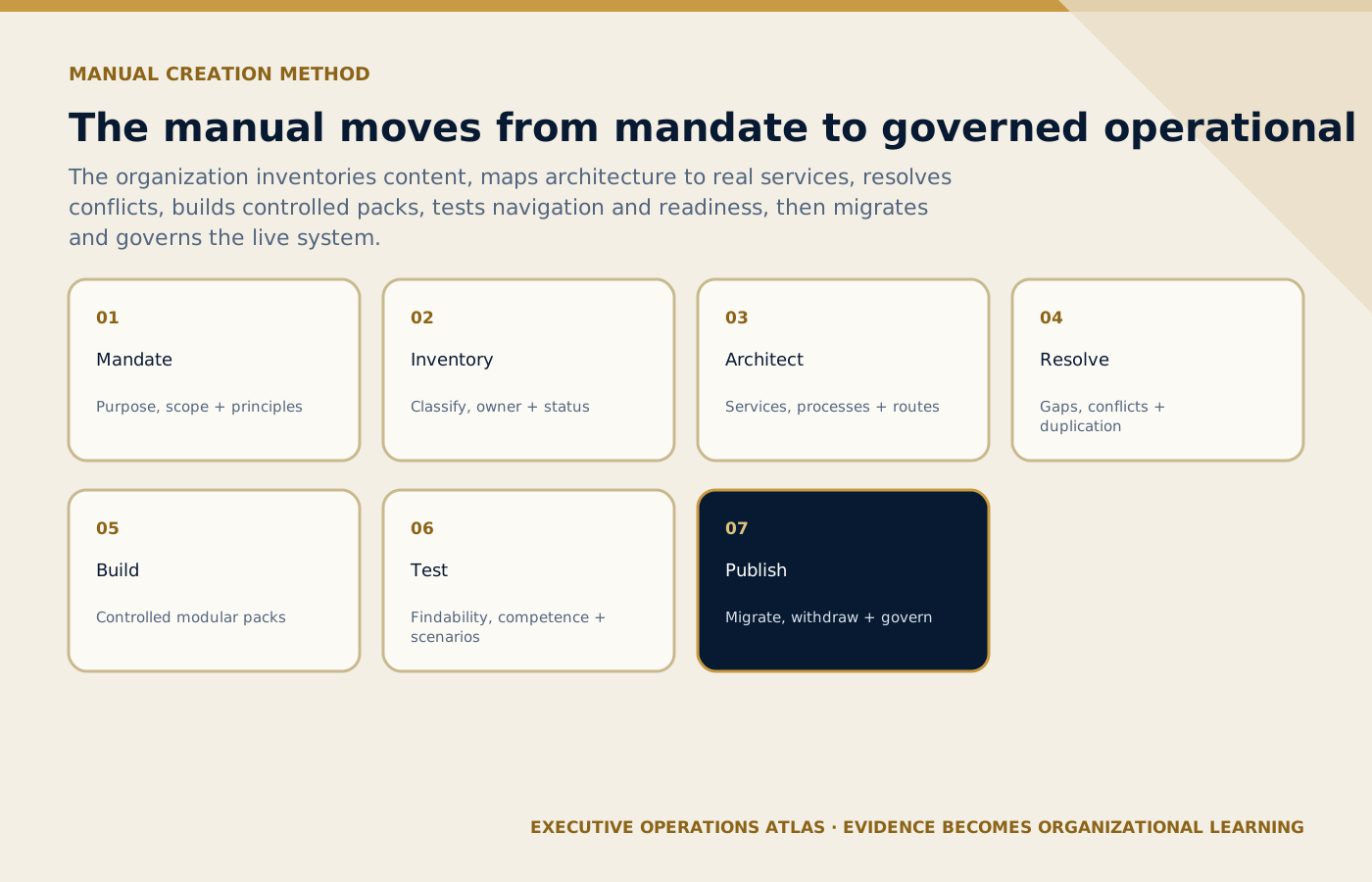
The organization tests navigation and operational readiness before migrating users and withdrawing fragmented source files.
On small screens, scroll the diagram horizontally to read its labels.
#A professional method
#Set mandate and design principles
Confirm executive sponsor, manual owner, document-control authority, purpose, users, scope, platforms, constraints, risk, service model, and principles for document type, naming, access, linking, and review.
#Inventory and classify
Record every current policy, process, SOP, instruction, checklist, form, template, record schedule, plan, contact list, contract interface, and external source with owner, version, location, status, users, and duplication.
#Map architecture to operations
Use the document hierarchy, process architecture, customer journeys, risk, and organization model to create enterprise, departmental, cross-functional, service, and crisis routes. Give users more than one sensible way to find content.
#Resolve gaps and conflicts
Compare overlapping documents, observed work, systems, contracts, and supplier instructions. Retire obsolete items, assign missing content, and escalate authority conflicts rather than publishing contradictions.
#Build controlled content packs
Create concise manual pages that orient users and link to approved components. Standardize metadata, owners, review triggers, evidence, related documents, systems, forms, contacts, and specialist references.
#Test navigation and readiness
Ask representative users across shifts and devices to locate and use content in normal and exception scenarios. Test search terms, links, permissions, offline arrangements, withdrawn copies, and emergency access.
#Publish, migrate, and govern
Release by planned waves, archive or withdraw superseded material, communicate changes, verify competence, monitor search and access failures, audit current use, and maintain a governed backlog of improvements.
At the end of the method, require a decision backed by evidence: proceed, proceed conditionally with named controls, return for correction, or stop. Record the decision maker, date, scope, residual issues, and next review. Ambiguous approval is especially dangerous in tourism because live teams and partners will fill the gap differently under time pressure.
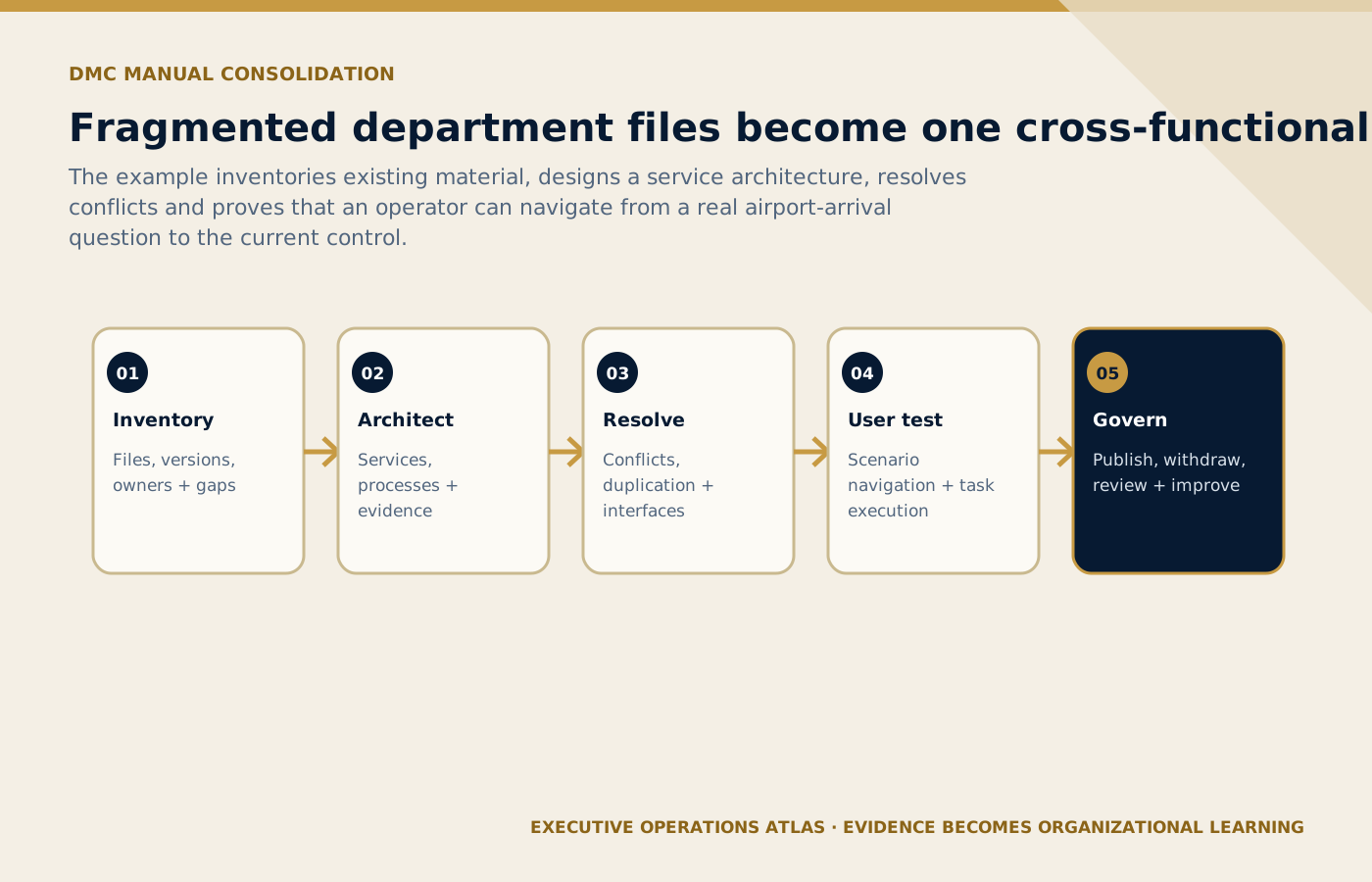
A cross-functional architecture turns departmental fragments into a tested route from service question to current control.
On small screens, scroll the diagram horizontally to read its labels.
#Running example: Consolidating fragmented departmental files into a controlled DMC operations manual
Illustrative scenario
Operational teaching scenario, not a documented incident. Uncited figures and outcomes are illustrative assumptions.
- Situation
Departmental operating files need to become a controlled, navigable DMC manual.
- Evidence
Check the current approved process, roles, observed work, record requirements and the control or acceptance criteria.
- Decision
Decide which instruction or control addresses the verified gap and where authority or escalation is required.
- Action
#Inventory
The DMC discovers multiple airport SOPs, personal contact lists, supplier briefs, and finance approval tables with different versions and owners. Several files combine policy, procedure, form, and training notes.
#Architecture
The manual creates enterprise controls and department areas for Reservations, Transportation, Airport Operations, Excursions, Representatives and Guides, Customer Service, Supplier Management, Safety and Emergency, Quality, Finance Controls, After-Hours, and Crisis.
#Cross-functional route
An ‘Airport arrival’ page links the end-to-end process, roles, live SOP, supplier interface, checklist, no-show form, communication templates, evidence rules, dashboard, and recovery plan without duplicating their content.
#User test
Night controllers can find a current escalation contact but cannot access a linked recovery form on mobile. The permission defect is corrected and retested before the old shared folder is withdrawn.
#Governance
Each component has an owner and trigger. Airport, supplier, system, contract, risk, audit, or incident changes create routed review tasks; analytics and user feedback reveal navigation gaps.
The example is not a universal SOP. A company should repeat the reasoning with its own service promise, systems, suppliers, volumes, guest profiles, legal environment, and disrupted conditions. Compare the design with operational risk assessment and customer-journey mapping for SOP design so operational control, risk, and the visible guest journey remain connected.
#Common failure modes—and the management response
- Turning the manual into one huge word file. Trace the operational consequence using a recent case, then identify the earliest control that could have prevented, detected, or safely contained the condition.
- Migrating duplicates without deciding authority. Follow the issue across upstream inputs and downstream handoffs. The visible lapse may originate in workload, information, authority, system design, supplier behavior, or an incentive outside the user's control.
- Filing only by department despite cross-functional services. Decide whether the remedy belongs in process design, the SOP pack, technology, resource planning, supplier governance, competence, or leadership policy. Adding prose to the wrong document will not control the cause.
- Copying external rules that rapidly become obsolete. Test the proposed remedy in a normal case and a credible exception. Confirm that improvement in one measure has not transferred delay, risk, cost, or confusion to another role or the guest.
- Testing navigation only with the design team. Assign one accountable owner, evidence, due date, and review point. An informal workaround may protect today's service but should not silently become the future operating method.
- Keeping the old uncontrolled folder as a permanent fallback. Record the residual risk and escalate it through the approved route. A vague warning such as ‘take care’ is not an observable control and cannot support an effectiveness decision.
- Verification
Observe execution, inspect the resulting records and confirm that the control works before approving or closing the change.
#Implementation roadmap
Implementation should be proportionate to risk and change. The same five gates can govern a small improvement or a cross-company launch, but the evidence, independence, resources, testing, and approval depth should match the potential consequence.
#Phase 1: Mandate
Confirm sponsor or owner, scope, authority, success criteria, affected stakeholders, risk, resources, and the evidence required before proceeding. Put unresolved assumptions in an issue log rather than disguising them as approved facts.
#Phase 2: Design
Use observed work, representative records, customer and partner needs, data, risk, and front-line knowledge. Align the method with process maps, SOPs, systems, contracts, supporting tools, roles, and existing governance.
#Phase 3: Pilot
Choose representative normal, boundary, and exception cases. Protect live operations, define acceptance and stop criteria in advance, record actual results, correct defects through control, and retest affected interfaces.
#Phase 4: Release
Verify approved content, access, system readiness, partner acknowledgement, competent users, supervisor coverage, communications, rollback or contingency, monitoring, support, and explicit go-live authority.
#Phase 5: Sustain
Review early use, compare results with baseline, audit deployment and effectiveness, route recurrence through RCA and CAPA, preserve lessons, and control revisions so improvement does not create parallel versions.
Control the approved version through document control and version management. Use training, competency, and SOP adoption to verify competence and adoption rather than counting distribution or attendance. Where suppliers perform part of the process, apply the interface and performance disciplines in supplier and partner governance.
#Measures that support decisions
Select a small balanced set. For each measure define purpose, formula or classification rule, numerator and denominator where applicable, source, owner, refresh, segmentation, target, response threshold, and known limitations. A measure without an action route becomes reporting overhead.
| Measure | Decision use |
|---|---|
| Inventoried documents with owner and status | Shows whether the method is deployed, producing its intended result, exposing risk early, or requiring investigation and controlled improvement |
| Duplicate or conflicting controls resolved | Shows whether the method is deployed, producing its intended result, exposing risk early, or requiring investigation and controlled improvement |
| Users finding current content within target | Shows whether the method is deployed, producing its intended result, exposing risk early, or requiring investigation and controlled improvement |
| Broken or unauthorized links | Shows whether the method is deployed, producing its intended result, exposing risk early, or requiring investigation and controlled improvement |
| Overdue content reviews | Shows whether the method is deployed, producing its intended result, exposing risk early, or requiring investigation and controlled improvement |
| Withdrawn versions found in operational use | Shows whether the method is deployed, producing its intended result, exposing risk early, or requiring investigation and controlled improvement |
Scroll horizontally to read every column. Keyboard: focus the table, then use the arrow keys.
What to learn: Read each row across to connect Measure with Decision use. Compare the rows to identify the relevant measure for your situation; use the accompanying section to interpret the result.
Read the measures together. A better average can hide a damaging tail; a lower complaint count can reflect harder reporting; a perfect checklist score can coexist with weak outcomes; and a rise in recorded exceptions may be healthy when previously hidden problems become visible. Segment results and combine performance data with observation, audit, guest evidence, supplier context, and front-line feedback.
#Field review before approval
#Value and outcome
Can the team state which guest, client, employee, partner, or organizational outcome this method protects, and what evidence would show that value was actually created? Review one successful and one failed service so internal completion is not confused with customer value.
#Boundary and ownership
Are trigger, completion, exclusions, process owner, deputies, and connected services explicit? Follow one service reference end to end and note every point where work crosses a department, system, shift, location, or supplier boundary.
#Risk and resilience
Have credible failure, peak demand, absence, conflicting information, technology loss, supplier failure, accessibility need, and recovery been examined proportionately? Confirm that efficiency does not remove the capacity or discretion needed to stabilize a disrupted service.
#Data and evidence
Are definitions, sources, timestamps, versions, calculations, access, corrections, and retention controlled enough to support the stated decision? Reconstruct an event from records and identify any conclusion that depends on memory, a private message, or an unverified field.
#People and authority
Can representative users explain and demonstrate their role, decision limits, handoffs, and escalation under real working conditions? Include night, weekend, remote, temporary, and partner personnel where they form part of the service.
#Guest and partner interface
Does the design control what external parties need to know, provide, acknowledge, decide, and record without exposing them to contradictory instructions? Walk through the visible guest experience and ask a partner to demonstrate the handoff in their own words.
#Usability and technology
Can the method be used on actual devices, channels, locations, languages, and workload conditions without unofficial notes or coaching? Observe searching, scrolling, duplicate entry, screenshots, manual workarounds, and automation failure as evidence about design.
#Learning and governance
Will incidents, complaints, defects, tests, audits, measures, user feedback, supplier signals, and external change reach a named review and controlled decision? Distinguish urgent correction, formal CAPA, routine revision, project change, and strategic improvement.
#How this article connects to the series
The most useful connected articles are the tourism document hierarchy, document control and version management, the operational excellence management system. Each supplies a prerequisite, complementary control, or next improvement step; the links form a deliberate route through the series rather than promotional references added after drafting. The existing portfolio demonstrates the operating context in Abu Dhabi MICE Operations in Practice, Tourism Operations Roles, The Tourism Quality and SOP AI Toolkit. Those pieces show journeys, assignments, control rooms, dashboards, guide quality, AI tools, commercial workflows, or recovery in practice. This article adds the management method behind repeatable delivery.
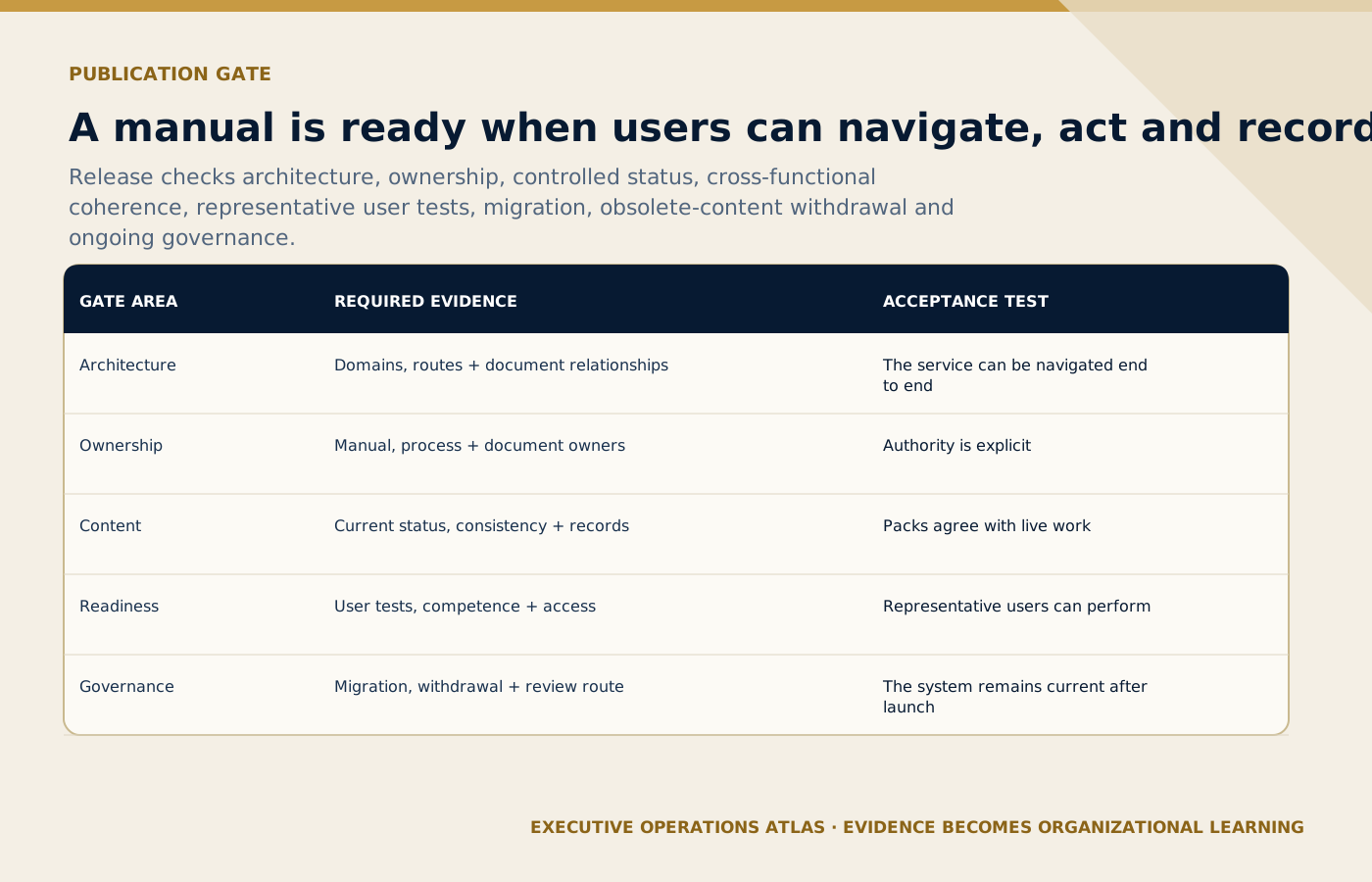
Publication is accepted when representative users can navigate and act correctly and the organization can keep the system current.
On small screens, scroll the diagram horizontally to read its labels.
#Manager's approval checklist
- The purpose, service value, scope, owner, users, authority, and required outcome are explicit.
- The method reflects observed work, current systems, representative data, guest needs, partners, risk, and disrupted conditions.
- Definitions, roles, thresholds, evidence, privacy, accessibility, safety, exceptions, and escalation are controlled at the appropriate level.
- Supporting documents, systems, tools, contracts, training, tests, dashboards, and records agree with one another.
- Representative users and partners have demonstrated the design in normal and exception scenarios without hidden coaching.
- Release, access, version, support, monitoring, audit, change, retention, improvement, and withdrawal arrangements are ready.
#Sources and further reading
Primary standards, institutional guidance and professional references used to support this article.
- ISO 10013:2021 — guidance for documented information
- ISO 31000:2018 — risk management guidelines
- ISO 23592:2021 — principles and model for service excellence
- ISO 9004:2018 — guidance for sustained organizational success
Editorial note: This article provides operational and quality-management guidance for a professional portfolio. It does not provide legal, regulatory, privacy, safety, emergency, employment, financial, or contractual advice, nor does it replace official framework training or certification materials. Apply qualified local review wherever those obligations affect the service.
Connect this guide to your next step
Continue with related methods and the wider series.
- Related guideCAPA: Corrective and Preventive Action in Tourism
Turn complaints, incidents, audit findings, defects, and adverse trends into controlled actions that contain the problem, remove verified causes, and prove the change works.
- Related guideITIL 4 for Tourism Operations
Apply service-management thinking to tourism value streams, incidents, requests, changes, knowledge, suppliers, and continual improvement—while recognizing the framework's current 2026 evolution.
- Related guideWhere Does STP Fit? Standard Test Procedures in Tourism Operations
Separate instructions for doing the work from controlled tests that prove the process, system, handoff, or contingency performs as intended.
Put this article into practice
- Organise a navigable manual connecting governance, departmental procedures, safety, escalation and crisis response.
- The purpose, service value, scope, owner, users, authority, and required outcome are explicit.
- The method reflects observed work, current systems, representative data, guest needs, partners, risk, and disrupted conditions.
- Definitions, roles, thresholds, evidence, privacy, accessibility, safety, exceptions, and escalation are controlled at the appropriate level.
Your next step
Use this connected method when you are ready to define approval, versioning, access, revision and withdrawal controls so employees can identify the current approved document.
Review Document Control & Version Management